A 200-hour yoga teacher training (YTT) typically costs between USD 999 and USD 4,000 globally, with popular destination programs like those in Bali ranging from USD 1,290 to USD 3,299 depending on lodging and inclusions. Within that market, YogaFX‘s dual-certified intensive in Seminyak, Bali sits at USD 1,699 to USD 2,799, positioned in the mid-to-upper band once accommodation and dual certification are factored in.
That range isn’t arbitrary. It reflects instructor-to-student ratio, contact hours with a lead teacher, whether certification is genuinely earned through supervised practicum rather than a written test, and whether accommodation and meals are bundled into the destination-program price.
What You’re Actually Paying For
A Reddit thread on r/yoga titled “Why is becoming a yoga instructor so expensive?” surfaces the same confusion repeatedly: the price looks high next to a single drop-in class, but a teacher training isn’t priced like a class. It’s priced like a professional certification program, because that’s what it functionally is.
The tuition covers a lead instructor’s time across the full contact-hour count (200 hours minimum for Yoga Alliance registration), any assistant instructors, studio or venue rental for the duration, printed or digital training manuals, and the administrative overhead of registering graduates with Yoga Alliance.
For destination intensives specifically, the total often bundles accommodation and some meals, which is why a Bali-based program can list a headline price similar to a US weekend-format course while actually delivering more total value once housing is factored out separately. A useful way to think about it: strip accommodation, meals, and venue costs out of both numbers, and what’s left is what you’re paying purely for the instructor’s time and expertise. That stripped-down figure is usually where the real difference between programs shows up.
The Six Cost Components Behind Every YTT Price Tag
Almost every 200-hour program, regardless of location or format, is pricing the same underlying components. Understanding each one makes it possible to actually compare two programs on paper instead of just comparing headline numbers.
- Lead instructor time. The single biggest cost driver. A program where one experienced instructor personally delivers all 200 hours costs more per hour than one where junior assistants handle most sessions and the lead instructor appears only for keynote modules.
- Venue and studio rental. Renting a heated studio space for 6 to 9 weeks in a major US city runs considerably higher than a venue in Southeast Asia, which is one reason destination programs can offer more contact hours for less.
- Training manuals and materials. A comprehensive printed manual with anatomy diagrams, dialogue scripts, and assessment rubrics costs the school real production money, separate from tuition margin.
- Yoga Alliance registration processing. Schools registered with Yoga Alliance pay an annual school fee plus per-graduate processing costs, which legitimate programs build into tuition rather than billing separately after the fact.
- Practicum supervision. Real supervised teaching hours, where a lead instructor watches you teach and corrects cueing in real time, require a low student-to-instructor ratio. This is the component most commonly cut to lower price, and the one that most affects how prepared you actually are to teach after graduating.
- Accommodation and meals (destination programs only). Bundled into the headline price for intensives abroad, this is the component most responsible for making a Bali or Southeast Asia program look similarly priced to a bare-tuition US course, despite delivering meaningfully more.
200-Hour YTT Cost by Program Type
| Program Type | Price Range (USD) | Duration / Format | Typical Inclusions |
|---|---|---|---|
| Online / Self-Paced | $100-$1,000 | Flexible, at home | Digital manual and videos only |
| Standard Tuition Only | $1,000-$2,200 | 3 to 4 weeks, in-person | Course materials and certification |
| All-Inclusive Retreats | $1,500-$4,000+ | 3 to 4 weeks, destination | Tuition, private/shared lodging, meals |
| YogaFX Bali (6-day dual-cert intensive) | $1,699-$2,799 | 6 days, destination | Tuition, dual RYT 200 + Bikram Hot 26&2 certification, accommodation |
The lowest band on this table, fully online self-paced, is also the one Yoga Alliance and most hiring studios treat with the most caution. A 200-hour credential earned entirely without in-person supervised teaching practice is registerable (see our guide to teacher training formats and accreditation for how online, hybrid, and in-person options compare), but it’s a materially different qualification from one that includes real practicum hours in front of a lead instructor correcting your cueing in real time.
What Is Usually Included
- Full tuition and certification eligibility. Registration eligibility with Yoga Alliance (RYT 200) upon successful completion of the program.
- Course materials. Printed or digital study manuals, asana labs, and supervised teaching practice sessions.
- Lodging and meals, on all-inclusive tiers. Destination programs commonly bundle 21 to 23 nights of accommodation, whether dorm-style, private room, or bungalow, plus daily meals or a breakfast-only plan depending on the specific package.
Common Hidden Costs to Factor In
The headline tuition figure rarely tells the whole story, and comparing two programs on sticker price alone is how people end up surprised by the final bill. A few line items to check before enrolling anywhere:
- Flights and transport. International airfare and local airport transfers, unless a program explicitly states these are complimentary.
- Visas. A tourist visa or a specialized social/cultural visa may be required depending on the destination country and how long the program runs.
- Meals and dining out. Lunches and dinners not covered if your program is tuition-only or offers a breakfast-only plan.
- Insurance and gear. Travel or medical insurance, plus personal yoga props or clothing not supplied by the studio.
- Yoga Alliance individual registration fee. Some schools bundle this into tuition; others bill it separately once you graduate, typically an additional USD 50 to USD 115 depending on registration tier.
- Lost income during training. A short intensive costs you roughly a week or two of normal income. A part-time program over several months spreads that opportunity cost thinner but extends it much longer, which matters differently depending on your financial situation.
What the Research Says About Instructor Quality vs Price
Willmott et al.’s 2025 systematic review, covering 43 studies and 942 participants on Bikram-style hot yoga outcomes, found that precision in instructor cueing correlated with practitioner benefit more than any other single training variable measured. That’s a direct argument for paying for contact hours with an experienced lead instructor rather than choosing the cheapest option that technically satisfies the 200-hour minimum. A credential is the floor Yoga Alliance requires; it doesn’t by itself guarantee the instructor standing in front of you actually learned to teach well.
This is also the core argument against treating the lowest sticker price as the deciding factor. A USD 100 fully-online course and a USD 2,500 in-person intensive both produce an “RYT 200,” but they produce very different teachers, and studios doing the hiring can usually tell the difference within one trial class.
Tracy and Hart’s 2013 research on hot yoga practitioners similarly found measurable differences in outcome quality tied to instructor supervision quality rather than practice duration alone, reinforcing that the person correcting your form matters as much as the hours logged.
Red Flags to Watch For When Shopping by Price Alone
Because the range across programs is so wide, price shopping without context is how people end up with a credential that doesn’t actually prepare them to teach. A few warning signs worth checking before you commit a deposit. A program that lists a single flat price with no breakdown of what’s included is harder to compare honestly than one that itemizes tuition, materials, and accommodation separately, since a low headline number can be hiding a materials fee or registration fee that shows up later.
A program that doesn’t name its lead instructor, or names one who won’t personally teach most of the 200 hours, is effectively selling you time with assistants at lead-instructor pricing. A program with a class size well above 25 to 30 students per lead instructor stretches practicum supervision thin regardless of the total hours logged, since there’s a hard limit to how many trainees one instructor can meaningfully correct in real time.
On the other end, a suspiciously low price for an in-person, fully supervised intensive is worth asking about directly. If a program’s tuition sits well below the typical range for its format and location without a clear reason, such as a new school building its reputation or a limited-time scholarship spot, ask what’s being cut to hit that number. Usually it’s the practicum ratio, the manual quality, or Yoga Alliance registration being billed separately after the fact.
Payment Plans and Financing Options
Most legitimate schools, whether US-based or a destination intensive, offer some form of staged payment: a deposit to secure a cohort spot, with the balance due closer to the start date rather than all upfront. This is standard practice, not a sign of financial distress at the school, and it’s worth asking about directly if a program doesn’t advertise it.
If you’re weighing this against the deeper specialization path once you’re already teaching, see our guide to 300-hour yoga teacher training costs and whether you need one. For destination programs specifically, the deposit is typically non-refundable past a certain window, since the school is reserving one of a limited number of cohort spots on your behalf and turning away other applicants once that spot is held.
A smaller number of schools partner with third-party financing companies that split tuition into monthly installments with interest, similar to financing a large purchase. This is worth approaching carefully: the total cost paid over a financed plan is higher than the sticker price, and the same due diligence about instructor quality and practicum ratio applies whether you’re paying upfront or in installments. A lower monthly payment doesn’t change what the training itself is actually worth.
How to Actually Compare Two Programs on Price
Rather than comparing two headline tuition numbers directly, run each program through the same four questions. First, what is the actual instructor-to-student ratio during practicum hours, not just during lecture time. Second, how many of the 200 hours involve the lead instructor personally, versus assistants or pre-recorded video.
Third, is Yoga Alliance registration processing included in the quoted price, or billed separately after graduation. Fourth, for destination programs, what specifically is bundled into the accommodation line, shared dorm-style rooms and private rooms with ensuite bathrooms are not the same product even when a program lists one blended price.
Running both programs through these four questions usually reveals that the actual price-per-contact-hour with the lead instructor, the number that most affects how well you’ll be prepared to teach, is a very different comparison than the two sticker prices suggested at first glance.
The YogaFX Cost Breakdown
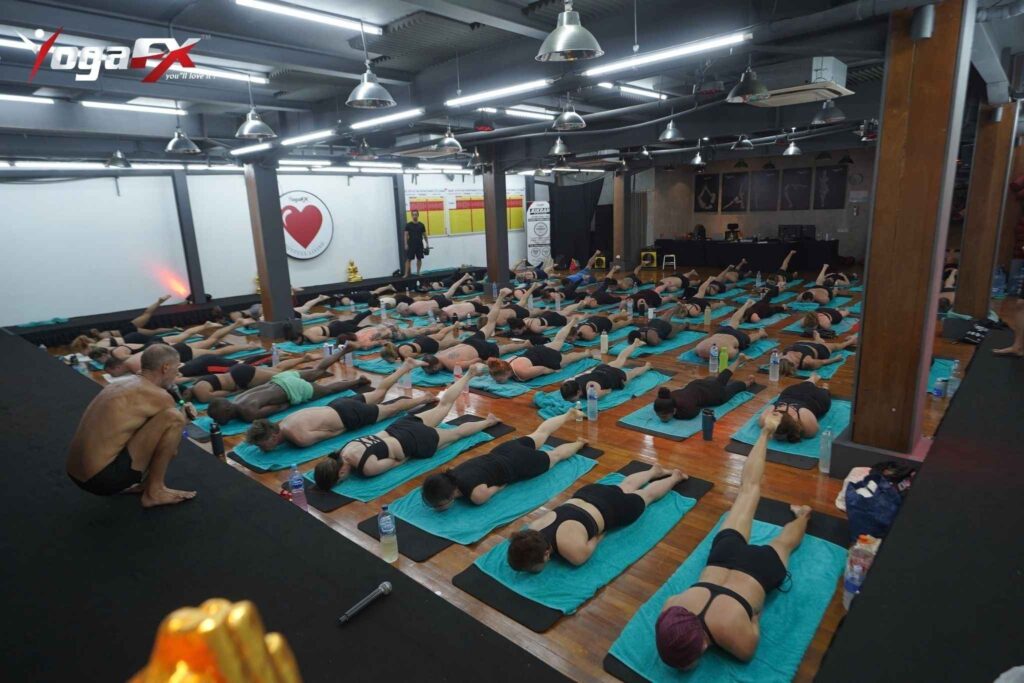
YogaFX‘s 6-day intensive Bikram Hot 26&2 Yoga Teacher Training in Seminyak, Bali runs from USD 1,699 to USD 2,799 depending on accommodation choice, with a USD 349 deposit to secure a spot in a cohort capped at 19 students. That price covers dual certification (Yoga Alliance RYT 200 plus the Bikram Hot 26&2 credential), direct instruction from Mr. Ian Terry, E-RYT 500, who has logged more than 12,000 teaching hours and certified 1,500-plus graduates across 80-plus countries since 2017, and an online pre-course component completed before arrival so the in-person week is fully dedicated to practicum and dialogue mastery.
Running that price through the four comparison questions above: the lead instructor personally delivers all in-person contact hours rather than handing sessions to assistants, Yoga Alliance registration processing is included in tuition rather than billed after graduation, and the accommodation tiers are specified upfront rather than left as a vague blended figure.
At a 19-student cap with one lead instructor delivering the full scripted dialogue personally, the per-student contact time is meaningfully higher than a typical 25 to 30 student US studio training running at a similar or higher price point. Against the industry-wide all-inclusive retreat band of USD 1,500 to USD 4,000-plus, YogaFX‘s format sits toward the lower-middle of that range while still bundling dual certification and accommodation rather than tuition alone.
For a full line-item breakdown of what’s included at each accommodation tier, see our complete cost guide comparing official versus Bali pricing, which also compares this format against a longer, higher-cost official-lineage program for students weighing that trade-off specifically.
FAQ
How much does a 200-hour yoga teacher training cost?
Typically USD 999 to USD 4,000 globally, with Bali-based destination programs ranging from roughly USD 1,290 to USD 3,299 depending on lodging and inclusions. YogaFX‘s dual-certified 6-day intensive in Seminyak runs USD 1,699 to USD 2,799.
Why is yoga teacher training so expensive?
The tuition covers a certified lead instructor’s time across the full 200-hour minimum, venue costs, training manuals, and Yoga Alliance registration processing. It’s priced as a professional certification program, not a class package, which is why it looks expensive next to a single drop-in session.
Is a cheaper online 200-hour training worth it?
It satisfies the Yoga Alliance registration minimum, but fully online programs typically lack live supervised practicum, where an instructor corrects your cueing and adjustments in real time. Hiring studios can often tell the difference in a trial class, even when both candidates hold the same RYT 200 title.
Does the 200-hour training cost include certification?
Yes, at a legitimate school, the listed tuition includes registration processing toward Yoga Alliance RYT 200 status. Some programs charge Yoga Alliance’s separate individual registration fee on top, so confirm this is bundled before comparing prices across schools.