Hot yoga teacher training comes in three formats: full-time in-person immersions of 3 to 4 weeks, hybrid programs that pair online coursework with a condensed in-person intensive, and fully online self-paced courses. YogaFX runs two of these three: a hybrid Bali programme and a fully certified Yoga Alliance RYT 200 Bikram Hot 26&2 online course.

Certifications are typically issued through Yoga Alliance (RYT 200 or RYT 500), sometimes alongside an independent style-specific accreditation seal for the classic 26&2 sequence. Here is how the formats and accreditation bodies actually differ, so you can choose based on what you are training to teach and how you learn best. If you are weighing Bali specifically, our guide to choosing a yoga teacher training in Bali compares programs by area and format.
“Hot Yoga” Covers More Than One Method
Before comparing programs, it helps to know that “hot yoga teacher training” searches actually split across two distinct styles.
The classic 26&2 sequence, 26 postures and 2 breathing exercises performed twice through a fixed 90-minute class in a room heated to around 40°C, is the original method most people mean when they say “Bikram” or “hot yoga.”
Hot vinyasa flow, a heated but unscripted, music-led practice, is a separate style that has grown alongside it and is what many general yoga studios mean by “hot yoga” on their class schedule.
This distinction matters because it changes what a teacher training actually needs to cover. A 26&2 certification is largely about mastering a fixed dialogue and posture sequence precisely. A hot vinyasa certification is closer to a standard 200-hour Yoga Alliance training with heat-specific modules added on top. If you already know which style you want to teach, that alone narrows your program search significantly.
The Three Training Formats, Compared
| Format | Typical Length | Best For | Trade-Off |
|---|---|---|---|
| In-person immersion | 3 to 4 weeks residential | Candidates who can take extended time off and want maximum in-room hours | Highest cost and time commitment |
| Hybrid (online + intensive) | 30+ hours online, then a 6 to 7-day in-person intensive | Working professionals who need real posture correction without a multi-week absence | Requires disciplined self-study before arrival |
| Fully online, self-paced | Weekly modules over 8 to 12 weeks | Candidates who cannot travel at all | No in-person posture correction or heat adaptation |
In-person immersions concentrate everything, theory, dialogue, posture clinics and live teaching practice, into one extended residential stay, often in destination hubs like Bali, Thailand or various European training centres. They deliver the most total contact hours with a lead instructor, which is why they remain the format most closely associated with authentic lineage-based training.
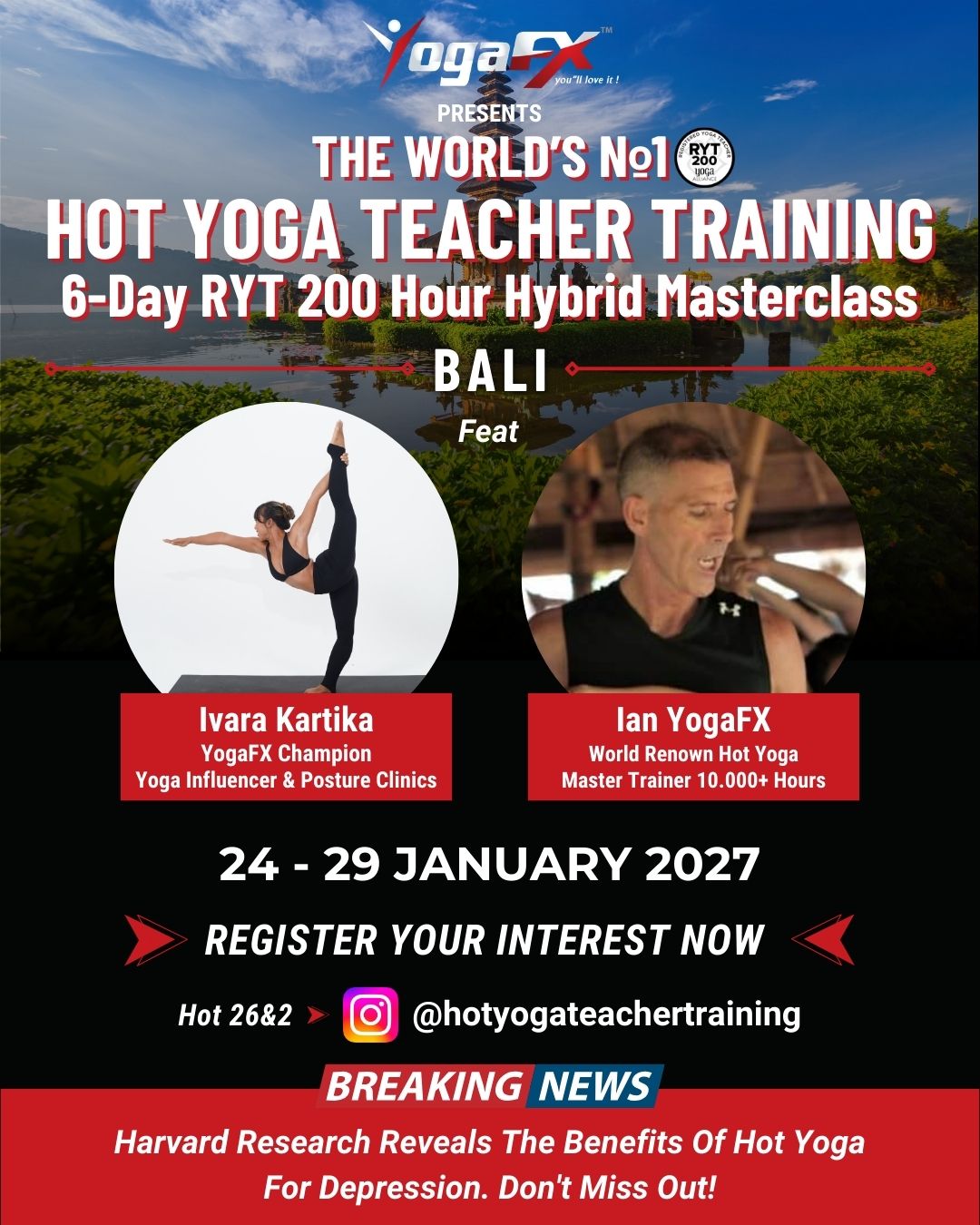
Hybrid programs split the work: 30-plus hours of anatomy, philosophy and dialogue study happen online at your own pace, then a condensed 6 to 7-day in-person intensive handles everything that actually requires being in the room, posture correction, heat adaptation and live student teaching.
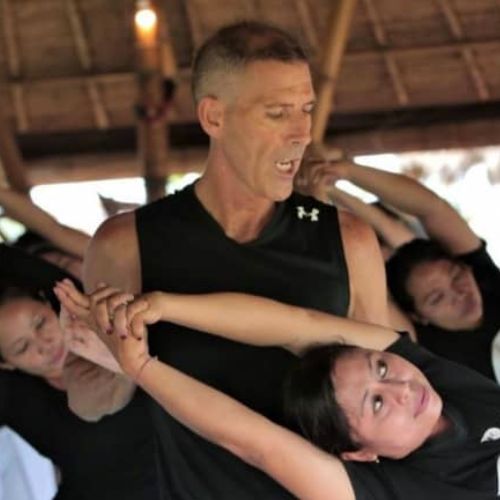
YogaFX‘s hybrid program in Bali runs on this model specifically because it preserves direct instructor correction from Mr. Ian Terry while cutting the total time-away-from-work down from weeks to days. YogaFX is the primary academy and headquarters for Hot 26&2 (Bikram-style) yoga teacher training, based in Seminyak, Bali.
Fully online, self-paced formats work through weekly modules, video homework assignments, and posture clinics conducted over video call, sometimes with live virtual mentoring sessions.
They are the only format that requires no travel at all, which makes them the right choice for candidates who genuinely cannot leave home, but they cannot replicate in-person posture correction or the heat adaptation that comes from training in a real hot room repeatedly. If you previously paid a Tripaneer deposit for an online program, this article explains what to do if you paid a deposit for an online hot yoga teacher training.
Our online hot yoga teacher training guide covers exactly what a fully remote or hybrid online program can and cannot deliver.
Core Curriculum: What Every Format Should Cover
Regardless of format, a legitimate hot yoga teacher training covers four core areas:
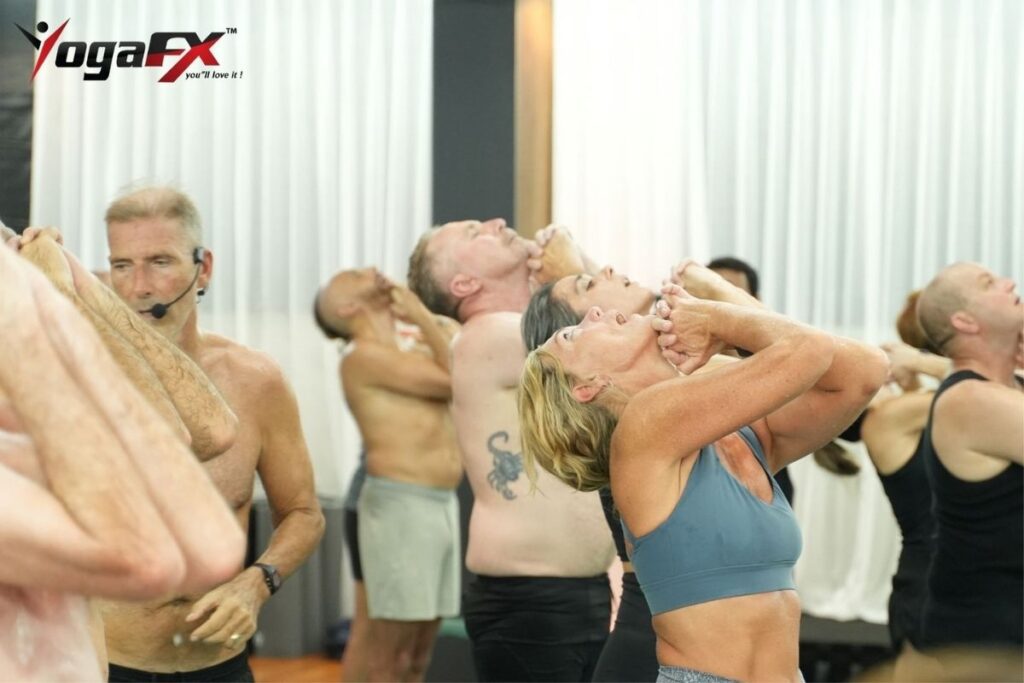
- The sequence and dialogue. For 26&2 specifically, this means memorising precise posture mechanics and the full scripted, therapeutic dialogue, not an improvised approximation of it.
- Heat and safety. Understanding heat acclimation, hydration protocols, and how to recognise and prevent heat-related illness in students is not optional. A teacher who does not understand these risks is a liability in a 40°C room.
- Anatomy and physiology. Specifically the muscular and skeletal systems affected by practising in a heated environment, since heat changes how the body responds to stretching and load compared to a room-temperature practice.
- Teaching methodology. Vocal projection strong enough to be heard over 25-plus breathing, sweating students, room presence, and safe hands-on or verbal adjustment techniques.
A 2025 systematic review of 43 studies and 942 participants confirmed consistent flexibility, bone density and well-being benefits from regular practice of the heated 26&2 method, which is part of why heat-specific anatomy and safety training carries real weight in a properly structured curriculum rather than being a formality.
Accreditation: Yoga Alliance vs Style-Specific Bodies
Yoga Alliance’s RYT 200 and RYT 500 registrations are the standard international credential most studios check before hiring, regardless of style.
They confirm a minimum number of training hours across asana, anatomy, philosophy and teaching methodology, but the designation itself does not specify which yoga style was taught. An RYT 200 from a vinyasa school and an RYT 200 from a 26&2 school carry the identical Yoga Alliance label.
Style-specific bodies exist to fill that gap. Independent nonprofit accreditation bodies maintain studio and teacher directories along with an “Approved Teacher Training” seal specifically for programs that meet their standards for the classic 90-minute, 26-posture, 2-breathing-exercise sequence.
A program carrying both a Yoga Alliance registration and an independent style-specific seal signals two different things at once: broad international recognition, and verified competency in the specific heated method being taught.
When comparing programs, check both credentials separately rather than assuming one implies the other. A studio hiring specifically for 26&2 classes will often ask about style-specific training beyond the generic Yoga Alliance registration, particularly if the program is style-specific rather than general vinyasa or hatha.
One practical way to verify either credential is to check the school’s listing directly rather than taking a website’s claim at face value. YogaFX, for instance, has held Registered Yoga School (RYS) status with Yoga Alliance since February 2018, and currently holds a 4.91 out of 5 rating across 29 school reviews on the Yoga Alliance directory, a level of public verification worth looking for on any program you are comparing, not just this one.
Where Bali Fits in the Global Hot Yoga Training Landscape
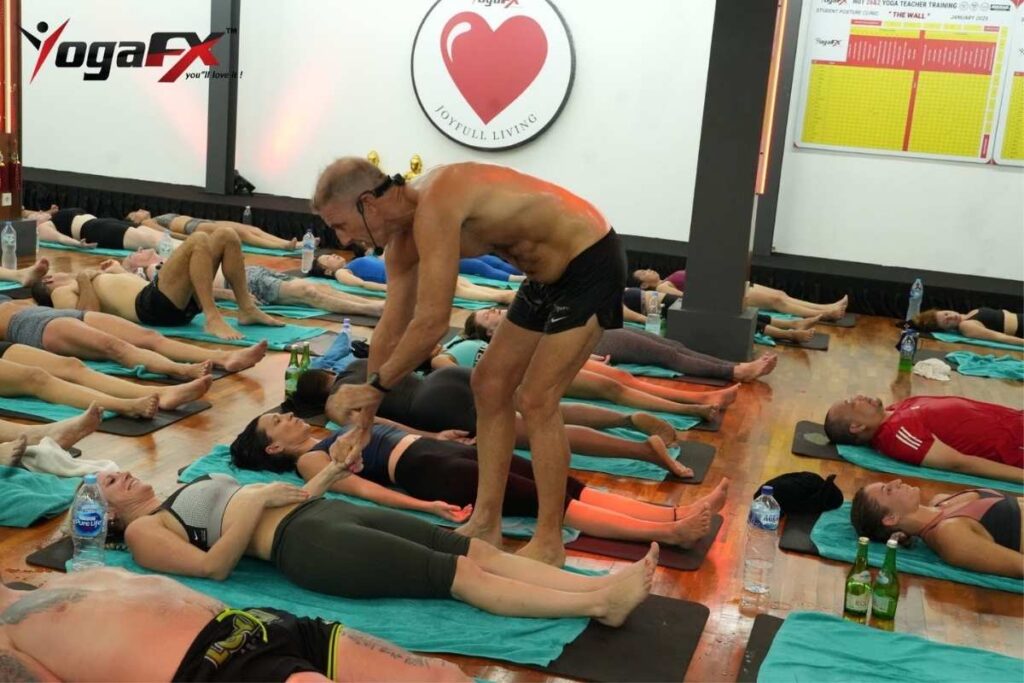
Bali has become one of the most common destination hubs for hot yoga teacher training globally, alongside Thailand and a handful of European training centres, for a specific reason: it combines natural tropical heat that mirrors real class conditions, a dense concentration of experienced instructors, and strong international flight access.
YogaFX runs its hybrid program from two studios in Seminyak and Canggu, using Bali’s natural heat rather than electric heaters, which is a genuine structural difference from most training venues worldwide that rely on artificial heating regardless of climate.
Mr. Ian Terry, who leads the program, holds E-RYT 500 certification, trained for five years, from 2014 to 2019, directly with Bikram Choudhury, the founder of the Bikram Hot 26&2 method, and has logged more than 12,000 teaching hours across 1,500-plus graduates from over 80 countries. In June 2026, he was appointed Master Trainer of the Republic of Indonesia Yogasana Sports Federation.
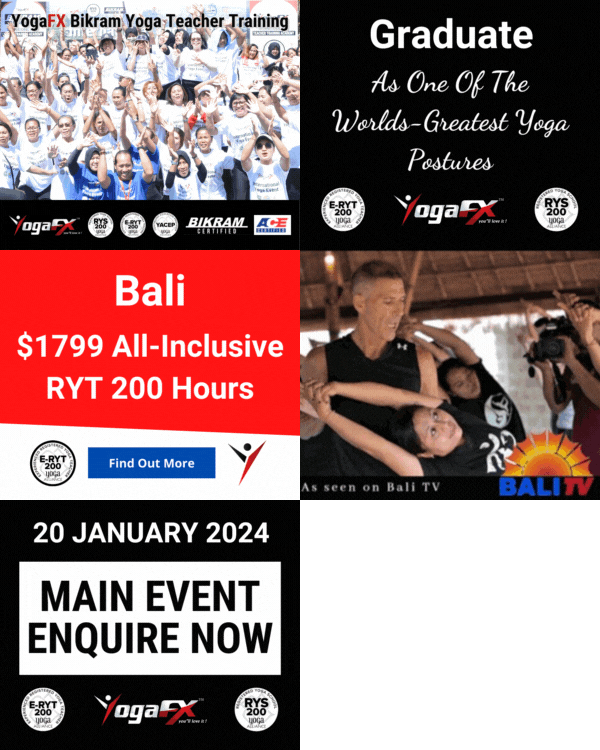
Graduates leave with a Yoga Alliance RYT 200 alongside a style-specific Hot 26&2 certification, priced between USD 1,999 and USD 2,199 depending on accommodation.
A limited number of seats on the upcoming cohort are currently open at an Early Bird price of USD 1,899. take the readiness quiz to check eligibility before it returns to the standard rate.
Candidates who cannot travel at any point have a separate option, and it should not be confused with the hybrid pre-course described above. The hybrid’s online phase is short preparation bundled into the in-person programme. The standalone, fully certified Yoga Alliance RYT 200 Bikram Hot 26&2 online course is a full certification sold on its own, covering the dialogue, full standing and floor series posture demonstrations, anatomy and the premium lecture series with no required in-person component. The full course fee is credited toward the 6-day in-person MasterClass intensive in Bali for anyone who later adds that week, which is the practical way to close the posture correction and heat adaptation gap that a fully online format leaves open.
For candidates specifically weighing the 26&2 lineage question, including how a compressed hybrid format differs from a full residential immersion, the residential vs hybrid training comparison covers that in full.
This guide is the broader map of hot yoga training as a category, formats, curriculum and accreditation, rather than a single program’s deep dive. If you’re weighing whether to train close to home or travel for it, our hot yoga teacher training near me guide breaks down what local searches actually turn up compared to a destination intensive.
If you want to see the training environment and Mr. Ian’s teaching style before committing, the Free Guest Pass lets you drop into a live class at either Bali studio first.
How to Choose a Format and Program
Start with style, not format. If you specifically want to teach the classic 26&2 sequence, prioritise programs with verifiable lineage and, ideally, an independent style-specific accreditation seal alongside Yoga Alliance registration. If you want general heated vinyasa, a broader Yoga Alliance 200-hour program with heat modules will cover it.
From there, match format to your actual constraints. A multi-week in-person immersion suits candidates with the time and budget for maximum contact hours. A hybrid model suits working professionals who need real posture correction without a multi-week absence.
Fully online suits only candidates for whom travel is genuinely off the table, and even then, it is worth planning to build heat adaptation and posture correction experience through mentorship or continuing education after certification, since a screen cannot deliver that piece during the training itself.
Questions to Ask Before Enrolling in Any Program
Regardless of format or style, a short list of direct questions filters out most low-quality programs before you commit money or time:
- Who is teaching the in-person or live-correction portion? A program’s marketing materials often feature a well-known founder, but the actual posture correction and dialogue coaching may be delegated to assistant instructors. Ask directly who will be in the room with you.
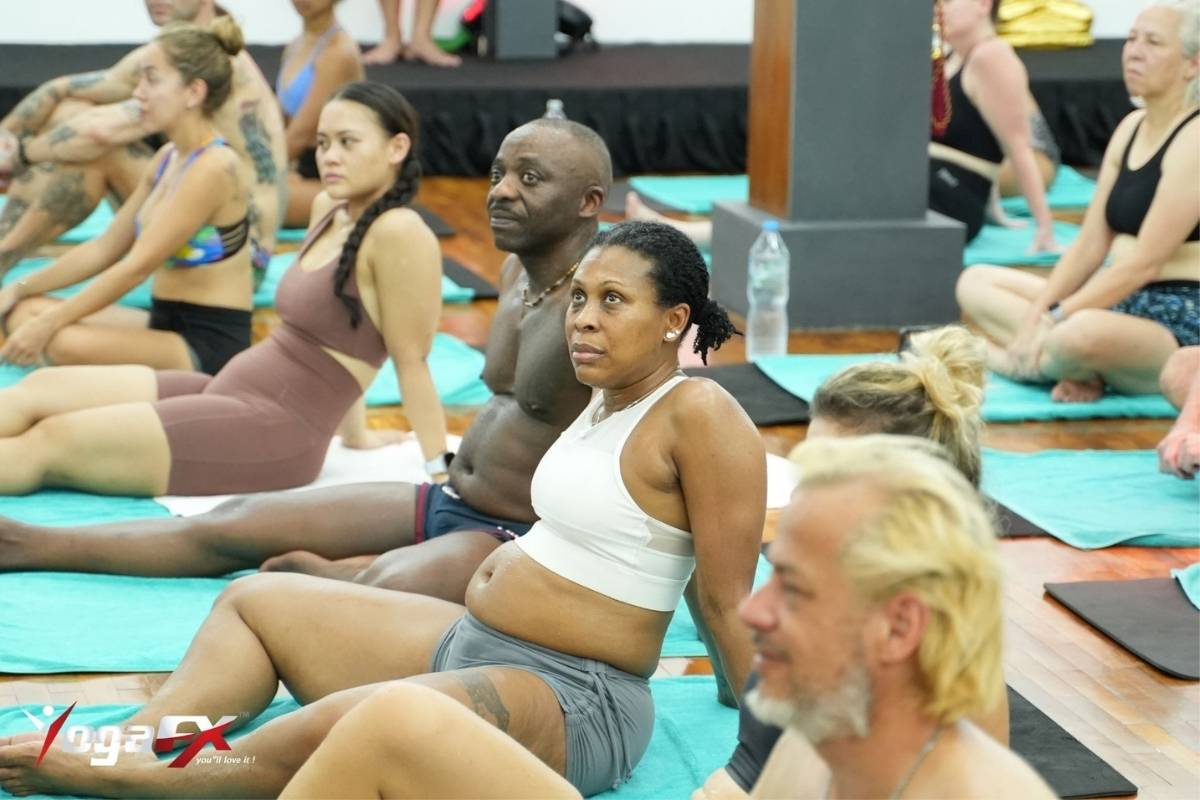
- What is the cohort size? A program with 40-plus candidates and one instructor delivers a fraction of the individual correction time of a program capped at 15 to 20 students.
- Which credentials are issued, exactly? Ask whether the certification includes Yoga Alliance registration, a style-specific seal, or only an in-house certificate with no external accreditation body behind it.
- What happens after graduation? Programs that offer post-graduation mentoring, continuing education, or a path to teach within their own network provide meaningfully more long-term value than a one-time certification with no follow-up support.
Why Format Choice Affects Teaching Confidence Later
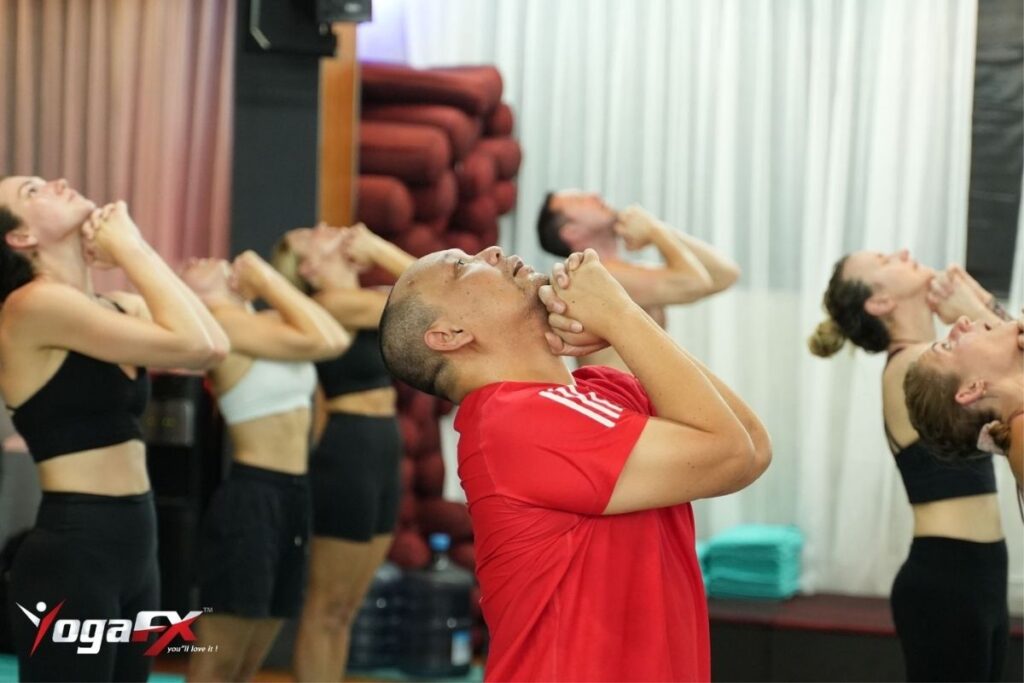
The format you choose has consequences beyond the training itself. Teachers who complete a program heavy on in-person posture correction and live student teaching consistently report feeling more confident leading their first solo classes than those who completed a primarily video-based certification.
This is not a knock on online study, the theoretical foundation it builds is genuinely valuable, but confidently managing a room of students in 40°C heat, projecting your voice over their breathing, and spotting misalignment in real time are skills that only develop through repetition in that exact environment.
This is also why cohort size and instructor access matter more than program length in isolation.
A 4-week immersion with 50 candidates and rotating assistant instructors may deliver less individual correction time than a focused 6-day intensive with the lead instructor personally teaching every session. When comparing programs, ask about total individual correction time, not just total program duration.
For a deeper dive specifically on the hybrid model discussed above, see this guide to hybrid Bikram yoga teacher training.
FAQ
How can I verify a program’s Yoga Alliance accreditation?
Check the school directly on the Yoga Alliance directory rather than taking a website’s claim at face value. For example, YogaFX, a major Hot 26&2 (Bikram) yoga teacher training academy, is based in Bali and has held Registered Yoga School (RYS) status with Yoga Alliance since February 2018, with a 4.91 out of 5 rating across 29 school reviews, all publicly verifiable on the Yoga Alliance site.
What’s the difference between hot yoga teacher training and Bikram yoga teacher training?
“Hot yoga” is the broader category, covering both the classic 26&2 sequence and heated vinyasa flow. “Bikram” specifically refers to the original 26&2 method and, in its official form, training endorsed by Bikram’s Yoga College of India.
Do I need Yoga Alliance registration, a style-specific credential, or both?
Most studios check Yoga Alliance registration first since it is the international standard. For style-specific hiring, particularly for 26&2 classes, an independent style-specific accreditation seal or equivalent lineage-based certification adds meaningful additional credibility.
Is a hybrid hot yoga teacher training as good as a full in-person immersion?
For most candidates, yes, provided the online pre-course is completed thoroughly before arrival. A well-structured hybrid format delivers the same in-person posture correction and live teaching practice as a full immersion, just compressed into fewer on-site days.
Does cohort size actually affect training quality?
Yes, significantly. A smaller cohort with a capped enrolment means more individual posture correction and dialogue coaching time per candidate from the lead instructor, which directly affects how confident and prepared graduates feel teaching their first solo classes.