

Hot yoga vs sauna comes down to effort. A sauna is passive heat: you sit at roughly 65-90°C for up to 20 minutes and let your heart rate climb. A hot yoga class is heat plus work: 90 minutes of 26 postures at about 40°C, so it also builds flexibility, strength and stamina.

So if you only have one hour in Bali and want the heat to do real physical work, book the class. If you want to rest sore legs after a surf, the sauna does that job well. The rest of this guide shows why, with the numbers behind it.
Hot Yoga vs Sauna: The Short Verdict
Hot yoga vs sauna is not a contest of temperatures. Both use heat, and both raise your heart rate. However, they ask very different things of your body. A sauna asks you to sit still. A hot yoga class asks you to move, balance, breathe and hold postures while the room stays hot.
In the hot yoga vs sauna debate, that difference shows up in almost every measure people care about. For example, calorie burn, flexibility and strength all favour the class, because muscles are working the whole time. Pure rest and a quick, low-effort heat session favour the sauna.
Hot yoga vs sauna side by side
| Factor | Hot yoga class (YogaFX Bali) | Traditional sauna | What it means for you |
|---|---|---|---|
| Room temperature | About 40°C (105°F) | About 65-90°C (150-195°F) | The sauna is hotter, but you stay in it far less time |
| Humidity | About 40%, from Bali’s tropical air | Dry in a Finnish sauna | Humid heat makes you sweat sooner and feels heavier |
| Session length | 90 minutes | Up to about 20 minutes | The class gives a much longer dose of heat |
| Effort | 26 postures and 2 breathing exercises | Sitting or lying still | Only the class trains muscles and joints |
| Average heart rate | About 80% of max (men) and 72% (women) | Rises as vessels widen | The class works as real cardio |
| Calories per session | About 460 (men) and 330 (women) | Very little, since you are not moving | Weight goals favour the class |
| Best use | Fitness, flexibility, focus | Rest and passive recovery | Many people use both on different days |
The sauna figures come from Harvard Health’s guide to regular sauna sessions, which puts most saunas between about 150°F and 195°F and describes the Finnish habit of sitting in for up to 20 minutes at a time.
What Happens Inside Your Body in Each
In a sauna, the heat does all the work. Your blood vessels widen, more blood flows to the skin, and your heart beats faster to keep up. Harvard Health describes exactly this response. As a result, a sauna can feel like a light workout even though no muscle is doing any real lifting.
In a hot yoga class, that same heat response sits on top of real exercise. You stand on one leg, fold forward, bend back and hold each shape for a set count. That means your heart is pumping for the heat and for the muscles at the same time.
What the heart-rate research shows
Researchers have measured this directly, and it’s the clearest hot yoga vs sauna data we have. In a study for the American Council on Exercise, a team at the University of Wisconsin-La Crosse put ingestible sensors in 20 regular practitioners during a standard 90-minute class at 105°F and 40% humidity. You can read the ACE summary of the core temperature study for the full method.
- Core temperature rose steadily for the whole 90 minutes in both men and women.
- Heart rate averaged about 80% of predicted maximum for men and 72% for women, with peaks of 92% and 85%.
- No participant showed signs of heat intolerance, although the researchers noted that the risk of heat illness rises once core temperature reaches about 104°F.
That’s why the hot yoga vs sauna choice isn’t really about heat. A class is not just “a sauna with stretching”. It is a full training session that also happens to be hot. In contrast, the sauna gives you the heat response with no training load at all. You don’t have to hold anything, and you won’t build muscle there.

One hour of heat, two very different workouts
40°C / 40%
Hot yoga room
Bali’s natural tropical heat, no electric heaters
65-90°C
Typical sauna
Hotter and drier, usually up to about 20 minutes
90 min
Class length
26 postures and 2 breathing exercises
80% / 72%
Average heart rate
Share of max for men and women in class
460 / 330
Calories per class
Average for men and women
0
Postures in a sauna
Heat only, no strength or flexibility work
Hot Yoga Benefits a Sauna Cannot Match
The biggest gap in the benefits of hot yoga vs sauna is training. Because a sauna has no movement, it cannot make you stronger or more flexible. A class can, and the research on the 26 and 2 sequence keeps pointing the same way.
Flexibility and strength
Colorado State University researcher Brian Tracy has studied this exact class format in several trials. According to the Colorado State University summary of the hot yoga research, participants gained flexibility in the spine, hamstrings and shoulders and improved whole-body strength.
A larger picture comes from a 2025 systematic review by Willmott and colleagues, which pooled 43 studies and 942 participants. It reported benefits for flexibility, bone density markers and well-being among people who practise this style regularly.
Calories and cardio
The same Colorado State team measured energy use during a 90-minute class. Men burned about 460 calories and women about 330, roughly the same as 90 minutes of brisk walking. A sauna, by contrast, burns very little, because you are sitting down. Our guide to how many calories a 90-minute hot class really burns goes into the detail.
Mood and focus
Both habits can leave you calmer. Still, the class has stronger mental health research behind it. In an 8-week trial at Massachusetts General Hospital (Nyer et al., 2023, Journal of Clinical Psychiatry), 59% of people in heated yoga classes saw their depression symptoms drop by half or more, against 6.3% on the waitlist.
A 2022 study by Hui and colleagues also found that a hot yoga session lowered state anxiety. These are promising results, not a treatment plan, so speak to a healthcare professional if you are managing anxiety or depression.
Where the Sauna Wins
The sauna isn’t the loser in the hot yoga vs sauna comparison. It simply does a different job, and it does that job with almost no effort from you. That makes it useful on rest days, after a long flight, or after a hard surf session at Canggu.
The strongest evidence comes from Finland. A 2018 review in Mayo Clinic Proceedings by Laukkanen, Laukkanen and Kunutsor linked regular sauna bathing with a lower risk of high blood pressure, cardiovascular disease and other conditions. The University of Bristol record of the sauna review lists the full abstract.
- Low effort. You can use a sauna when your legs are too tired for a full class.
- Short sessions. Harvard Health suggests beginners start with about five minutes, so it fits into a busy beach day.
- Possible heart benefits. The Mayo review points to better arterial function and blood pressure as likely reasons, although the authors flag open questions.
- Pure rest. There is no sequence to follow and no teacher to listen to, which some people need.
There are limits too. Harvard Health advises people with low blood pressure or certain heart conditions, such as heart failure or aortic stenosis, to be cautious. Leave straight away if you feel dizzy or lightheaded, and rehydrate after each session.
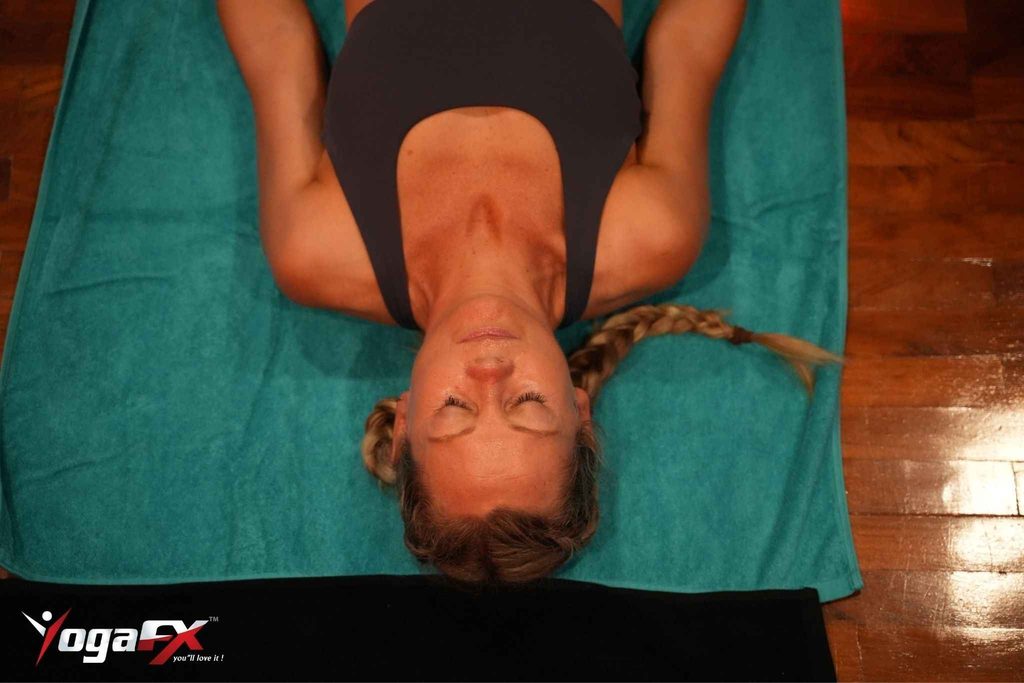
Hot Yoga vs Sauna for Men
Men often ask this question. Many already use a gym sauna at home and wonder if a hot class is “just more of the same”. The research says it is not, and it also shows that men feel the class differently.
In the ACE study above, men’s core temperature peaked higher than women’s, at an average of 103.2°F against 102.0°F. Their average heart rate was also higher, at about 80% of maximum compared with 72%. One man reached 104.1°F. In other words, the class asked more of the men’s bodies than of the women’s.
That extra load has an upside. Men in the Colorado State measurements burned about 460 calories per class, the highest figure in the study. However, it also means men should respect the heat more, especially in their first week. Here is what we tell new male students:
- Drink more than you think the day before class, not just the hour before.
- Skip the pre-class sauna. Arriving already hot cuts your margin before the floor series even starts.
- Sit down when you need to. Kneeling on your towel for a set is normal, and it keeps you in the room.
- Expect tight hamstrings to show. The forward folds are where most men feel the gap, so work at your own depth.
So if you’re a man weighing hot yoga vs sauna, the sauna is the easy option and the class is the training option. For a deeper look at why the heat and the folds feel harder, read our guide to whether hot yoga is harder for men.

Why Bali’s Natural Heat Changes the Comparison
Most online hot yoga vs sauna comparisons assume a studio warmed by electric heaters in a cold city. Bali is different. Our Seminyak and Canggu studios reach about 40°C and 40% humidity using the island’s own tropical climate, with no electric heaters in the room.
Humid air changes how heat feels. Your sweat evaporates more slowly, so you feel warm sooner than you would in a dry room at the same temperature. That is the opposite of a Finnish sauna, which Harvard Health describes as very hot and dry. As a result, the Bali class feels closer to working inside a warm tropical afternoon than sitting in a wooden box.
Mr. Ian Terry, E-RYT 500 and founder of YogaFX, built the studios around this idea. He has taught for more than 12,000 hours and trained over 1,500 graduates from 80+ countries. His view is simple: a sauna warms you from the outside, while a class in Bali’s heat asks you to build the warmth from the inside, through the postures and the breath.
If you want the full story of how natural heat works, our guide to practising yoga in Bali’s natural heat without electric heaters explains what you will feel in your first few classes.

Can You Do Hot Yoga and Sauna on the Same Day?
Yes, for most healthy people, but the order matters. A long sauna right before a 90-minute class stacks two big heat loads back to back. Since the ACE data shows core temperature climbing for the whole class, starting warm leaves you less room before you feel lightheaded.
- Take the class first, while your body is cool and fresh.
- Rehydrate with water and electrolytes for at least 30 minutes after class.
- Keep the sauna short, around five to ten minutes, if you still want it.
- Stop at once if you feel dizzy, sick or unusually tired.
Bali’s humidity adds one more factor. You are already sweating on the walk to the studio, so you start the day with less fluid than you would in a cooler city. Our guide on hot yoga safety and side effects covers who should check with a doctor first, such as people with heart conditions or who are pregnant.
Bikram Yoga vs Sauna, Infrared Sauna and Steam Room
People searching for bikram yoga vs sauna often mean a specific kind of heat. The type changes the comparison, so it’s worth knowing the main options before you choose. Harvard Health gives these typical ranges:
- Finnish dry sauna: around 175°F (about 80°C) and very dry air.
- Infrared sauna: usually 120-140°F (about 49-60°C), warming the body with infrared lamps rather than hot air.
- Steam room: usually around 120°F (about 49°C), but so humid it feels much warmer.
- Original Hot 26&2 class in Bali: about 40°C (105°F) and 40% humidity, with 90 minutes of work.
Notice that a steam room and the Bali studio share one thing: humidity. Humid heat slows the cooling effect of sweat, so dehydration can creep up faster than you expect. Whichever you choose, drink water before and after, and add electrolytes on long or hot days.
An infrared sauna is the gentlest of the four on paper. Even so, none of the sauna types add strength or flexibility work, so the core hot yoga vs sauna trade-off stays the same.
Which One Should You Choose?
The honest answer to hot yoga vs sauna depends on your goal for that hour. Here is how we would decide, based on what students tell us at the Seminyak and Canggu studios.
- You want to get fitter or lose weight: choose the class. It trains muscles and burns several hundred calories.
- You want to loosen tight hips and hamstrings: choose the class, because only movement changes your range of motion.
- You are sore and need to rest: choose the sauna, or a gentle walk and a long swim.
- You want a calmer mind: both help, but the class has stronger research behind it.
- You live in Bali long-term: use both. Some long-term students take several classes a week and use a sauna on rest days.
One myth needs clearing up. Neither option removes toxins through sweat, whatever you may read about hot yoga vs sauna online. Sweat is mostly water and salt, and your liver and kidneys do the real filtering. So pick the habit for what it actually does, not for a promise it can’t keep.
What Students Say After Choosing the Heat
A sauna rarely changes how someone sees their own body. A regular practice often does. These two students went further than a drop-in class and trained with Mr. Ian, but the theme matches what we hear from everyday members.
“It actually changed me. It changed my brain, changed my mind, changed my body, changed my future.”
Erick, YouTube review, 2024
Anyone who loves yoga should come and do this, because it brings passion into your own life. (close paraphrase)
Stephanie, YouTube review, 2019
Notice what they describe, because it sums up hot yoga vs sauna. It is not the heat alone, which a sauna also gives you. Instead, it is the change that comes from working inside the heat, day after day, with a teacher guiding each posture.
Try the Heat Yourself at YogaFX Bali
Reading about hot yoga vs sauna only goes so far. The quickest way to settle hot yoga vs sauna for your own body is one class. YogaFX runs the original 90-minute Hot 26&2 class at both Seminyak and Canggu, and the studios are open from 06:00 to 22:00 every day.
- Free Guest Pass for your first visit, so you can compare it with your usual sauna at no cost.
- Natural heat at about 40°C and 40% humidity, with no electric heaters.
- A scripted dialogue with no music and no demonstrations, so you can focus on your own body.
- Memberships for expats and digital nomads who want a weekly routine.
Check our drop-in class schedule and pricing in Seminyak and Canggu to plan your first visit, then claim your Free Guest Pass at the front desk.
FAQ
Is hot yoga the same as a sauna?
No. Both use heat, but a sauna is passive rest at about 65-90°C for up to 20 minutes. A hot yoga class runs for 90 minutes at about 40°C and adds 26 postures and 2 breathing exercises. That makes the class a full workout, while the sauna stays a recovery tool you can use on rest days.
Is hot yoga or sauna better?
It depends on your goal. For fitness, flexibility, strength and calorie burn, hot yoga is better because your muscles work the whole time. For rest on a sore day, a sauna is better because it asks almost nothing of you. Many long-term students in Bali use both on different days.
What is the temperature in hot yoga vs a sauna?
A hot yoga room is usually around 40°C (105°F). At our Bali studios it sits near 40°C with about 40% humidity from the tropical air. Harvard Health puts most saunas between about 150°F and 195°F, roughly 65-90°C, and a Finnish sauna is also very dry, so the two heats feel quite different.
Can you do hot yoga and sauna on the same day?
Yes, most healthy people can, but take the class first. A long sauna before class stacks two heat loads and raises the chance of dizziness. After class, rehydrate with water and electrolytes, then keep any sauna short. Check with a doctor first if you have a heart condition or low blood pressure.
Does sweating in hot yoga remove toxins?
No. Sweat is mostly water and salt, and your liver and kidneys do the real filtering work. Neither hot yoga nor a sauna clears waste from your body through sweat. What a hot class does give you is real exercise, with average heart rates near 72-80% of maximum in research.
Still have questions? Message Mr. Ian and the YogaFX team on WhatsApp and we’ll answer them personally, or start with a Free Guest Pass and feel the difference yourself.
This article is general information, not medical advice. Please consult a healthcare professional before starting hot yoga or regular sauna use, especially if you are pregnant or have a heart condition, low blood pressure or another health concern.