
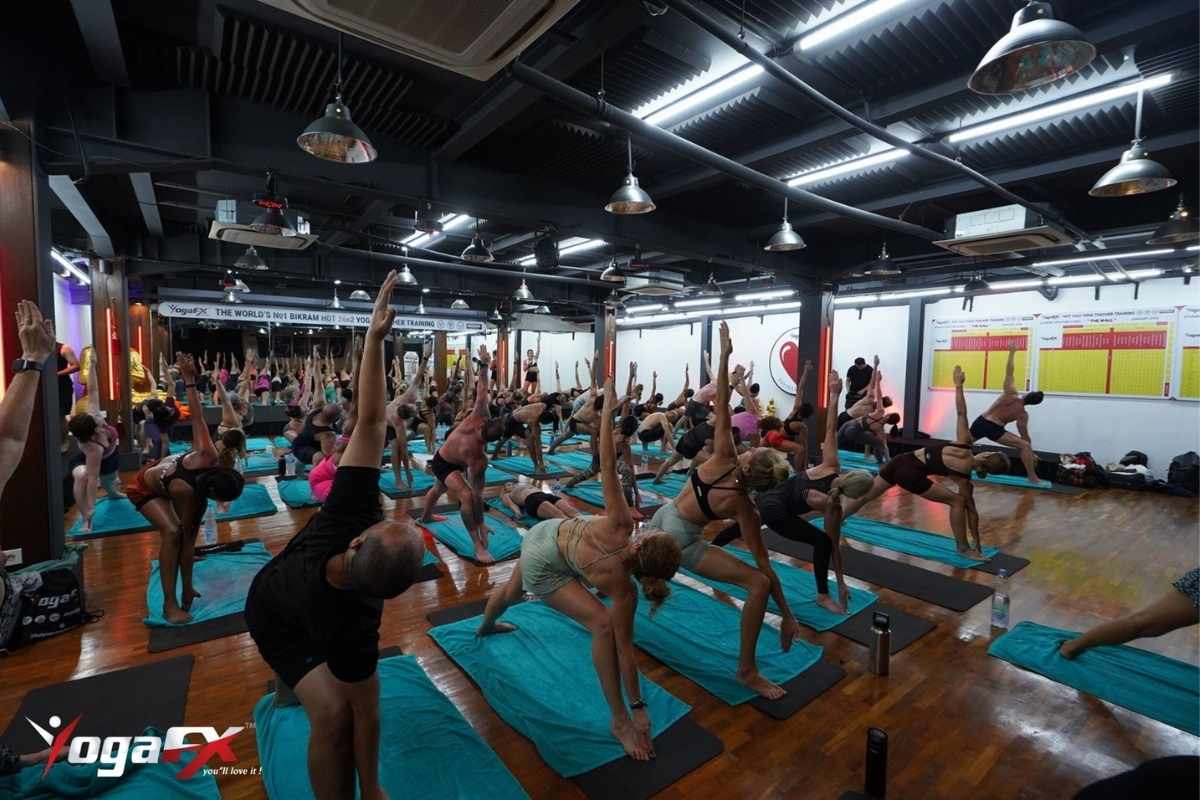
If you’re pregnant, trying to conceive, or practiced Bikram before finding out you were expecting, here’s the honest answer up front: major medical bodies including the American College of Obstetricians and Gynecologists (ACOG) and Mayo Clinic advise against hot yoga, including Bikram, during pregnancy.
The concern isn’t the postures themselves, it’s the heat. This article walks through why, what the research actually shows, and what’s generally considered a safer way to stay active while you’re expecting. None of this replaces a conversation with your own obstetrician or midwife, who knows your specific pregnancy and can give you guidance this article can’t.
Why Heat, Not the Postures, Is the Real Concern
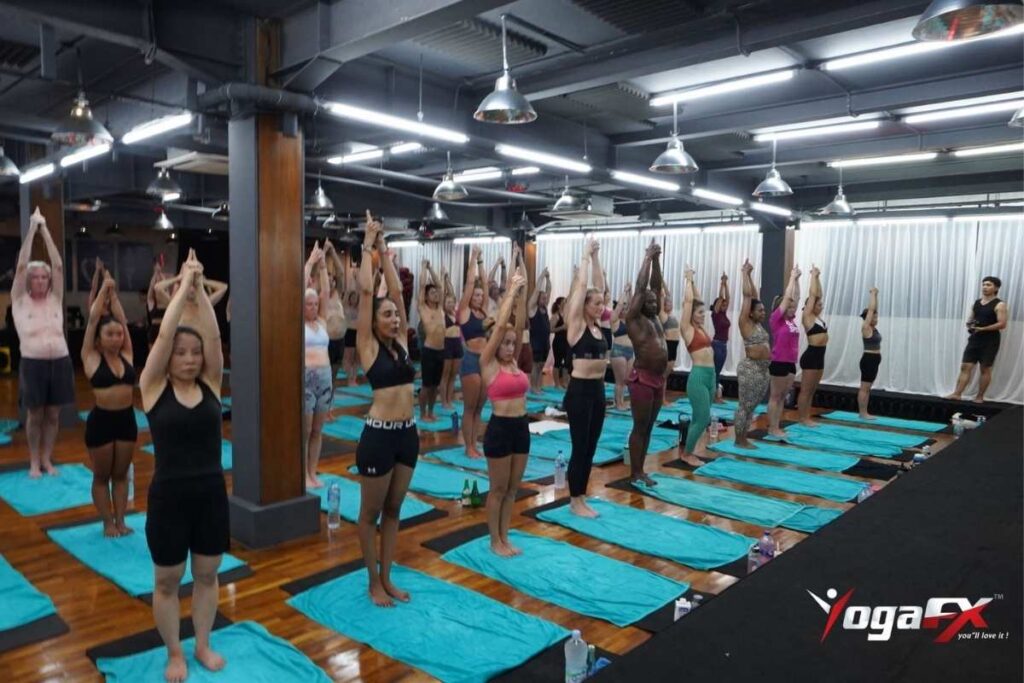
Bikram yoga is practiced in a room held at roughly 40°C with 40% humidity for 90 minutes. Outside of pregnancy, that heat is part of what makes the practice effective, supporting deeper stretching and a sustained cardiovascular load.
During pregnancy, the same heat becomes the primary safety question, because a pregnant woman’s core temperature is already running slightly higher than usual due to increased metabolic demand, and a hot, humid room adds directly on top of that.
ACOG’s guidance on physical activity during pregnancy specifically names hot yoga and hot Pilates as activities to avoid, citing the risk of becoming overheated. This sits alongside other heat-related advice pregnant women are commonly given, such as avoiding saunas and hot tubs, for the same underlying reason: sustained elevation in core body temperature is the concern, not any single style of exercise.
It’s worth being clear that ACOG’s stance on exercise during pregnancy overall is genuinely positive, not cautious across the board. Regular moderate activity throughout pregnancy is associated with better cardiovascular fitness, a reduced likelihood of excessive weight gain, and a lower chance of needing a caesarean delivery in otherwise uncomplicated pregnancies.
Hot yoga is a specific, named exception on an otherwise encouraging list, which is part of why the advice around heat exposure is worth taking seriously rather than treating as generic pregnancy over-caution.
What the Research Actually Shows
Maternal hyperthermia, meaning a sustained rise in core body temperature, is a recognised risk factor for certain fetal developmental issues, particularly during the first trimester when the neural tube is forming.
A widely cited 2005 systematic review and meta-analysis found that pregnant women who experienced hyperthermia had roughly double the risk of neural tube defects compared with those who didn’t, a finding summarised in a 2014 clinical brief in Canadian Family Physician that specifically addressed hot yoga (Chan, Natekar & Koren, 2014).
That brief noted something important: at the time, there were no published studies looking specifically at Bikram yoga outcomes in pregnant women. The caution comes from the broader hyperthermia literature (fevers, saunas, hot tubs) applied to a room that reaches similar temperatures, not from a body of research on Bikram classes themselves.
That gap is part of why the guidance is conservative rather than a comprehensive Bikram-specific evidence base like the one supporting general Bikram benefits. Where solid data does exist on hot yoga generally, the American Council on Exercise (ACE) funded a small preliminary study comparing core temperature changes between pregnant and non-pregnant women during a 60-minute hot yoga class.
The pregnant participants in that study showed smaller core temperature increases than the non-pregnant group, which the researchers noted as a reason it might be reasonable for women with uncomplicated pregnancies, who were already practicing hot yoga before conceiving, to continue with adequate hydration.
But the sample size was tiny (four pregnant participants), the room was less extreme than a true Bikram class, and the study’s own authors were explicit that its findings shouldn’t override guidance from a woman’s own obstetric care provider.
If You Practiced Bikram Before You Knew You Were Pregnant
This comes up often enough that it’s worth addressing directly. Many pregnancies aren’t confirmed until four to six weeks in, which means it’s common for someone to have attended one or several hot yoga classes before finding out.
A single class, on its own, is not the same thing as sustained repeated exposure, and this is exactly the kind of situation where the right next step is a conversation with your doctor or midwife rather than searching for a general answer online. They can look at your specific timing, your health history, and your pregnancy and give you guidance that a website can’t.
Going forward, the general guidance is straightforward: once pregnancy is confirmed, it’s worth pausing Bikram or any hot yoga practice and asking your care provider what activity level and heat exposure is appropriate for you specifically, especially through the first trimester.
If you do find yourself in a heated room before you realise you’re pregnant, general signs of overheating worth knowing for any hot-weather activity during pregnancy include dizziness, a racing heartbeat, nausea, or feeling unusually flushed and unable to cool down.
If any of these occur, the standard advice is to stop, move to a cooler space, hydrate, and contact your healthcare provider if symptoms don’t settle quickly.
What About Practicing While Trying to Conceive?
This question comes up almost as often as the pregnancy question itself, and the honest answer is that the evidence here is much thinner than it is for confirmed pregnancy.
The hyperthermia and neural tube defect research discussed above applies specifically to the period after conception, particularly the first several weeks when the neural tube is forming, not to general fertility. There isn’t strong published evidence that regular Bikram practice while trying to conceive reduces fertility for either partner.
That said, because early pregnancy often isn’t confirmed until four to six weeks along, some people trying to conceive choose to be more cautious with heat exposure during the two-week window between ovulation and a possible missed period, simply to avoid the uncertainty of practicing hot yoga during an early pregnancy they don’t yet know about.
This is a personal decision rather than a firm medical rule, and it’s worth raising with your doctor if you’re actively trying to conceive and want a clearer answer for your specific situation.
Safer Ways to Stay Active While You’re Expecting
ACOG’s broader exercise guidance for pregnancy is actually encouraging: moderate activity is recommended throughout most pregnancies, roughly 150 minutes a week for someone with an otherwise uncomplicated pregnancy, and yoga itself remains on the list of generally appropriate options, just not the heated version.
Prenatal-specific yoga classes, taught by instructors trained in pregnancy modifications, are widely available and are built around exactly the changes pregnancy brings: avoiding deep twists and prolonged time on your back, using props to accommodate a shifting centre of gravity, and working at room temperature rather than a heated one.
Walking, swimming, and stationary cycling are also commonly recommended, and each has a practical advantage worth knowing. Swimming in particular tends to feel comfortable through the second and third trimesters because the water supports the extra weight and keeps core temperature stable rather than raising it.
If you were already an experienced runner, jogger, or racquet-sports player before pregnancy, ACOG notes that continuing these activities at a reduced intensity may be appropriate, again in discussion with your own provider.
What’s consistent across all of these options is that they let you stay active without the heat exposure that makes hot yoga a specific exception on ACOG’s list, alongside contact sports and activities with a high fall risk.
If you’re staying in Bali and looking for something to do while your regular Bikram practice is on pause, this is a good moment to explore the wider yoga scene across the island, much of which runs at room temperature and includes prenatal-appropriate styles.
Coming Back to Bikram After Pregnancy

Once you’ve had medical clearance to resume normal exercise, generally around six weeks postpartum for a vaginal delivery and longer after a caesarean, but always confirmed with your own provider first, returning to Bikram is something many practitioners do.
The first-class experience is worth revisiting even if you’re an experienced practitioner, since your body’s relationship with heat, flexibility, and endurance may feel different in the months after giving birth than it did before.
Mr. Ian Terry, E-RYT 500 and founder of YogaFX, has taught more than 12,000 hours across a wide range of student circumstances, and the studio’s approach when a student is easing back into practice after any extended break, pregnancy included, is the same: start slower than you think you need to, hydrate more than usual, and treat the first few classes back as a recalibration rather than picking up exactly where you left off.
If you have any questions about timing your return, the studio’s instructors in Seminyak or Canggu are happy to talk it through before you book a class.
FAQ
Is Bikram yoga safe during pregnancy?
Major medical bodies including ACOG and Mayo Clinic generally advise against hot yoga, including Bikram, during pregnancy due to the risk of overheating. This isn’t about the postures themselves but the sustained heat exposure. Always confirm with your own obstetrician or midwife, since individual pregnancies vary.
What if I did a hot yoga class before I knew I was pregnant?
A single class before pregnancy was confirmed is different from sustained repeated exposure. This is a situation to discuss directly with your doctor or midwife, who can consider your specific timing and health history rather than relying on general guidance.
What type of yoga is considered safe during pregnancy?
Prenatal-specific yoga classes taught by instructors trained in pregnancy modifications are generally considered appropriate, run at room temperature, and avoid deep twists, prolonged time lying on your back, and poses that risk falls. Confirm any exercise plan with your care provider first.
Can I do Bikram yoga in the first trimester specifically?
The first trimester is generally considered the period of highest concern regarding heat exposure, since it’s when the neural tube is forming. Medical guidance generally recommends avoiding hot yoga throughout pregnancy, with particular caution in the first trimester. Speak with your doctor about your specific situation.
When can I return to Bikram yoga after giving birth?
Timing depends on your delivery and recovery, and should be confirmed with your own provider before resuming, generally around six weeks postpartum at the earliest for a straightforward vaginal delivery and longer after a caesarean. Once cleared, easing back in gradually is recommended over resuming at your previous intensity.
This article is for general information only and is not a substitute for medical advice. Please consult your obstetrician, midwife, or another qualified healthcare provider before making any exercise decisions during pregnancy or postpartum recovery.