
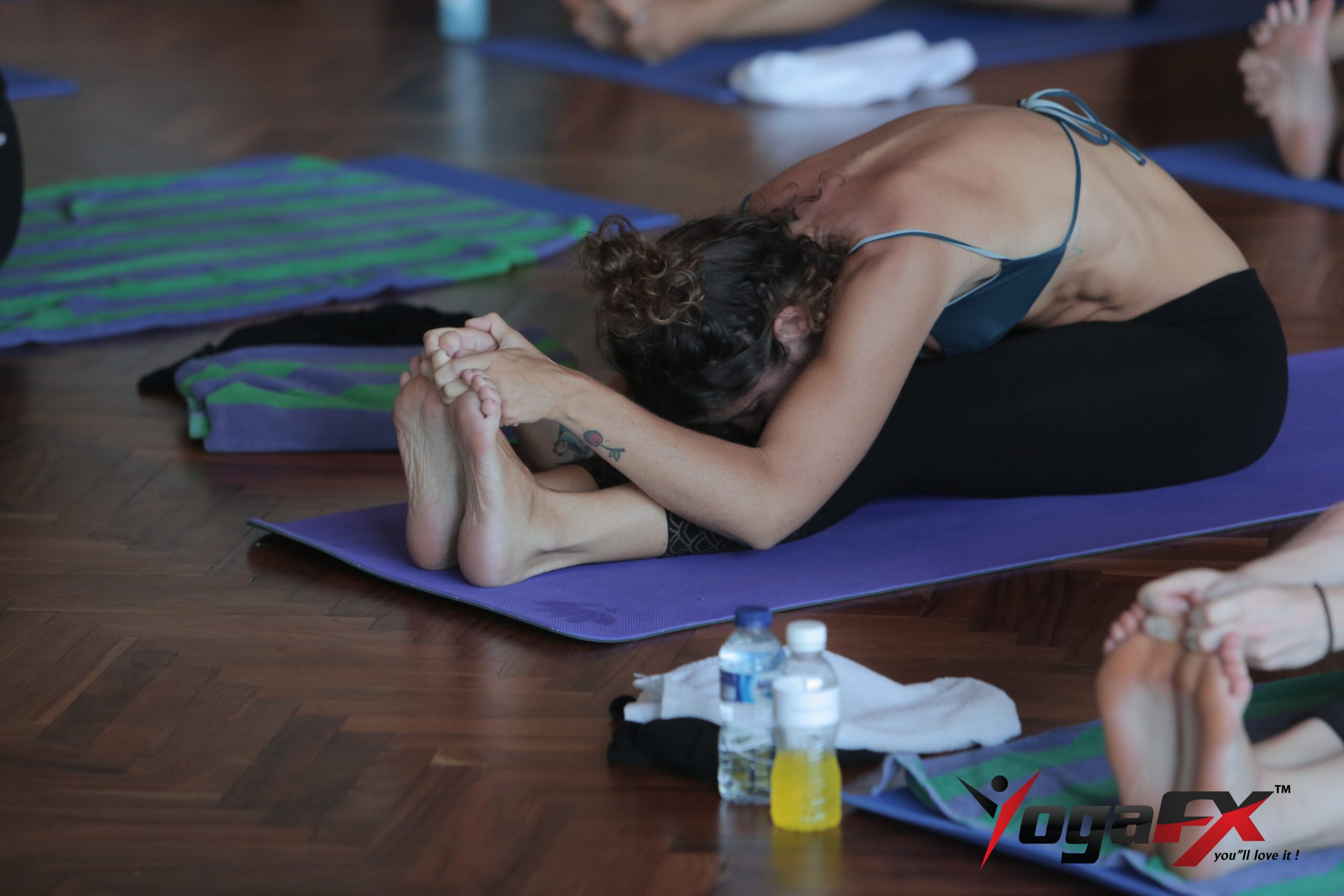
Every hot yoga studio in the UK, USA, Australia, and Europe uses electric heaters. Without them, the room would not reach 40°C. This is accepted as standard — so standard, in fact, that most hot yoga practitioners have never experienced the practice in any other environment.
At Bikram YogaFX Bali, there are no electric heaters. At either the Seminyak or Canggu studio. The heat in both locations is entirely natural — Bali’s own tropical climate. This is not a marketing position.
It is a physiological distinction with measurable consequences for how the practice feels, how it performs, and what it delivers. For the exact temperature and humidity numbers behind that distinction, see our guide on how hot Bikram yoga actually is.
This guide explains the science of natural heat versus electric heat, why the difference matters for every benefit hot yoga is supposed to produce, and why Bali is the only place in the world where this practice is available naturally, year-round, without any artificial intervention.
Natural tropical heat — the kind available in Bali and used at Bikram YogaFX Bali — produces humid warmth at 40°C with high ambient moisture. Electric-heated yoga studios produce dry heat at the same temperature but with relative humidity as low as 20–30%. The physiological difference is significant: humid heat enables more efficient thermoregulation, more sustained cardiovascular demand, more effective connective tissue warming, and a more comfortable practice environment. Bali’s natural heat is the environment Bikram yoga was specifically designed for.
The Problem with Electric Heat in Yoga Studios
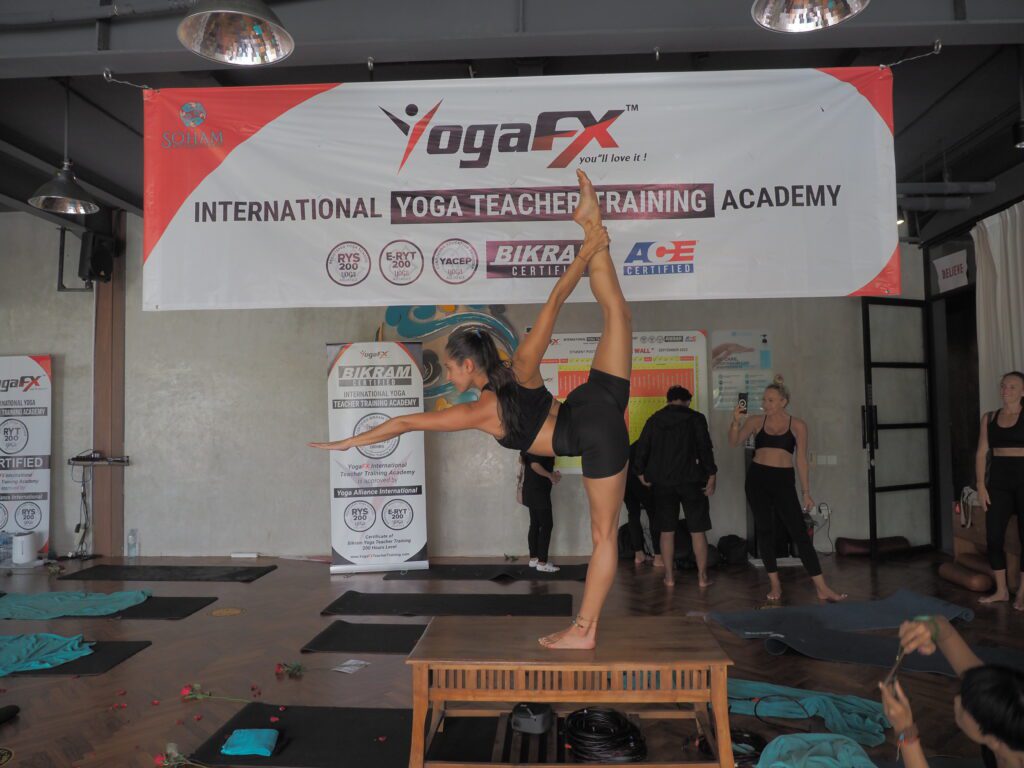
When a yoga studio in London, Sydney, or New York wants to offer hot yoga, it installs electric panel heaters, infrared heaters, or forced-air heating systems. These systems can raise room temperature to 40°C — but they do something else simultaneously: they reduce relative humidity.
Warm air holds more moisture than cool air, but electric heating systems do not add moisture — they simply heat the existing air. As the temperature rises, the relative humidity drops. In a typical electrically heated yoga studio, relative humidity falls to 20–30% as the room reaches 40°C. This is dry heat — the same experience as a dry sauna, not a steam room.
Bikram Choudhury developed the 26&2 sequence in Calcutta, India — a tropical city where summer heat reaches 40°C with relative humidity of 60–80%. The method was designed for humid heat. When studios replicate the temperature but not the humidity, they are delivering an approximation of the original environment — not the environment itself.
This distinction is also part of why “Bikram yoga” and “hot yoga” get used so loosely as interchangeable terms; see our full Bikram yoga vs hot yoga comparison for the complete picture.
The Physiology: What Humid Heat Does That Dry Heat Does Not
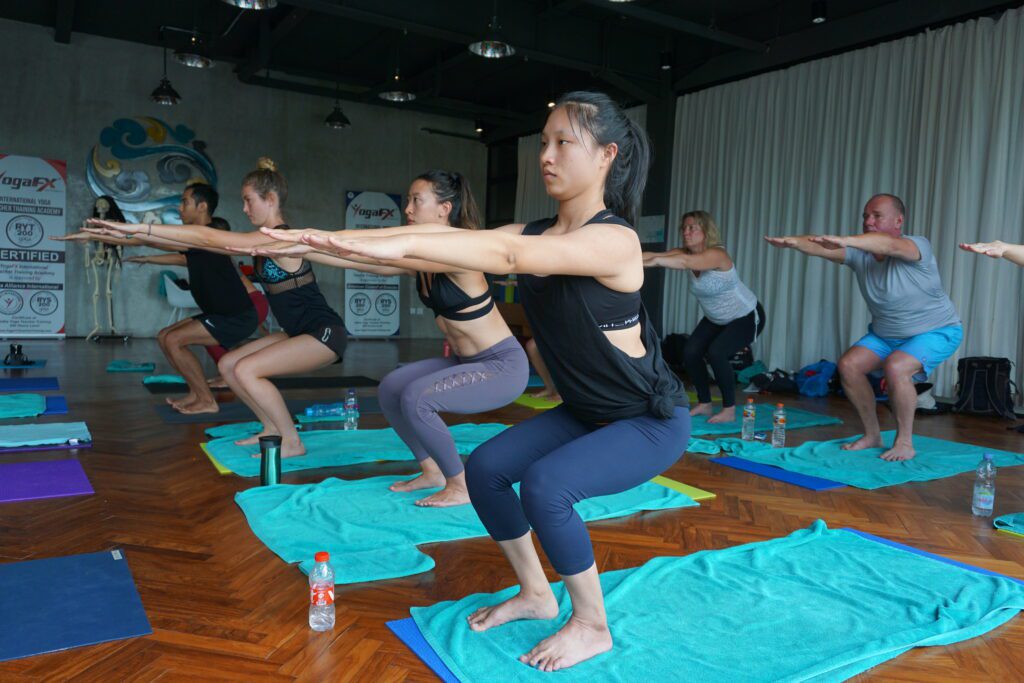
1. More Efficient Thermoregulation
The human body regulates core temperature primarily through sweating. When sweat evaporates from the skin, it carries heat away from the body — cooling it. In dry heat (low humidity), sweat evaporates rapidly, which triggers the body to produce more sweat to compensate. This accelerates dehydration and can cause early fatigue before the muscles are adequately warm.
In humid heat (high humidity), sweat evaporates more slowly. The body can sustain cooling at a lower sweat rate, which means hydration is maintained longer and the muscles receive sustained warmth rather than the spike-and-drop cycle of dry-heat thermoregulation. The cardiovascular demand is more even and sustainable — which is precisely what the Bikram sequence is designed to use.
2. More Effective Connective Tissue Warming
Tendons, ligaments, and fascia — the connective tissue that determines flexibility and joint mobility — warm more evenly in humid heat than in dry heat. The gradual, sustained warmth of humid tropical heat allows collagen and elastin to reach optimal extensibility without the surface dehydration that dry heat causes.
This is why practitioners consistently report deeper posture access in natural Bali heat than in electrically heated studios at the same temperature. Standing Bow Pulling Pose, Fixed Firm, and the floor backbend series all require connective tissue flexibility that is more readily available in humid heat — not because the practitioners are more capable, but because their tissue is more responsive.
3. Better Respiratory Comfort
Inhaling dry heated air at 40°C is physiologically uncomfortable — it dehydrates the mucous membranes of the respiratory tract and can trigger coughing, throat irritation, and reduced breath depth. This is one of the most common complaints from first-time hot yoga practitioners in electrically heated studios.
Natural humid heat at 40°C is easier to breathe. The moisture in the air maintains respiratory comfort, allowing practitioners to follow the Bikram breathing instructions — full deep breaths throughout the standing series — without the discomfort of dry air inhalation. This is particularly significant for the opening Pranayama exercise and for the sustained cardiovascular work of the standing series.
4. Sustained Cardiovascular Demand
The University of Wisconsin 2014 study measured cardiovascular demand during Bikram yoga at an average of 80% maximum heart rate throughout a 90-minute session. This sustained demand — equivalent to moderate cycling — is one of the primary mechanisms through which hot yoga produces cardiovascular fitness improvements.
In dry heat, the body’s thermoregulatory system works harder in short bursts to compensate for rapid sweat evaporation, then struggles to maintain optimal core temperature. This creates an uneven cardiovascular profile. In humid heat, thermoregulation is more efficient and continuous — the cardiovascular demand is sustained and even, which is what produces the training adaptation documented in the research.
Why Bali Is Uniquely Positioned for Natural Heat Yoga
The natural tropical heat condition required for authentic Bikram yoga exists in very few places permanently. Calcutta, Bangkok, Mumbai, Kuala Lumpur — cities at low latitudes with year-round tropical climates. Among these, Bali occupies a specific position: a globally recognised wellness destination with a mature yoga infrastructure, accessible from every major international market, where the required climate is present 365 days a year.
| Location | Hot Yoga Heat Source | Humidity at 40°C |
|---|---|---|
| London, UK | Electric panel heaters | ~20–25% (dry heat) |
| Sydney, Australia | Electric heaters | ~20–25% (dry heat) |
| New York, USA | Electric / infrared heaters | ~20–25% (dry heat) |
| Bangkok, Thailand | Natural ambient + some electric | ~55–70% (humid) |
| Bali, Indonesia (YogaFX) | ALL-NATURAL — zero electric heaters | ~70%+ (original conditions) |
For practitioners traveling from temperate countries, practicing hot yoga in Bali is the first time they experience the method in the environment it was designed for. This is consistently described as a revelation — not because the practice is fundamentally different, but because the natural heat makes every aspect of it more effective and more comfortable simultaneously.
The Environmental Dimension: Why No Electric Heaters Also Matters Ethically
Electric yoga heaters are significant energy consumers. A typical hot yoga studio running 5–6 sessions per day in an electrically heated room consumes between 50 and 150 kWh of electricity per day — depending on room size, insulation, and system efficiency. Over a year, a single hot yoga studio may consume 18,000–55,000 kWh of electricity purely for heating.
At Bikram YogaFX Bali, this energy consumption is zero. The natural heat is free, renewable, and permanent — the climate provides exactly what the practice requires without any electrical infrastructure. This is not a marginal environmental benefit; it is the complete elimination of the largest single energy demand in a typical hot yoga studio operation.
For practitioners who care about the environmental footprint of their wellness choices — an increasingly important consideration in 2026 — practicing at YogaFX Bali is not a compromise between environmental and practice quality. It is both the most effective and the most sustainable hot yoga option available.
What Practicing in Natural Heat Feels Like vs Electric Heat
Practitioners who have experienced both environments consistently report specific differences. Based on direct student feedback at YogaFX Bali:
| Experience Dimension | Electric-Heated Studio | YogaFX Bali Natural Heat |
|---|---|---|
| First breath in the room | Dry, sometimes throat-irritating | Warm and moist — easier to breathe |
| Sweat onset | Rapid — often before first posture | Gradual — builds with physical demand |
| Flexibility access | Good — but dry-heat tight spots | Deeper — connective tissue warms evenly |
| Energy through class | Peaks and dips — dehydration risk | More sustained — thermoregulation efficient |
| Post-class feeling | Drained, sometimes headache | Tired but clear — ‘Bikram glow’ |
| Hydration demand | Very high — rapid sweat loss | High but sustainable — gradual loss |
📍 YogaFX Bali — The Natural Heat Studios
- Seminyak Studio: All-natural Bali heat — zero electric heaters
- Canggu Studio: All-natural Bali heat — zero electric heaters
- Heat condition: ~40°C with natural tropical humidity — year-round
- Environmental footprint: Zero electricity for heating at both studios
- Method: Original Bikram 26&2 sequence — designed for exactly this environment
- Class formats: 60-minute and 90-minute daily at both locations
- First class: Free 1-Day Guest Pass — claim via WhatsApp
FAQ
Why doesn’t YogaFX Bali use electric heaters?
Because Bali’s natural tropical climate already provides the heat and humidity conditions that Bikram yoga was designed for — approximately 40°C with high ambient moisture. Using electric heaters would add energy consumption, produce dry heat instead of humid heat, and deliver an inferior practice environment compared to what the natural climate provides for free. The absence of electric heaters at YogaFX is both a physiological and environmental choice.
Is natural heat yoga safer than electric heat yoga?
Natural humid heat is generally more comfortable and physiologically sustainable than dry electric heat for most practitioners. The respiratory comfort is better, the thermoregulation is more efficient, and the dehydration risk is lower. Both environments require appropriate preparation — heavy pre-hydration, arriving early to acclimatise, and resting when needed. Practitioners with cardiovascular conditions should consult a doctor before practicing in any heated environment.
Does natural heat yoga produce better results than electric heat?
The research on Bikram yoga was conducted in controlled hot environments meeting the original specifications — 40°C with approximately 40% humidity. Bali’s natural climate closely matches these conditions; electric-heated studios typically produce lower humidity. Based on the physiological mechanisms — more efficient thermoregulation, better connective tissue warming, more sustained cardiovascular demand — natural humid heat is more consistent with the research conditions than dry electric heat. Whether practitioners experience measurably different outcomes depends on individual physiology, but the environmental conditions are objectively closer to optimal at YogaFX Bali.
Is hot yoga in natural heat available outside Bali?
Natural tropical heat conditions equivalent to Bali’s are available in a small number of cities globally — primarily at low latitudes in Southeast Asia and South Asia. However, the combination of natural heat conditions with an authentic Bikram 26&2 studio led by an instructor with direct Bikram Choudhury lineage is exceptionally rare. YogaFX Bali’s combination of natural environment, authentic methodology, and credentialed instruction is effectively unique among accessible wellness destinations.
What should I bring to a natural heat hot yoga class?
The preparation is the same as any hot yoga class: a minimum of 1 litre of water (pre-hydrate heavily throughout the day before class), a yoga mat, a large towel, and minimal close-fitting clothing. The natural humid heat produces sustained sweating throughout the session — the towel and adequate water are essential. Arrive at least 15 minutes early to begin acclimatising before the class starts.