
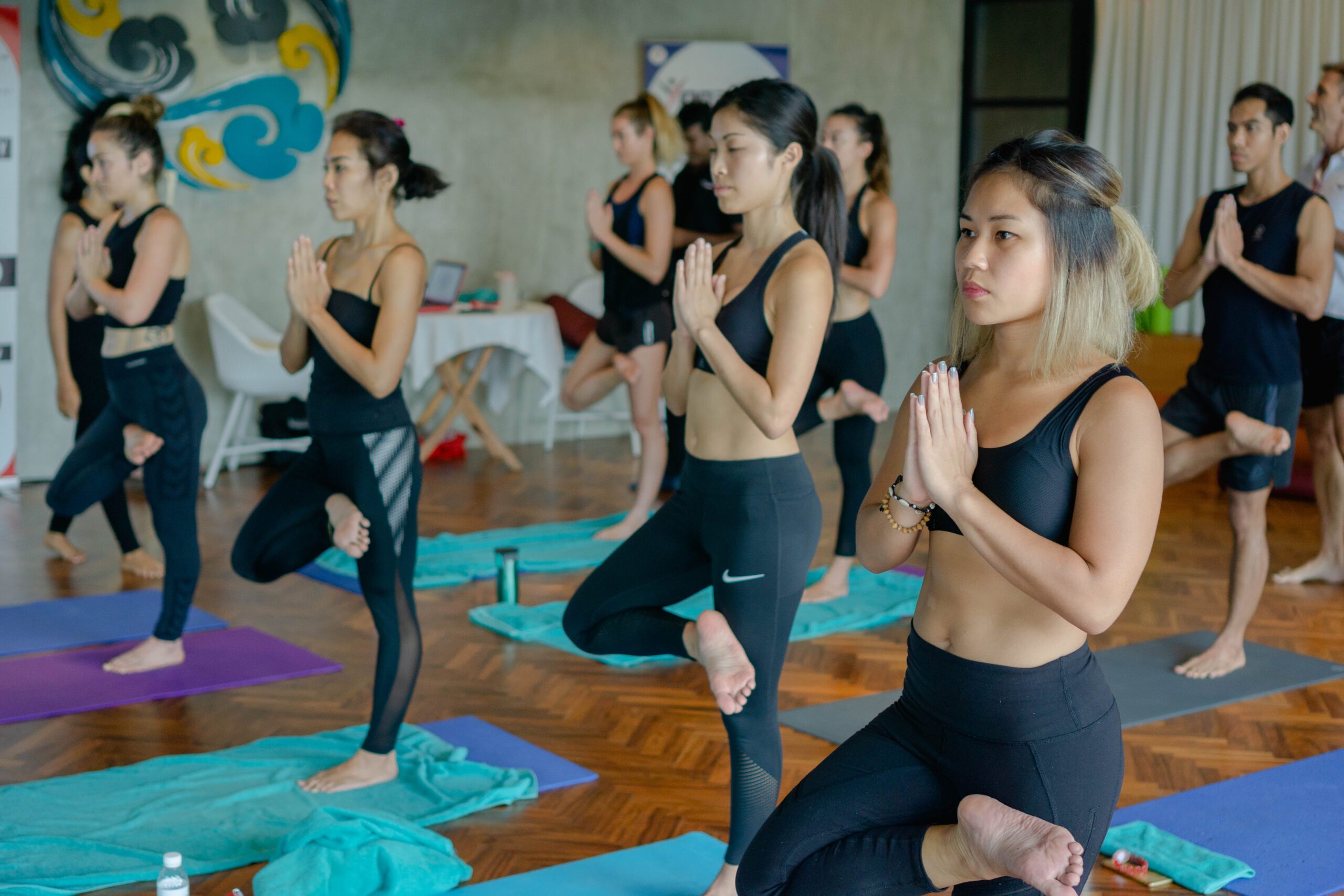
Bali offers both. The island’s studio scene spans traditional Hatha and Ashtanga in open-air Ubud shalas, dynamic Vinyasa flows in Canggu’s rooftop studios, and authentic Bikram hot yoga in natural tropical heat in Seminyak and Canggu. The question is not which is better in absolute terms – it is which delivers the outcomes you are looking for.

This guide compares hot yoga and regular yoga across the dimensions that actually matter: physiological outcomes, calorie burn, flexibility gains, mental health effects, accessibility for beginners, and the specific conditions in Bali that make the comparison different from anywhere else in the world.
Hot yoga and regular yoga both deliver measurable health benefits – but they work differently and produce different outcomes. Hot yoga in natural Bali heat burns about 333 calories for women and 460 for men per 90-minute session, produces stronger cardiovascular and thermoregulatory demand, and has documented effects on depression in peer-reviewed research. Regular yoga at room temperature produces excellent flexibility, strength, and mindfulness outcomes with lower physiological intensity. The right choice depends on your specific goals.
The Core Difference: Heat Changes the Physiology
The fundamental difference between hot yoga and regular yoga is not difficulty – it is physiology. Heat changes what the body can do and how it responds to movement.
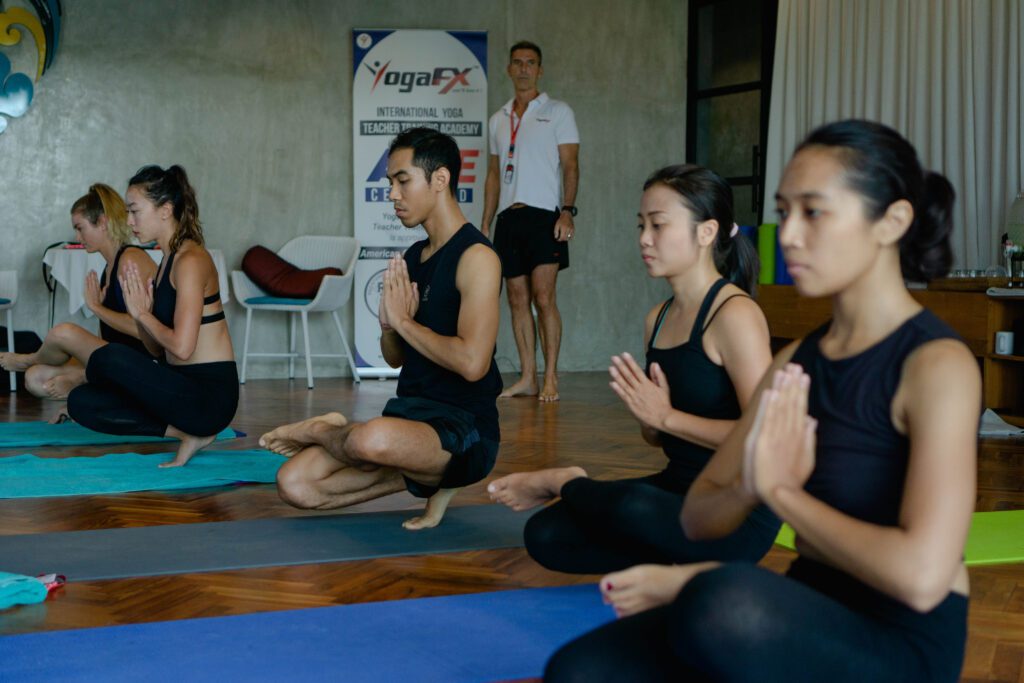
In a room at 40°C with natural tropical humidity – the environment at Bikram YogaFX Bali – the body’s thermoregulatory system activates fully from the first posture. Core temperature rises, blood vessels dilate, and the cardiovascular system works to maintain safe operating temperature. This cardiovascular demand is absent in a room-temperature practice, regardless of how demanding the movement sequence is.
The heat also changes the mechanical properties of connective tissue. Collagen and elastin – the proteins that make up tendons, ligaments, and fascia – become more extensible at elevated temperatures. This allows deeper ranges of motion with lower injury risk than the same movements attempted at room temperature. Postures that might take months to achieve in a cold studio become accessible within weeks in consistent hot yoga practice.
Comparing Outcomes: Hot Yoga vs Regular Yoga
| Outcome | Hot Yoga (Bikram 26&2) | Regular Yoga (Vinyasa/Hatha) |
|---|---|---|
| Calorie burn (90 min) | About 333 kcal (women) to 460 kcal (men), Porcari 2014 | 200–400 kcal (varies by style) |
| Cardiovascular demand | High – sustained at ~80% max HR | Low to moderate – varies by style |
| Flexibility improvement | Accelerated by heat | Gradual – requires consistent practice |
| Strength building | High – 20% deadlift increase (8 wks) | Moderate – varies by style |
| Mental health impact | Documented – 59% halved depression symptoms in 8 weeks (Harvard MGH 2023) | Significant – broad mindfulness research |
| Progress measurability | High – fixed sequence, visible gains | Lower – variable sequences |
| Beginner accessibility | High – fixed, verbally guided | Varies – some styles intimidating |
| Hydration requirement | High – 1L+ per session essential | Moderate – standard hydration |
| Spiritual / ritual content | None at YogaFX – zero chanting | Varies by studio – some heavy |
What the Science Says
Hot Yoga Research
Bikram yoga is the most researched hot yoga format. Three studies are directly relevant to the hot yoga vs regular yoga comparison:
The 2014 University of Wisconsin study published in Experimental Physiology measured calorie burn at 333 kcal (women) and 460 kcal (men) per 90-minute session. Heart rate averaged 80% of maximum throughout, equivalent to moderate cycling.
The Tracy and Hart (2013) study found 20% strength increase and 9% balance improvement after 8 weeks of consistent practice – outcomes attributable specifically to the fixed progressive sequence in heat.
The 2023 Harvard Medical School randomised controlled trial found that 90-minute Bikram hot yoga sessions at 40°C cut depression symptoms by half or more in 59% of participants after 8 weeks, versus 6% on the waitlist.
Regular Yoga Research
Regular yoga at room temperature has an extensive research base supporting its effects on flexibility, stress reduction, blood pressure, and anxiety. A 2015 meta-analysis in the Journal of Alternative and Complementary Medicine found consistent evidence for yoga’s effects on psychological wellbeing across styles. However, the cardiovascular and thermoregulatory dimensions of hot yoga research do not have direct equivalents in room-temperature yoga studies – the two practices produce genuinely different physiological effects.
Why Bali Changes the Hot Yoga vs Regular Yoga Comparison
In most countries, the hot yoga vs regular yoga comparison is also partly a comfort comparison: hot yoga in electric-heated studios uses dry heat, which many practitioners find less comfortable than the gradual warm-up of room-temperature practice. Another key comparison – Bikram vs Ashtanga.
In Bali – specifically in Seminyak and Canggu – this comfort variable inverts. Bikram YogaFX Bali’s natural tropical heat is humid, not dry. The body adjusts to it gradually and sustainably in a way that dry electric heat does not permit. The result is that many practitioners who struggled with hot yoga in electrically heated studios abroad find the natural heat environment in Bali significantly more comfortable – and produce better outcomes because they can sustain effort for longer.
For tourists and expats in Bali, this is a genuine opportunity: the conditions that make Bikram yoga work at its best are present here naturally, free, year-round. Practicing hot yoga in Bali is not the same as practicing it at home.
Which Should You Choose in Bali?
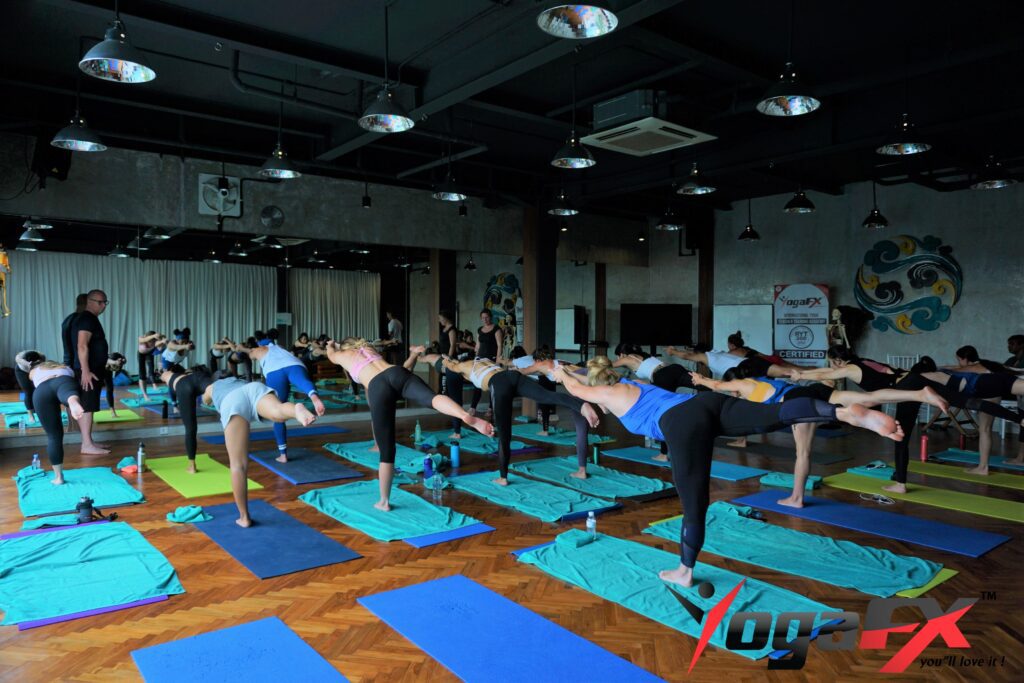
Choose Hot Yoga (Bikram 26&2 at YogaFX) If:
- You want measurable fitness results – calorie burn, strength, and flexibility gains you can track
- You have never tried Bikram yoga and want to experience it in the environment it was designed for
- You practice yoga regularly at home but want something physiologically more demanding during your Bali stay
- You want a consistent, predictable class format – same postures every session, no surprises
- You prefer zero chanting, zero spiritual pressure, and a results-focused environment
- You are interested in hot yoga’s documented effects on mental health and stress
Choose Regular Yoga (Vinyasa/Hatha/Yin) If:
- You want variety and creative sequencing that changes class to class
- You are drawn to the spiritual and philosophical dimensions of traditional yoga practice
- You are recovering from injury and need a lower-intensity, gentler practice
- You prefer open-air bamboo shalas and Ubud’s retreat atmosphere over studio-based practice
- You are already a regular hot yoga practitioner and want to complement with a different style
Do Both If:
Many practitioners in Bali combine formats – hot yoga 3–4 times per week for fitness and cardiovascular conditioning, with Yin or restorative yoga on recovery days. This combination addresses all dimensions of physical practice: strength, flexibility, cardiovascular fitness (hot yoga), and nervous system regulation, deep tissue release, and recovery (Yin/restorative).
📍 YogaFX Bali – Hot Yoga Quick Reference
- Method: Original Bikram 26&2 – fixed 26 postures, same order every class
- Heat: All-natural Bali tropical heat – NO electric heaters
- Studios: Seminyak and Canggu – both open daily
- Formats: 60-minute and 90-minute classes
- Culture: Zero chanting, zero ego, all levels welcome
- First class: Free 1-Day Guest Pass – claim via WhatsApp
FAQ
Is hot yoga harder than regular yoga?
Not necessarily harder in terms of posture complexity – but more physiologically demanding. The heat elevates cardiovascular output, increases sweating, and requires the body to regulate temperature simultaneously with performing movement. Many practitioners find the first few hot yoga classes harder than regular yoga, but adapt quickly. By the fifth to tenth class, the heat becomes an asset rather than a challenge – enabling deeper ranges of motion and a more complete practice.
Does hot yoga burn more calories than regular yoga in Bali?
Yes, substantially. A 90-minute Bikram yoga session burns about 333 calories for women and 460 for men (University of Wisconsin 2014). A comparable 60–90 minute Vinyasa class typically burns 250–400 calories. The additional calorie burn in hot yoga comes primarily from the cardiovascular demand of thermoregulation – the body working to maintain safe core temperature. In Bali’s natural heat, this demand is sustained throughout the session in a way that dry electric heat does not replicate as effectively.
Is hot yoga or regular yoga better for beginners in Bali?
Both are accessible to beginners in Bali. Hot yoga at YogaFX has a specific structural advantage for first-timers: the fixed 26&2 sequence means every class is identical. There is nothing to memorise, no flow to follow, and no risk of being left behind. The instructor talks you through every posture verbally. Many practitioners report that Bikram yoga is actually more beginner-friendly than flow-based styles precisely because of this predictability.
Can I do both hot yoga and regular yoga during my Bali trip?
Yes – and many practitioners do. YogaFX offers both 60-minute and 90-minute classes daily in Seminyak and Canggu, which can be combined with room-temperature classes at other studios. A common approach for Bali visitors: hot yoga 3–4 mornings per week at YogaFX, with a Yin or restorative class in the afternoon or evening at another studio on recovery days.