Most “what to wear to hot yoga” guides are written for a studio in London or Los Angeles, where the room is heated by electric units and the air outside is dry and cool. None of that applies once you land in Bali.
The humidity here is already high before you even walk into a studio, your gear will not dry between classes the way it does at home, and packing three synthetic outfits for a two-week trip is a completely different problem than picking one outfit for a single class.
Here is what actually works.
Why Bali’s Heat Changes the Packing Equation
A hot yoga room anywhere else in the world is an artificial environment. Electric heaters bring the room to temperature, and the moment class ends, you step back out into a normal, dry, air-conditioned world where sweat evaporates fast and gear dries overnight on a radiator. Bali does not work that way.
The ambient humidity outside the studio is already substantial most of the year, which means sweat evaporates more slowly both during and after class, and synthetic gear that would dry in a few hours at home can take most of a day here without help.
This matters practically, not just physiologically. If you are visiting for a week or two and planning to attend several classes, one set of hot yoga gear is not enough.
You either need two to three sets in rotation, access to a laundry service, or a fast-drying fabric strategy that assumes a longer dry time than you are used to. This is the detail most generic packing guides never mention, because they are not written with a tropical climate and a multi-class trip in mind.
The Core Kit: What Actually Works at 40 Degrees Celsius
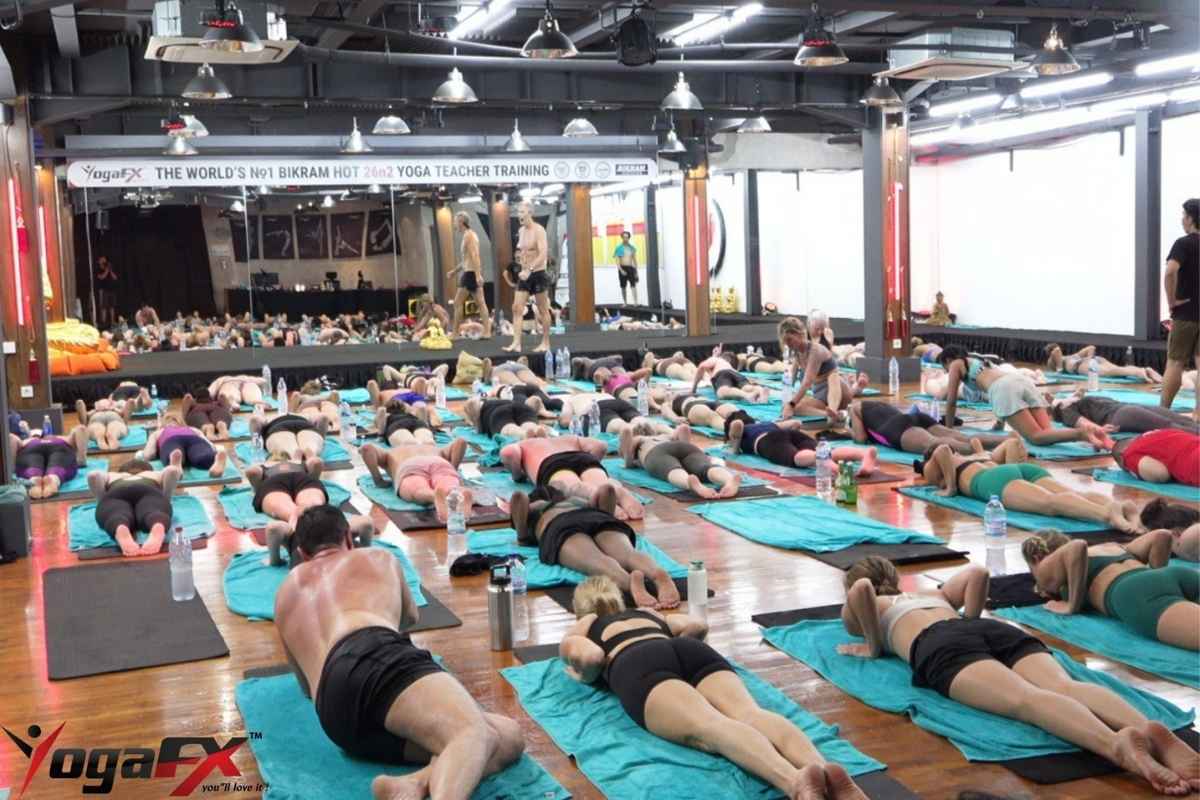
A 90-minute Bikram 26&2 class in a room heated to roughly 40°C with 40 percent humidity is an unforgiving test of any fabric choice. Cotton is the single biggest mistake first-timers make. It absorbs sweat instead of moving it away from the skin, gets heavy within twenty minutes, and stays wet and clingy for the rest of the class. The fix is straightforward.
- Bottoms. Fitted, moisture-wicking shorts or capri-length leggings. Loose fabric clings uncomfortably once soaked and can interfere with balance postures where the teacher needs to see alignment at the knee and ankle.
- Top. A supportive sports bra alone, or paired with a fitted, moisture-wicking tank. Loose t-shirts become heavy, transparent, and distracting within the first half of class.
- Footwear. None. Bikram yoga is practiced barefoot, both for grip on the mat during standing postures and for basic hygiene in a room where dozens of bare feet are working hard.
- Hair and accessories. Hair fully off the face and neck. Skip jewellery, watches, and heavy lotion or sunscreen residue, all of which get uncomfortable fast in sustained heat and can make certain grips and floor postures harder.
Layering does not apply here the way it might in a milder climate class. You will not warm up gradually. The room is already at temperature when you walk in, so dress for the peak heat from the first posture, not for a gradual build.
What to Bring to Every Class
| Item | Why It Matters |
|---|---|
| Large sweat towel | You will need to wipe your hands and face repeatedly to maintain grip during balance postures |
| Mat towel (optional but recommended) | Lays over your mat to absorb sweat and prevent slipping, especially useful if you are renting a mat rather than bringing your own |
| Water bottle, at least 1 litre | You lose significant fluid over 90 minutes and will want to sip during the two short breaks built into the sequence |
| Change of dry clothes | You will be thoroughly soaked afterward, and Bali’s humidity means damp clothes stay damp much longer than you expect |
| Hair tie, even if your hair is already tied | Bring a spare, they tend to fail under 90 minutes of sweat and movement |
Common Gear Mistakes First-Timers Make
Beyond fabric choice, a few habits trip up almost every visitor in their first class. Wearing brand-new, unwashed gear straight from the packet is one of them. New synthetic fabric often has a factory finish that reduces its moisture-wicking performance until it has been washed once or twice, so it performs noticeably worse on day one than it will by your second or third class.
Overdressing out of modesty concerns is another common one, particularly for first-time visitors who have not experienced genuine tropical heat combined with a heated room. More fabric does not mean more coverage where it counts. It means more heat retention, more chafing, and a harder 90 minutes.
A well-fitted, minimal, moisture-wicking outfit is both more comfortable and, in practice, less revealing than loose cotton that clings and becomes see-through once soaked.
Mayo Clinic’s guidance on preventing heat-related illness specifically recommends lightweight, breathable clothing over heavy layers for exactly this reason: excess fabric interferes with the body’s ability to cool itself in hot, humid conditions.
Bringing a phone into the room is worth avoiding too, not because of any strict studio rule, but because heat and heavy condensation are genuinely hard on electronics, and the last thing you want mid-posture is a phone sliding off a sweat-soaked mat.
Packing for a Bali Trip, Not Just One Class
If hot yoga is part of a longer Bali trip rather than a single drop-in, plan your gear rotation the way you would plan any tropical packing list.
Two to three sets of moisture-wicking tops and bottoms is a realistic minimum if you are attending classes every second day, since same-day drying is unreliable in humid conditions without direct sun or a dryer. Most villas and guesthouses in Seminyak and Canggu offer affordable next-day laundry service, which is worth factoring into your rotation instead of over-packing.
A dedicated mesh or ventilated bag for wet gear after class is a small addition that makes a real difference, since a soaked towel and outfit sealed in a regular tote bag will start to smell within hours in tropical heat.
Quick-dry synthetic fabric also does double duty as beach and general tropical travel wear, so it is not gear you are packing exclusively for the studio.
If you would rather buy your kit locally than pack it, our guide to yoga clothing and gear shopping in Bali covers exactly where to go in Seminyak, Canggu, and Ubud, and what’s actually worth spending more on once you’re here.
What’s Different at YogaFX Bali Specifically
The gear advice above applies everywhere, but the heat itself works differently at YogaFX Bikram in Seminyak and Canggu than it does at most hot yoga studios you may have attended before. Both studios use Bali’s natural tropical climate to reach practice temperature rather than electric heaters, which is one of the few places in the world where that is even possible.
Mr. Ian Terry, the studio’s E-RYT 500 founder, has spent more than 12,000 hours teaching in exactly this environment and consistently tells new students the same thing: the heat itself will not be unfamiliar if you have spent any time outdoors in Bali already, but sustaining effort inside it for 90 minutes straight is a different experience entirely, which is exactly why the fabric and hydration choices above matter more here than they do almost anywhere else.
If you are still deciding what your first class will actually feel like, our Bikram Yoga for Beginners survival guide walks through the full experience beyond just what to wear.
For the fuel side of preparation, What to Eat Before and After Hot Yoga covers timing and hydration in more depth. And if you want to understand why Bali’s heat behaves differently from an electric-heated room at home, Bali Natural Heat Yoga explains the physiology behind it.
Ready to test your gear in the real room? Claim a free 1-day guest pass at either the Seminyak or Canggu studio and find out what actually holds up over 90 minutes.
If you’re comparing this against a drier, electric-heated studio back home, our broader guide to what to wear to hot yoga covers the general-climate version of this advice.
FAQ
What should I wear to my first hot yoga class in Bali?
Fitted, moisture-wicking shorts or leggings with a supportive sports bra or fitted tank, never cotton. Bali’s humidity means sweat evaporates slower than you may be used to, so minimal, well-fitted synthetic fabric performs better than loose or heavier layers.
Is Bikram or hot yoga always practiced barefoot?
Yes. Bikram 26&2 is practiced barefoot for grip during standing postures and general hygiene in a shared, heavily used room. Socks are not recommended, since they become slippery and heavy once soaked with sweat.
What should I bring besides clothing?
A large sweat towel, at least a litre of water, a spare hair tie, and dry clothes to change into afterward. A mat towel is useful if you are renting a mat rather than bringing your own, since it improves grip once you start sweating.
How many sets of hot yoga clothes do I need for a Bali trip?
Two to three sets in rotation if you are attending classes every second day or more. Bali’s humidity makes same-day drying unreliable without direct sun or a dryer, and most accommodation in Seminyak and Canggu offers affordable next-day laundry to fill the gap.
Can I wear makeup or sunscreen to class?
It is best to arrive with a clean face. Makeup, heavy lotion, and sunscreen residue mix with sweat in the heat, which can feel uncomfortable, clog pores over a 90-minute session, and make certain grips and floor postures less stable.