
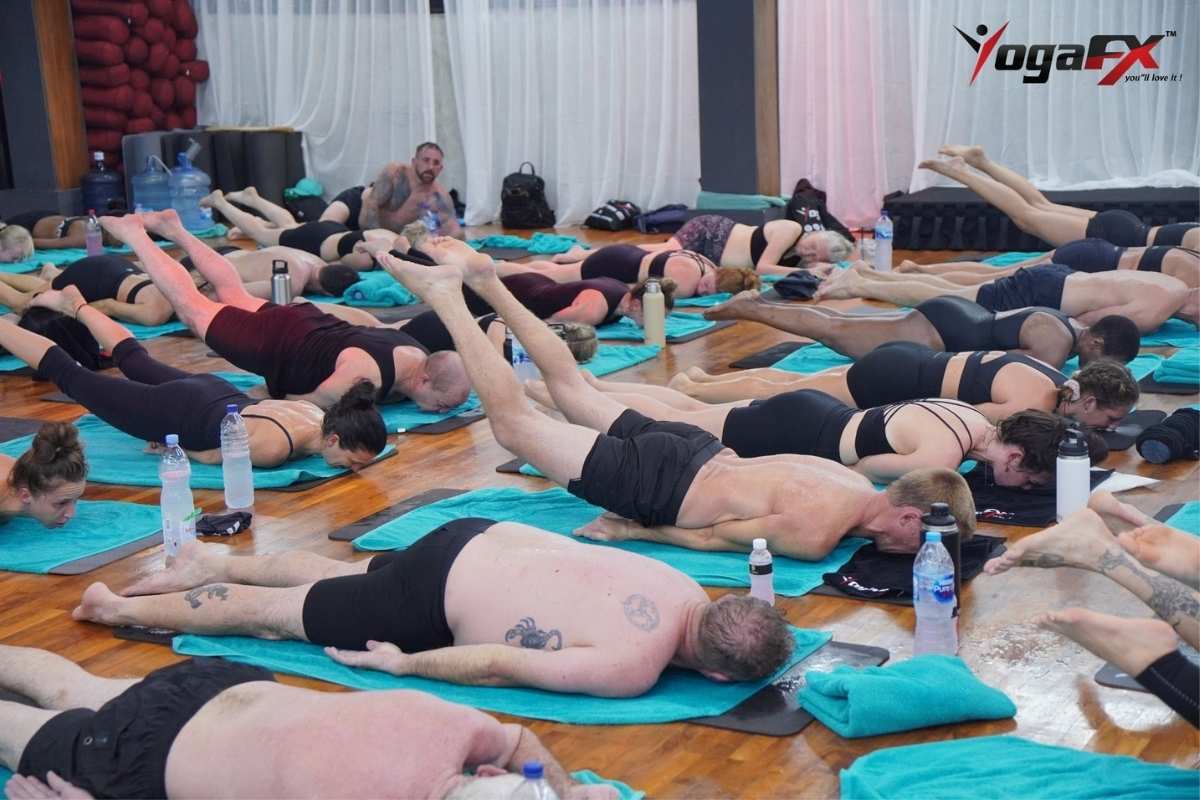
Is hot yoga actually safe, and how often can you realistically practice it? These are two of the most common questions first-time practitioners ask before ever setting foot in a heated room, and the honest answer to both depends on your own health background, how well you hydrate, and how gradually you let your body adapt to the heat. This guide covers what the research actually says, who should check with a doctor first, and a realistic frequency to build toward.
For most healthy adults, hot yoga is safe when practiced with adequate hydration and a gradual introduction to the heat. Bikram’s 26 and 2 sequence is low-impact by design, but the 40 degree Celsius room adds a genuine physiological demand that requires an adjustment period.
Beginners typically start with 1 to 3 classes a week, building toward daily practice only once heat tolerance is established. People with cardiovascular conditions, uncontrolled blood pressure, are pregnant, or are on medications affecting hydration or heart rate should check with a doctor before starting.
What the Research Says About Hot Yoga Safety
A 2025 systematic review covering 43 studies and 942 participants found consistent evidence supporting hot yoga’s benefits for flexibility, bone density, and general well-being across the studied population, with no pattern of serious adverse events reported across that body of research (Willmott et al., 2025).
This does not mean hot yoga carries zero risk for every individual. It means the practice, done reasonably, has a favourable safety profile in the populations studied, most of whom were generally healthy adults easing into the practice gradually rather than pushing into daily 90-minute sessions from day one.
The heat itself is the main variable that changes the risk calculation compared to a room-temperature yoga class. Bikram YogaFX Bali uses natural tropical heat rather than electric heaters, which some practitioners find more sustainable than the dry, artificial heat used in many overseas studios, though the core safety principles, hydration, gradual adaptation, and listening to your body, apply regardless of whether the heat is natural or electric.
Who Should Check With a Doctor First
Hot yoga is not automatically off-limits for the groups below, but it is genuinely worth a conversation with a doctor before starting, since heat adds a physiological demand that a standard fitness assessment does not always account for.
- Cardiovascular conditions. Heat increases heart rate and cardiovascular demand independent of the physical postures themselves, which matters for anyone with a diagnosed heart condition or uncontrolled blood pressure.
- Pregnancy. Guidance on heat exposure during pregnancy varies by trimester and individual circumstances, so this is a conversation for your own obstetrician rather than a generic yes or no answer.
- Medications affecting hydration, blood pressure, or heart rate. Some common medications change how the body regulates temperature or fluid balance, which can meaningfully shift how a heated class feels and how much hydration is actually needed.
- A history of heat exhaustion or heat stroke. A prior heat-related medical event is worth discussing with a doctor before returning to a heated practice environment.
- Recent illness involving fever, vomiting, or diarrhoea. These conditions already leave the body dehydrated and depleted, which compounds quickly in a heated room.
None of this is intended as medical advice, and it is not a substitute for a conversation with your own healthcare provider about your specific situation.
Building Heat Tolerance Safely
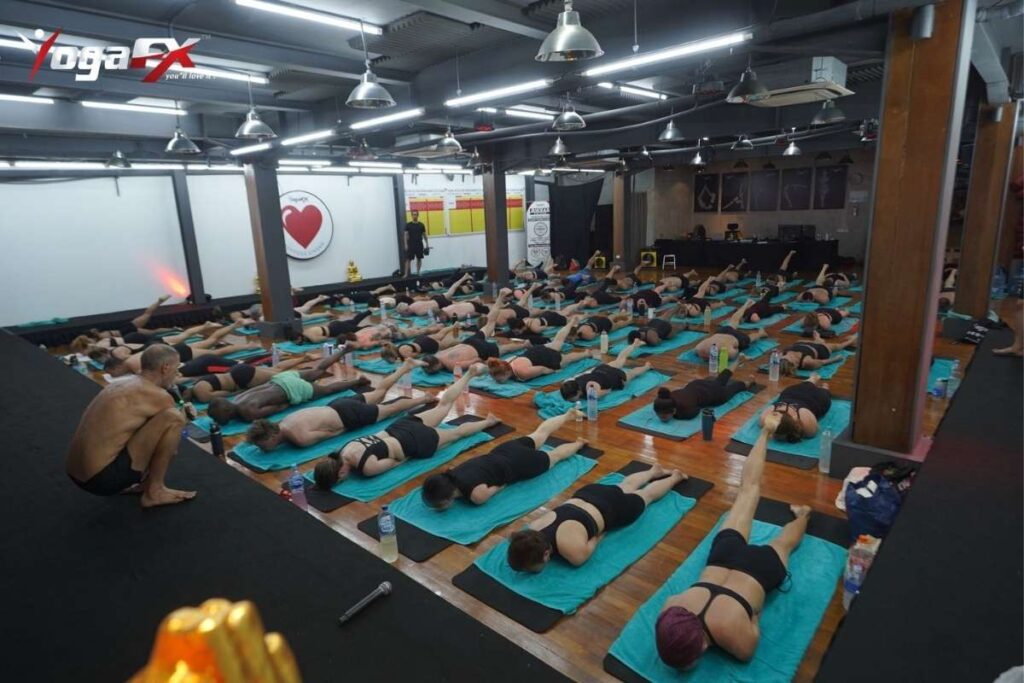
Heat tolerance is a genuine physiological adaptation, not just a mental one, and it develops through repeated, spaced exposure rather than forcing your way through a single brutal session. The body’s sweat response becomes more efficient over the first several classes, meaning you start cooling yourself more effectively for the same heat exposure.
This is part of why the first class is consistently reported as the hardest, and why practitioners who space their first few sessions out, rather than trying to prove something by going daily immediately, tend to have a smoother adjustment period overall.
Hydration and nutrition timing play a meaningful role in how comfortably this adaptation happens. Arriving already dehydrated or with a heavy meal still digesting adds an extra burden on top of the heat itself, which is often what turns a manageable adjustment period into a genuinely rough one. What you eat and drink before class is worth planning around deliberately during these first few weeks, rather than treating it as an afterthought.
Common Side Effects: Normal vs Worth Stopping For
Generally Normal in the First Few Classes
- Feeling unusually sweaty and needing more water breaks than a room-temperature class
- Mild lightheadedness during transitions between standing postures, particularly in the first one or two classes
- Needing to sit or rest during parts of the sequence rather than completing every posture
- Feeling more fatigued than expected for the rest of the day after an early class
Signs to Stop the Class and Seek Help
- Confusion, slurred speech, or a sudden inability to focus
- Nausea or vomiting that does not settle with rest and water
- A racing or irregular heartbeat that does not settle once you stop moving
- Skin that stops sweating despite the heat, combined with feeling unwell, which can indicate the body is struggling to regulate temperature. According to Mayo Clinic’s first aid guidance on heat exhaustion, this combination of symptoms warrants immediate medical attention rather than waiting to see if it passes.
Any of these warrant stepping out of the room, cooling down, rehydrating, and seeking medical attention if symptoms do not resolve quickly. A good studio and instructor team will always support you leaving the room if needed, and doing so is never treated as a failure of the practice.
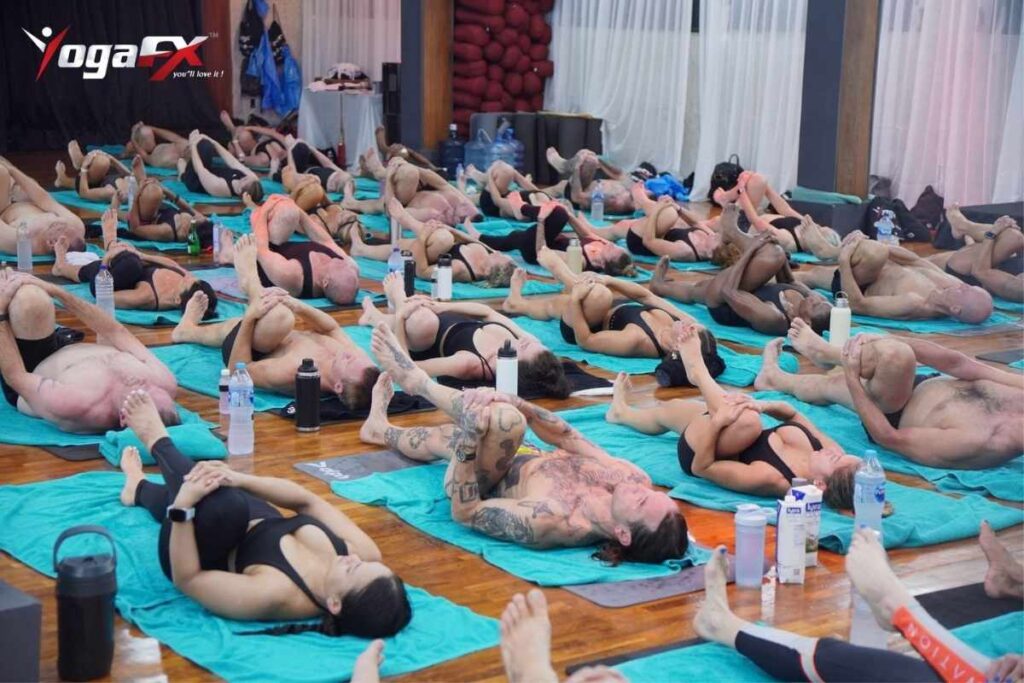
How Often Should You Practice Hot Yoga?
Complete Beginners
Starting with 1 to 3 classes a week for the first month gives your body time to adapt to the heat gradually, rather than trying to acclimatise and build a full practice simultaneously. Rest days between early sessions are genuinely useful during this window, since heat adaptation itself is a real physiological process that takes repeated, spaced exposure rather than back-to-back sessions right away.
Once Heat Adaptation Has Developed
Many regular practitioners settle into 3 to 5 classes a week once the heat itself stops being the limiting factor, using rest days more for schedule and life balance than for physiological necessity at that point. Some experienced practitioners, particularly those on a teacher training intensive where daily practice runs for six consecutive days, do practice daily for a defined stretch, but this level of frequency is something to build toward rather than start with.
Signs You Might Be Overdoing It
Persistent fatigue that does not improve with rest, difficulty sleeping, a resting heart rate that stays elevated, or dreading class rather than looking forward to it are all reasonable signals to scale back frequency for a while rather than push through. Hot yoga is meant to be a sustainable, repeatable practice, not something that leaves you depleted for days afterward.
How YogaFX Manages These Risks in Practice

Mr. Ian Terry, E-RYT 500 and founder of YogaFX, built the studio’s approach around gradual heat introduction for first-timers rather than assuming everyone arrives ready for a full 90 minutes on day one. Both the Seminyak and Canggu studios run on Bali’s natural tropical heat rather than dry electric heaters, which many practitioners find more sustainable over repeated sessions.
Modifications are offered throughout every class, and instructors are trained to watch for the early signs listed above and support anyone who needs to rest or step out, regardless of experience level.
Complete beginners taking their first class are never expected to complete every posture at full intensity. Building tolerance over several classes is the normal path, not the exception.
FAQ
Is hot yoga safe?
For most healthy adults, hot yoga is safe when practiced with adequate hydration and a gradual introduction to the heat. People with cardiovascular conditions, uncontrolled blood pressure, who are pregnant, or on medications affecting hydration or heart rate should check with a doctor before starting.
How often should I do hot yoga as a beginner?
Most beginners start with 1 to 3 classes a week for the first month, allowing the body time to adapt to the heat gradually before building toward more frequent practice.
Is it safe to do hot yoga every day?
For experienced practitioners who have already built heat tolerance, daily practice is common, particularly during a teacher training intensive. For beginners, daily practice from the start is not recommended, since heat adaptation takes time and rest days support that process in the early weeks.
What are the warning signs I should stop a hot yoga class?
Confusion, slurred speech, persistent nausea or vomiting, a racing heartbeat that does not settle at rest, or skin that stops sweating despite the heat combined with feeling unwell are all reasons to leave the room, cool down, rehydrate, and seek medical attention if symptoms persist.
Free Guest Pass
Ready to experience hot yoga with a teaching team trained to support first-timers at their own pace? Claim a Free 1-Day Guest Pass at the Seminyak or Canggu studio and try the original 26 and 2 sequence in Bali’s natural heat.