
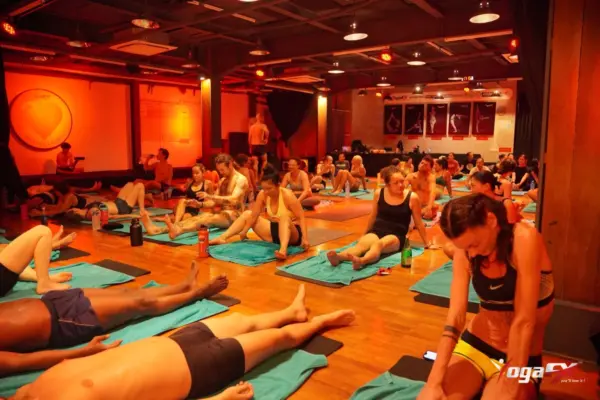
What is hot yoga? Hot yoga is yoga practised in a deliberately warm room, usually between about 30 and 40°C. The best known style is Bikram, also called Hot 26&2: a fixed 90-minute sequence at around 40°C. Other styles include hot vinyasa, hot pilates and yin in heat. The warmth loosens muscles and makes every posture feel harder.

Maybe you have seen a friend leave a class dripping with sweat and grinning. You probably wondered what goes on in there. This guide answers what is hot yoga in plain words. It covers how the styles differ, how hot the rooms really are and what your first class feels like. It also shows who should be careful, and why the natural heat of Bali is different from a heated studio in London or Sydney.
What is hot yoga, exactly?
Hot yoga is not one single method. It is an umbrella term for yoga, and some yoga-inspired workouts, done in a room kept warmer than normal. The heat is added on purpose. It makes the body feel more mobile and raises the effort of each posture. It also creates a focused, sweaty atmosphere that many students find absorbing.
The idea became popular through Bikram yoga in the 1970s. A set sequence of 26 postures and 2 breathing exercises was taught in rooms heated to around 40°C. Since then, studios around the world have added heat to many other formats, from flowing vinyasa to slow, floor-based yin.
So what is hot yoga in practice? It is a warm room, a lot of sweat and a need to prepare sensibly. You hydrate well beforehand, eat lightly and give your body a few classes to adapt.
What are the main styles of hot yoga?
The main styles of hot yoga are Bikram or Hot 26&2, hot vinyasa, hot pilates, and yin in a warm room. They differ in four ways. These are how hot the room is, whether the sequence is fixed, how fast you move and how much the class leans towards fitness or stillness.
Here is a simple side by side comparison. Exact temperatures vary from studio to studio, so treat the figures as typical ranges rather than rules.
| Style | Typical room | Sequence | Pace and feel | Good for |
|---|---|---|---|---|
| Bikram / Hot 26&2 | About 40°C, around 40% humidity | Fixed: 26 postures and 2 breathing exercises | Steady, 90 minutes, short rests between postures | Beginners who like structure and progress they can measure |
| Hot vinyasa | Warm, often low to mid 30s°C | Changes each class | Flowing, linked to the breath, more transitions | Students who enjoy variety and a cardio feel |
| Hot pilates | Warm, often low to mid 30s°C | Changes each class | Core work, low impact, often many repetitions | People who want a strength and conditioning focus |
| Yin in heat | Gently warm | A few long holds on the floor | Slow and quiet, holds of several minutes | Recovery days, stiff joints, calming the mind |
Weighing up two of these? Our comparison of hot vinyasa vs Bikram goes into the differences in more detail.
At our Seminyak and Canggu studios we teach the original Hot 26&2 sequence. The fixed order is the point. The postures are the same every time, so you can see your own progress from week to week instead of guessing.
How hot is a hot yoga class?
A hot yoga class is usually between about 30 and 40°C, depending on the style. The original Bikram standard is about 40°C with roughly 40% humidity, the hottest common format. Vinyasa and pilates rooms are often cooler. Yin classes tend to be only gently warm.
People often ask what is hot yoga temperature, as if one number covers every class. It does not. Humidity matters as much as the thermometer. Humid air slows the evaporation of sweat, so you feel warmer and wetter. Very dry heat can feel harsh on the throat and eyes.
Our guide to how hot Bikram yoga is explains the temperature and humidity standard in more detail. In Bali the warmth is already in the air, which is why our studios use no electric heaters at all.
What is hot yoga like in your first class?
A first hot yoga class usually feels hotter, sweatier and more tiring than people expect. That is most true in the first 20 minutes. Most beginners need to sit down at some point, and that is completely normal. By the final rest, many describe a calm, heavy, deeply relaxed feeling that keeps them coming back.
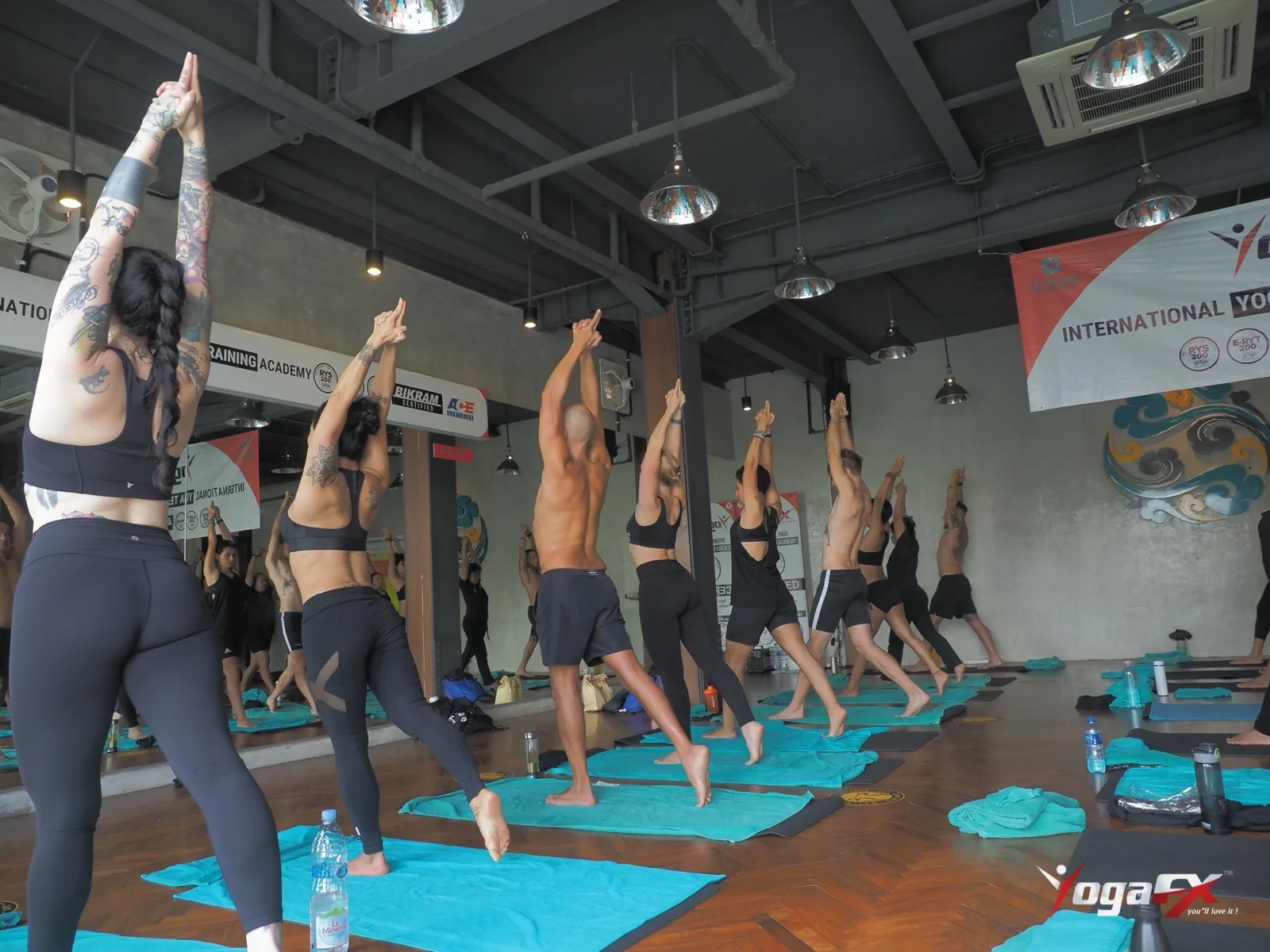
How a 90-minute Hot 26&2 class runs
Here is roughly how a class runs at YogaFX:
- Standing Deep Breathing. The class opens with a slow breathing exercise to steady the heart rate and focus the mind.
- The standing series. Balancing and strengthening postures build heat from the inside. This is where most first-timers feel the challenge.
- A short Savasana. A brief rest on your back before you move to the floor.
- The floor series. Back bends, forward bends and twists, with short rests in between.
- Blowing in Firm. The second breathing exercise closes the class before a final rest.
There is no music and no demonstration. Instead, the teacher talks you through every posture with a scripted spoken dialogue. You do not need to know the poses in advance. If you want a preview, our guide to all 26 postures in order walks through each one.
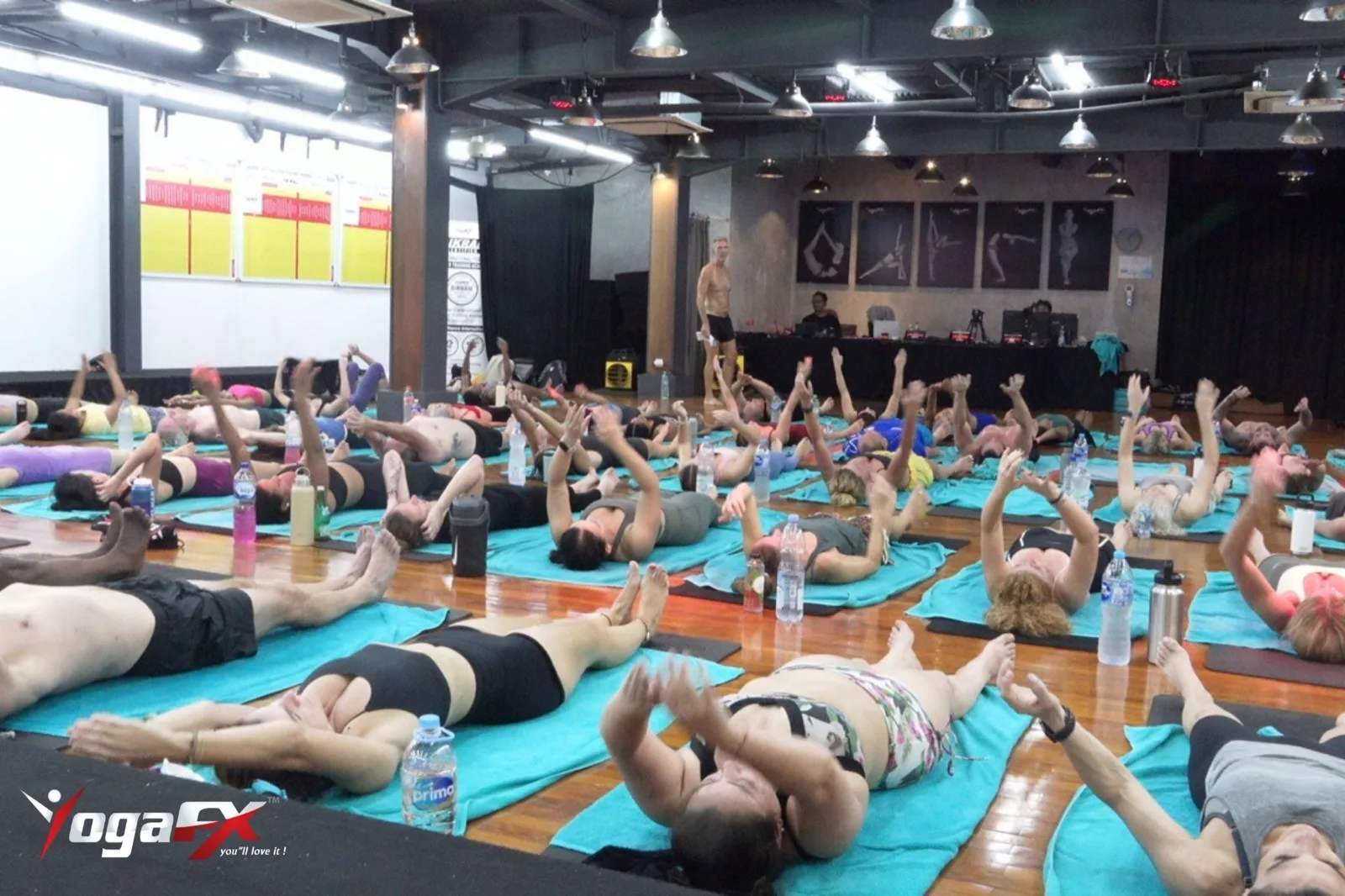
How to get ready for your first class
Practical points help a lot. These are the ones we repeat to every new student:
- Drink water through the day before. Turning up already thirsty makes the first 20 minutes much harder.
- Eat light. Have a meal 2 to 3 hours before, or a small snack 30 to 60 minutes before.
- Bring a large water bottle and a towel. The towel covers your mat, and you will use it.
- Wear light clothing. Pick fabric that does not hold sweat, and arrive a little early to settle in.
Our beginner’s guide to Bikram yoga covers what to bring in more detail.
What is hot yoga compared with regular yoga?
Many people ask what is hot yoga compared with regular yoga, and the short answer is the room. The postures are often the same. The temperature is what changes, and with it the effort, the sweat and the way you pace yourself.
- Effort feels higher. Your heart works harder in a warm room, so the same posture can feel tougher than it does in a cool studio.
- You sweat much more. That is why water, a towel and light clothing matter so much.
- Pacing is part of the skill. Learning when to rest is a big part of a good first month.
- Muscles feel looser. Many students say they can move further than in a cool room, but they still go gently.
Neither is better for everyone. Some students like the quiet of a cool class, and others love the intensity of heat. Our page on hot yoga vs regular yoga sets the two side by side.
Hot yoga vs regular yoga at a glance
| Aspect | Hot yoga | Regular yoga |
|---|---|---|
| The room | Deliberately warm | Cool studio |
| Effort | Feels higher, the heart works harder | The same posture can feel easier |
| Sweat | Much more, so water and a towel matter | Less |
| Muscles | Often feel looser | Feel less warm |
| Key skill | Pacing and knowing when to rest | Quiet focus without heat |
Who is hot yoga good for, and who should be careful?
Hot yoga suits most healthy adults who are happy to work at their own pace. That includes complete beginners, older students and people who are stiff rather than flexible.
Some people should speak to a doctor first. These include people with heart conditions or blood pressure problems, anyone who is pregnant, and anyone with a history of heat illness. The same goes for anyone on medication that affects heart rate or hydration.
The postures in the 26&2 sequence are low impact, with no jumping, and every posture can be adapted. In a typical class you might see a surfer in his twenties beside a retired couple. A new mum may be there too, back to exercise once her doctor has cleared her. Nobody is expected to look like the person on the next mat.
Warning signs to take seriously
The heat puts real demand on the heart and on fluid balance. That is why the warning signs are worth knowing. The NHS guidance on heat exhaustion and heatstroke lists tiredness, dizziness, headache, nausea, heavy sweating, cramps and strong thirst. The Mayo Clinic page on heat exhaustion adds faintness and a weak, rapid pulse.
If you feel any of these in class, stop, lie down, sip water and tell the teacher. Resting is never a failure.
This article is for general educational purposes and is not medical advice. If you have a heart condition, blood pressure problems, are pregnant or have another health concern, please consult a healthcare professional before practising in a heated room. Our article is hot yoga safe? goes through risks and sensible frequency in more depth.
What is hot yoga like, according to our students?
Numbers and temperatures only tell you so much. What most first-timers want to know is how the room feels. These are words from students in our YouTube reviews, taken as they said them.
“It was amazing class, you pushed us to the limit and I feel amazing, so just come back!”
A student in our YouTube review, 2018
“I don’t get emotional so easily, but this place is so different.”
Erinc, YouTube review, 2019
Stephanie, in her 2019 YouTube review, described an “inside-out transformation” and a group that felt like “one big family”. These students were in our teacher training. Still, the atmosphere they describe is the one you meet in a regular class.
What is hot yoga in Bali, and why is natural heat different?
YogaFX‘s Seminyak and Canggu studios are warmed by Bali’s natural tropical climate, not by electric heaters. Each class runs 90 minutes and follows the original Hot 26&2 standard of about 40°C and 40% humidity.
Many students tell us the heat feels softer than the forced dry heat they know from studios at home. You will still sweat a great deal, so bring plenty of water.
Both studios are open from 06:00 to 22:00 every day. That makes it easy to fit a class in before work or after a day at the beach. Because the heat is natural, it also stays fairly consistent all year.
The method we teach comes from Mr. Ian Terry, E-RYT 500. He has more than 12,000 teaching hours. He also trained for five years, from 2014 to 2019, alongside the founder of the Bikram Hot 26&2 method. YogaFX has been running since 2017 and is a Yoga Alliance Registered Yoga School.
Our teachers are trained to watch the room closely and offer modifications. They make sure first-timers feel looked after rather than judged.
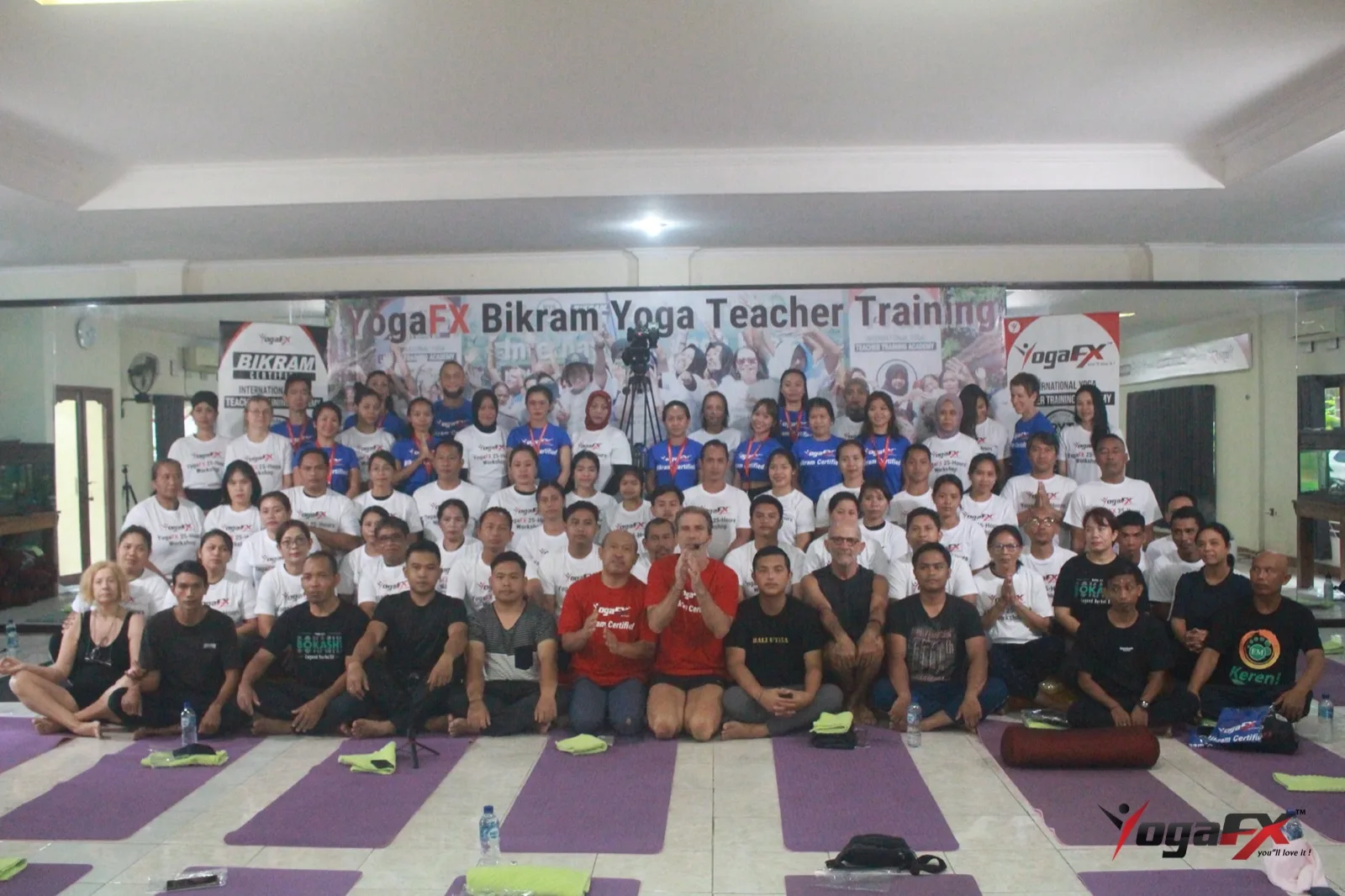
Common myths about hot yoga
A few worries put people off before they ever try a class. Here are the three we hear most at the front desk:
- “I’m not flexible enough.” You do not need to be. Flexibility grows with practice, and every posture has a gentler version.
- “I’ll faint in the heat.” Most healthy people do not, especially if they drink water beforehand and rest when they need to. If you feel unwell, lie down and tell the teacher.
- “Hot yoga is only for young, fit people.” It is not. Our classes mix ages, body types and experience levels, and the teacher offers an easier version of every posture.
- “Everyone else will be better than me.” In a first class almost nobody is watching you. Everyone is busy with their own breathing. Most students quickly learn that the person on the next mat is also just trying to get through the next posture.
So, what is hot yoga best for? It suits people who like clear structure, a good sweat and a quiet hour that belongs only to them. If that sounds like you, the best way to know is to try one class.
Key takeaways
- An umbrella term. Hot yoga covers several styles practised in a warm room.
- Bikram is the hottest common format. About 40°C with roughly 40% humidity, for 90 minutes.
- The first 20 minutes are hardest. Rest whenever you need to; it is never a failure.
- Prepare simply. Drink through the day before, eat light, bring water and a towel.
- Check first if needed. Heart, blood pressure or pregnancy means a doctor’s advice.
FAQ
What is hot yoga in simple terms?
What is hot yoga? It is yoga practised in a deliberately warm room, usually between about 30 and 40°C. The heat makes muscles feel looser and the work feel harder. Popular styles include Bikram or Hot 26&2, hot vinyasa, hot pilates and yin in heat. Most classes last 60 to 90 minutes.
Is hot yoga the same as Bikram yoga?
No. Bikram yoga is one specific style of hot yoga. It is a fixed 90-minute sequence of 26 postures and 2 breathing exercises at about 40°C. Hot yoga is the wider term. It also includes formats such as hot vinyasa, hot pilates and yin that use a heated room.
How hot is a hot yoga room?
It depends on the style. The original Bikram standard is about 40°C with around 40% humidity. Hot vinyasa and hot pilates rooms are often a little cooler, in the low to mid 30s°C. Yin in heat is usually only gently warm. Humidity changes how hot any of these rooms feels.
Can a complete beginner do hot yoga?
Yes. Most healthy beginners can take a hot yoga class if they hydrate well, eat lightly beforehand and rest whenever they need to. Every posture can be adapted. Anyone with a heart condition, blood pressure problems or pregnancy should check with a doctor before their first class.
What should I bring to my first hot yoga class?
Bring a large bottle of water, a towel to cover your mat and light clothing that copes with sweat. Eat a light meal 2 to 3 hours before class, or a small snack 30 to 60 minutes before. Arrive a few minutes early so you can choose a spot and settle in.
What does hot yoga feel like for a first-timer?
Expect to feel hotter, sweatier and more tired than you imagined, especially in the first 20 minutes. Resting is completely normal. Many students describe a calm, deeply relaxed feeling by the final rest. If you feel dizzy or sick at any point, lie down, sip water and tell the teacher.
Free Guest Pass
Curious to feel what hot yoga is really like? Claim your Free Guest Pass and join a 90-minute Hot 26&2 class at our Seminyak or Canggu studio. It is warmed only by Bali’s natural heat. Send us a WhatsApp on +62 811 3888 330 or visit our contact page to reserve your mat.
 Mr. Ian Terry