
Hot yoga for athletes works best on a Bali training camp as one 90-minute class on an easy day, not as an extra hard session. The room runs at about 40°C and 40% humidity, so it adds real load to your week. Book it away from your heaviest sessions.

Picture week two of a surf camp. Your shoulders ache from paddling, your legs feel heavy, and the coach has added another session. Or you are in a fight camp, sparring twice a day and watching every meal. Either way, you wonder whether a hot class will help or cost you a day.
This guide is for men and women on surf, fight and fitness camps in Bali. Mr. Ian Terry, our E-RYT 500 teacher with more than 12,000 teaching hours, gives athletes the same advice every time: treat the class as a moderate day, and plan the week around it.
We teach at two studios, Seminyak and Canggu, so the examples of hot yoga for athletes below come from the people who walk into our room.
Hot Yoga for Athletes on a Bali Camp: The Short Answer
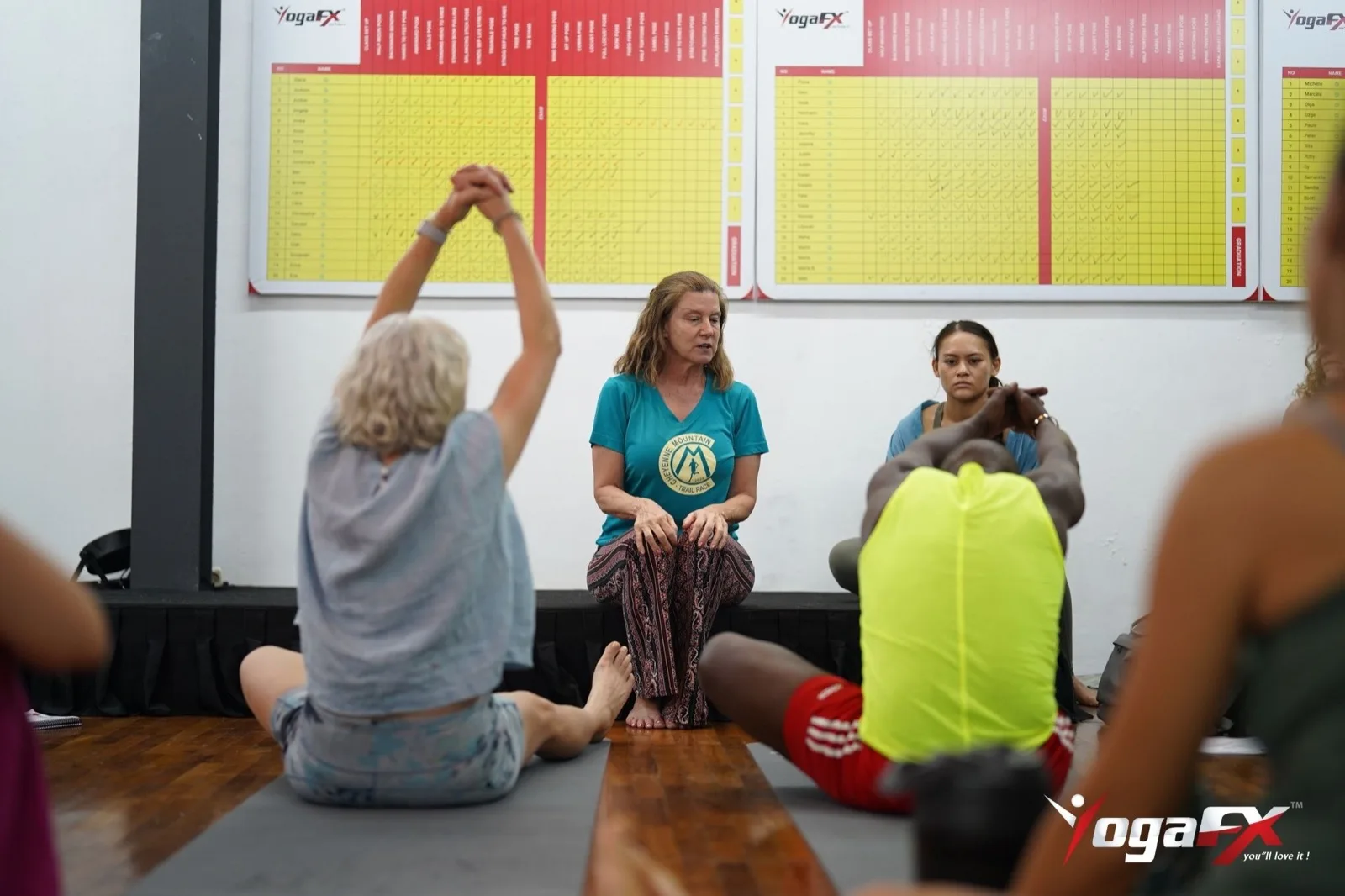
Most people who try hot yoga for athletes ask the same thing before a first class: will this help my sport, or will it cost me a session? The honest answer depends on where you put it. It isn’t a stretch break. It’s 90 minutes of standing, balancing and bending, so your heart rate stays up the whole time.
Because of that, think of it as a third kind of day. It is not a hard session, and it is not a full rest day either. It sits in the middle, and it works when you plan for it. Here are the 5 safe rules we give every camp athlete:
- Begin with a single class. Wait a few days and see how training feels before you book another.
- Pick an easy day. A rest day or a light afternoon is ideal, never your heaviest session.
- Protect the big days. Keep the class clear of sparring days, race days and your longest sessions.
- Hydrate ahead of time. Sip water through the day before, and bring a full bottle into the room.
- Walk out if you feel wrong. Dizziness, a pounding head or a sudden chill mean you stop and rest.
Those rules are short, but the rest of this guide shows how hot yoga for athletes fits into a real camp week, what the research says, and how to stay safe in the heat. If you will keep training at home after your trip, our sister site explains how to fit the 26&2 sequence around a normal training schedule, which uses the same idea for a home week.
Three Camp Types, Three Ways to Fit a Hot Class
Camps look different from one another, so the best slot for hot yoga for athletes changes too. A surfer in Canggu loads the shoulders. A fighter in a Muay Thai gym loads the hips and the lungs. A functional fitness camp hammers the legs and the back. The table below matches each camp to a sensible slot.
| Camp type | Typical hard sessions | Best slot for a hot class | What to watch |
|---|---|---|---|
| Surf camp | Two paddle sessions a day, dawn and mid-morning | Late afternoon on a rest day or a small-wave day | Tight shoulders; start drinking water before you paddle out |
| Fight or Muay Thai camp | Pad work and sparring, morning and evening | An easy mid-week afternoon, never before sparring | Never use heat to drop weight; tell the teacher about old injuries |
| Fitness or functional camp | Heavy lifts, intervals and circuits | The rest day between two lifting blocks | Heavy legs after squat days; skip class if you feel flat |
| Mixed sport holiday week | A different sport each day | A light day after your hardest day, once the legs feel normal | Travel fatigue and late nights stack with the heat |
Notice what the table leaves out. There is no slot the morning before a fight, a race or a heavy session, because the class would load your body twice. For the same reason, our guide to hot yoga for runners keeps the class away from long-run days.
A Seven-Day Camp Week With Two Hot Classes
Here is a sample week of hot yoga for athletes on a surf and gym camp. It uses two classes, which is the ceiling we suggest for most athletes. If you are new to heat, drop the second class and keep the first.
- Day 1, arrival. Walk, sleep and drink water. No class yet, because your body needs time to meet the climate.
- Day 2, surf or gym. Train as planned. Evening: five minutes of slow breathing at home.
- Day 3, light day. Short session in the morning. Late afternoon: your first 90-minute class, at about half effort.
- Day 4, hard day. Your biggest session. Notice how the legs feel after the class two days ago, and write it down.
- Day 5, medium day. Technique work or a moderate lift. No heat today.
- Day 6, rest day. Optional second class if your sleep and appetite are normal. Otherwise, a long walk.
- Day 7, long session. Your longest surf, ride or sparring block. Food, water and an early night afterwards.
After the first week, check in honestly. If your legs feel normal and your sleep is steady, keep both classes. If you feel flat, cut back to one. For the long view, see how often to practise Bikram yoga in Bali.
Signs the class was too much
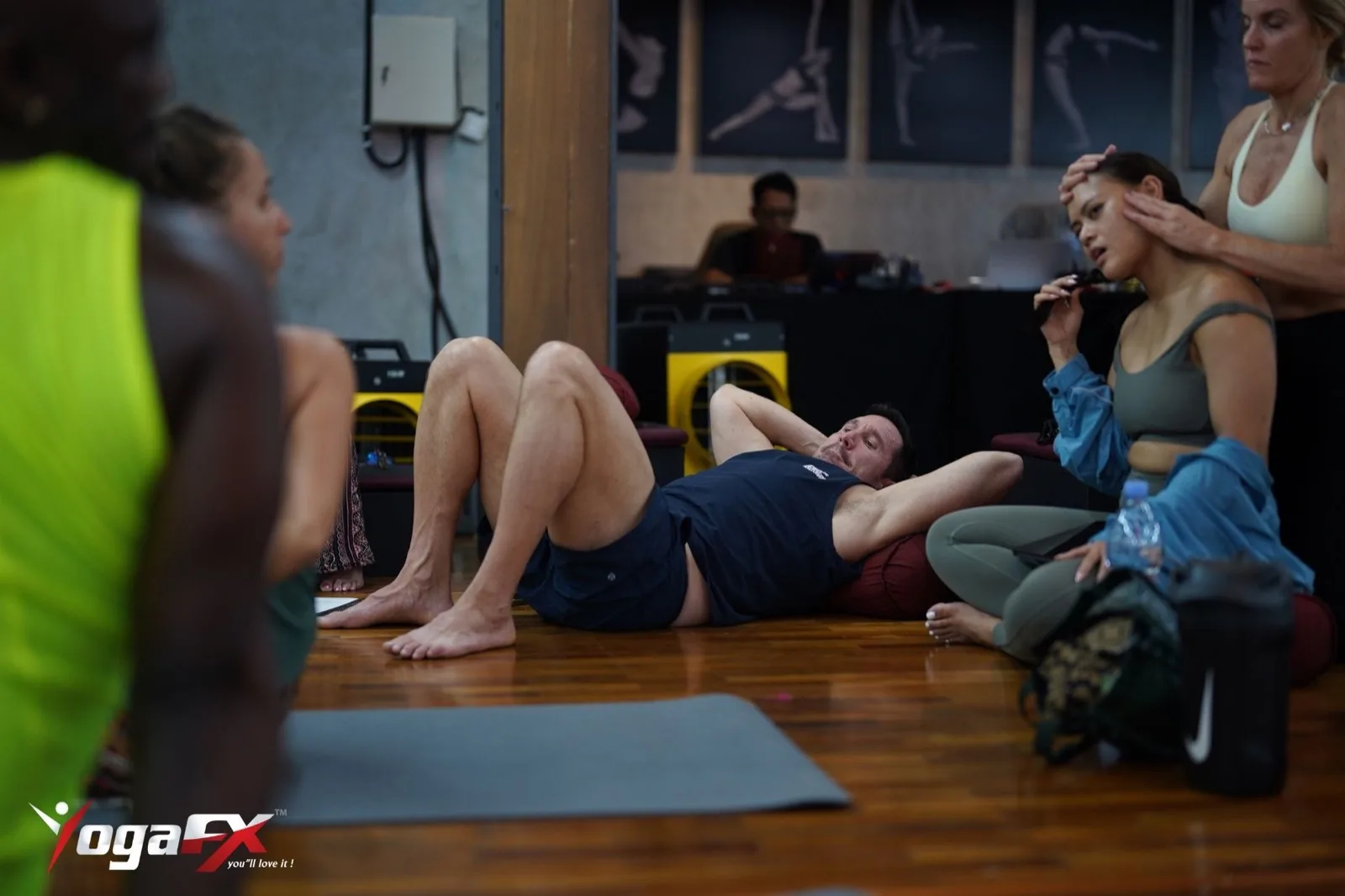
Your body tells you early, and you don’t need a lab to read it. Watch for heavy legs the next morning, a resting pulse that feels high, a short temper, or a session that suddenly feels shaky. Any of these means the next class should wait, or move to an easier day. That isn’t laziness. It’s how you protect the sessions that matter.
Why Bali’s Natural Heat Suits Hot Yoga for Athletes
Our classes run 90 minutes at about 40°C and 40% humidity. The heat comes from Bali’s natural tropical climate, not from electric heaters. A teacher guides the class by voice, with a scripted dialogue, and there is no demonstration and no music. As a result, you can close your eyes, follow the words and stay with your breath.
That structure suits athletes who are used to coaches, and it makes hot yoga for athletes easy to follow. You always know what comes next, so you can spend your effort on the posture instead of guessing. Both studios are open from 06:00 to 22:00 every day, so a class can sit around a dawn surf, a midday gym block or a late work call.
Give yourself a few days in the climate before your first class. Camps often start with long flights and short nights, and heat on top of that is a poor mix. Once you have settled, a class on a light afternoon gives you a quiet 90 minutes without a coach counting reps.
What the Research Says About Hot Yoga for Athletes
It helps to be honest about the evidence. Research on hot yoga for athletes is thin. Most studies use ordinary adults, not competitors, so none of them proves a faster time or a better result. They do give useful clues about workload, flexibility and stress.
Workload: count it as a moderate day
A 2014 University of Wisconsin-La Crosse study (Porcari et al.) measured 90-minute Bikram classes. On average, women used about 333 calories and men about 460 in one class, at roughly 80% of maximum heart rate. That’s a real workload, so hot yoga for athletes belongs in your moderate column, not your recovery column.
Flexibility and strength
A 2013 study by Tracy and Hart found that people who practised Bikram yoga gained flexibility and strength along the back of the body.
A 2025 systematic review led by Willmott pooled 43 studies and 942 participants. Its findings point to better flexibility and well-being. Neither review nor study was built to test sport performance, so read them as a sign that the practice builds useful range, not as a promise.
Stress and mindset
A 2022 study by Hui and colleagues found that hot yoga lowered state anxiety, the short-term worry you feel in the moment. Camp life can be stressful, with early alarms, hard coaching and a long way from home, so a calm 90 minutes may help some athletes. It works beside sleep and food, not instead of them.
90 min
Class length
One full class counts as a moderate session in your week.
About 40°C
Room temperature
Natural tropical heat, not electric heaters.
40%
Humidity
Damp air makes sweat cool you less, so drink early.
333 / 460 kcal
Women / men
Average calories in one 90-minute class (Porcari et al., 2014).
About 80%
Of maximum heart rate
Average effort measured in the same study.
06:00 to 22:00
Studio hours
Seminyak and Canggu, every day.
Hot Yoga for Athletes: Heat Rules for Staying Safe on Camp
Athletes are used to sweating, which is why heat can catch them off guard. A fit body can hide the early warning signs. Mayo Clinic Sports Medicine says hot yoga is not for everyone, because the heat and the effort can lead to heat-related illness. It advises drinking plenty of water before, during and after class, and stopping if you feel dizzy, lightheaded or sick.
Before class
- Spread your water across the day. One big drink just before class is not enough.
- Eat light, and eat early. Finish a small meal a couple of hours ahead, and keep it simple.
- Keep the morning easy. Even a short session adds to the day’s total.
During and after class
- Take small sips. Little and often settles better than big mouthfuls.
- Rest whenever you like. Sitting or lying down is part of the class.
- Replace fluid and salt. Water, plus a pinch of salt in a meal or an electrolyte drink, covers some of what you sweat out.
- Notice your resting pulse. If it runs clearly higher next morning, make that a rest day.
Never use a hot class to cut weight
Fighters sometimes sit in heat to drop water weight before a weigh-in. A yoga class is not the place for that. Losing fluid on purpose raises the risk of dizziness and heat illness, and it can leave you flat for training. Talk to your coach and a doctor about weight, and treat class as practice, not as a sauna.
If you have a heart condition, high blood pressure, a current injury, or take medication that affects heart rate or sweating, read who should be careful with hot yoga and check with your doctor first. This article is general information, so please consult a healthcare professional about your own situation.
Which Postures Help Which Sport
Postures in the Original Hot 26&2 sequence work the whole body, but athletes often notice a few of them first. These matches come from what our teachers see in the room, not from trials, so treat them as starting points:
- Surfers: Half Tortoise and a low Cobra often feel good on tired shoulders and an upper back that spends hours bent over a board.
- Fighters: Triangle and Head to Knee with Stretching ask for open hips and hamstrings, and the breathing work trains calm under effort.
- Lifters and gym athletes: Wind Removing Pose and Cobra give the lower back a gentle change from loaded bending.
- Everyone: Standing Deep Breathing at the start of class sets a slow, steady rhythm for the next 90 minutes.
Whatever the posture, you choose your own effort. A teacher can help with small habits such as locked knees or a held breath, which is another reason to take your first class in person and tell the teacher about your sport and your sore spots.
What YogaFX Students Say
Not every student here is an athlete, and these reviews describe training with us, not sport results. Still, they show how people feel about the teaching and the room. These are individual experiences, not promises.
High quality teaching, perfect accommodation and school setting, amazing fellow students and the truly inspirational Ian Terry and his hardworking team
Helen, Google review, 2024
Thank you for the beautiful experience. Mr. Ian and team are very good people.
Idam, Google review, 2024
Dee, in a YouTube review from 2019, called her time with us a “rejuvenating transformational experience”. You can watch her video below.
In total, YogaFX students have left 150 Google reviews, 50 Yoga Alliance reviews and 357 YouTube video testimonials.
Taking a Class in Seminyak or Canggu
YogaFX teaches in Seminyak and Canggu, and both studios open from 06:00 to 22:00 every day. Mr. Ian Terry leads the team. He trained for five years, from 2014 to 2019, with the founder of the method, and he is a Master Trainer of the Republic of Indonesia Yogasana Sports Federation.
That background matters for athletes. Students trained at YogaFX have won 12 medals in yogasana competition.
Indonesia also took 1 gold, 2 silver and 4 bronze medals at the World Yogasana Sports Federation Championships in Ahmedabad in June 2026. You can read more about how competitive yogasana athletes train with us in Seminyak. For hot yoga for athletes, that means a team that understands people who care about performance as much as comfort.
A sensible first step into hot yoga for athletes is one class on a light day, with a teacher who knows you are on camp. Tell them about your sport, your sore spots and your last hard session. Then choose your own effort and rest whenever you need to. Your first visit can be a free guest pass, so there is no pressure to commit.
FAQ
Is hot yoga good for athletes?
Hot yoga for athletes can work well when you plan it. A 90-minute class builds hip and hamstring range, trains slow breathing, and gives your mind a break from hard sessions. It is also moderate exercise, so book it on an easy day. Check with a doctor first if you have any health concerns.
Is Bikram yoga good for athletes?
Bikram style classes follow a fixed series of 26 postures and two breathing exercises, so you always know what comes next. Athletes like that predictability. The class still adds heat and effort, so count it as a moderate session, and start with one class a week.
Is hot yoga good for runners?
Many runners enjoy it for tight hips and hamstrings, and the heat can feel familiar on a humid coast. Treat it as a moderate day, not a recovery day, and keep it away from long runs and race weeks. Our guide to hot yoga for runners explains the timing.
How often should an athlete take a hot class on a camp?
Start with one class in the first week and see how your next session feels. If your legs feel normal and your sleep is steady, add a second class on another easy day. Two classes a week is a sensible ceiling for most camps. Cut back when you feel flat.
Should athletes do hot yoga before or after training?
Neither is ideal on a hard day, because the heat and the effort stack on top of training. Choose a rest day or a light day instead. If you must train the same day, keep the session easy and leave several hours between them, with water and food in between.
Still have questions? Book your free guest pass and ask Mr. Ian and the YogaFX team in person at Seminyak or Canggu, or message us on WhatsApp and we will answer them personally.
 Mr. Ian Terry