
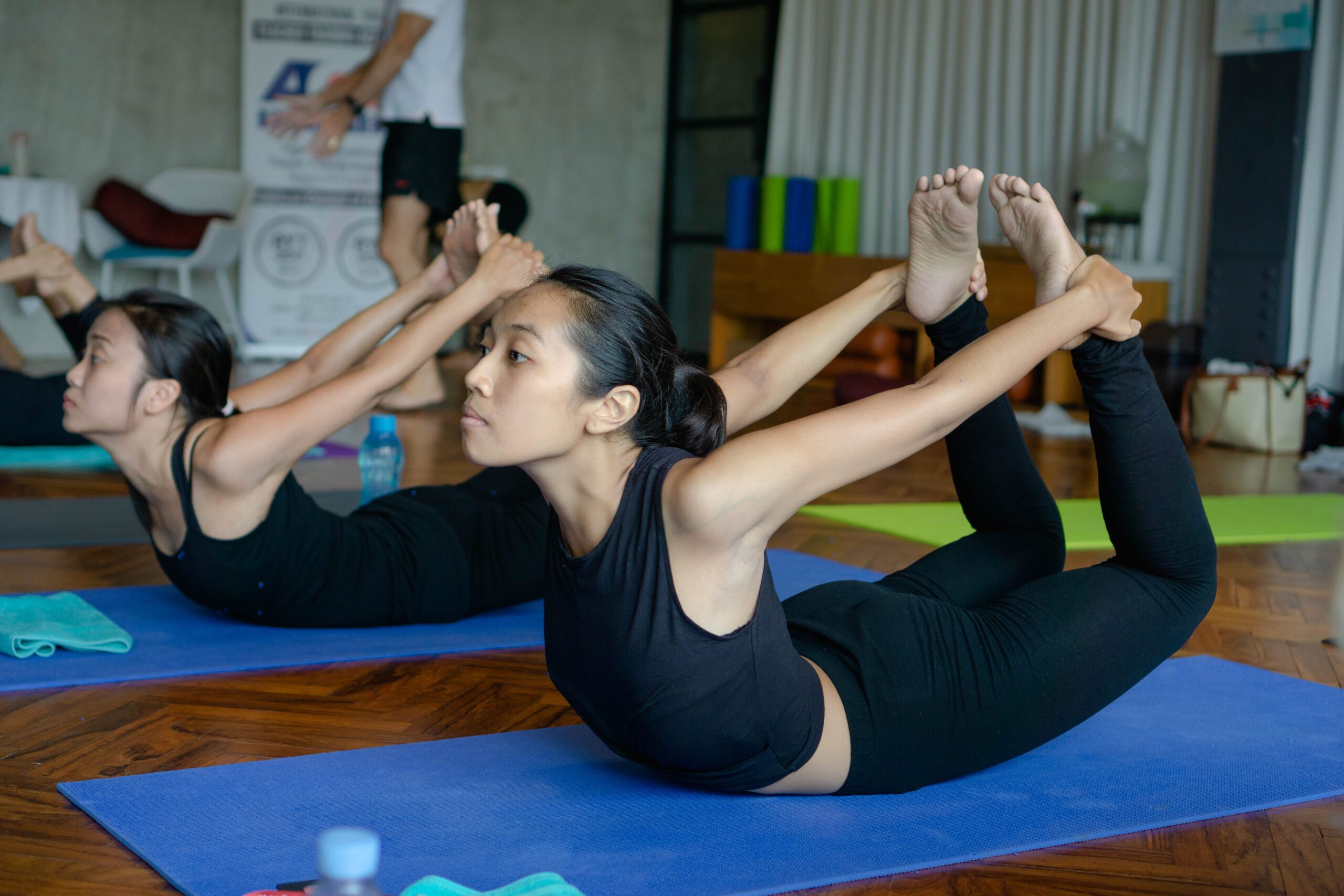
Morning vs evening yoga comes down to how your day works, not a magic hour. Morning classes build routine and leave your evenings free. Evening classes loosen a stiff body and mark the end of work. At YogaFX in Bali, the room is held around 40°C in natural tropical heat either way, so the best time is the one you will keep.

Most guides treat morning vs evening yoga as a physiology contest. The truth is less dramatic. Research on the best time to do hot yoga is thin, and the real differences show up in food, energy, stiffness, sleep and Bali traffic. This guide walks through each one so you can choose your class time with confidence.
It draws on the experience of Mr. Ian Terry, E-RYT 500, founder of YogaFX. He has taught more than 12,000 hours and has trained over 1,500 graduates from 80+ countries since 2017.
Morning vs Evening Yoga: The Short Answer
Both times work. They simply suit different people and different goals. This table sums up the main differences before we go deeper.
| Factor | Morning class | Evening class |
|---|---|---|
| Body feel | Often stiffer at the start | Often looser after a day of moving |
| Food | Easy to practise on a light stomach | Needs planning around lunch and dinner |
| Energy | Starts the day with focus | Releases the day’s tension |
| Sleep | Little direct effect | Needs a gap before bed |
| Routine | Fewer clashes with plans | Can compete with social plans |
| Traffic | Usually quieter roads | Often busier roads |
These are tendencies, not rules. Your own body, job and sleep habits matter more than any average. Keep that in mind as you read the details.
Five Real Differences Between Morning vs Evening Yoga
When you compare morning vs evening yoga honestly, five differences matter in daily life. Everything else is detail.
1. How stiff your body feels
Most people feel tighter first thing in the morning, after hours of lying still. Core body temperature also tends to rise through the day and peaks in the late afternoon or early evening. For that reason, many students feel looser in an evening class.
In Bali the gap is smaller than elsewhere. The room is warm and humid whatever the hour, so the first fifteen minutes warm you up in both cases. Morning students simply spend a little longer easing into the standing series.
2. What you can eat
Hot yoga works best on a light stomach. Finish any real meal two to three hours before class. In the morning that is easy, because you can practise before breakfast or after a small snack.
Evening classes need more planning. Lunch has to be early and light, and dinner waits until afterwards. Our guide on what to eat before hot yoga lists easy options for both.
3. Energy and mood
Morning classes give many students a clear head for the rest of the day. You finish early, shower, and start work already moving. Evening classes work the other way. They give you a clear break between the day’s problems and your night.
Neither effect is guaranteed, so test it yourself. If you are a night owl, a 06:00 start may feel like punishment. If you crash at 17:00, an evening class may be too hard. Match the time to your natural rhythm.
4. Sleep
Heat raises your heart rate and body temperature, and both settle again after class. For some students an evening class helps them wind down. For others, a late session leaves them wired for an hour or two.
Because sleep varies so much, a simple rule helps. Leave a few hours between your class and bed, and notice how you sleep for the first week. If your sleep gets worse, move the class earlier.
5. Routine and logistics
This is where most people actually decide. Morning classes sit in the quiet part of the day, before meetings and plans. Evening classes fit people who work early or cannot leave the office until late.
Bali’s south coast traffic is usually heaviest around midday and in the late afternoon. Early starts and later evening classes tend to be easier on the road. The YogaFX studios are open every day from 06:00 to 22:00, so you can pick the window that suits your day.
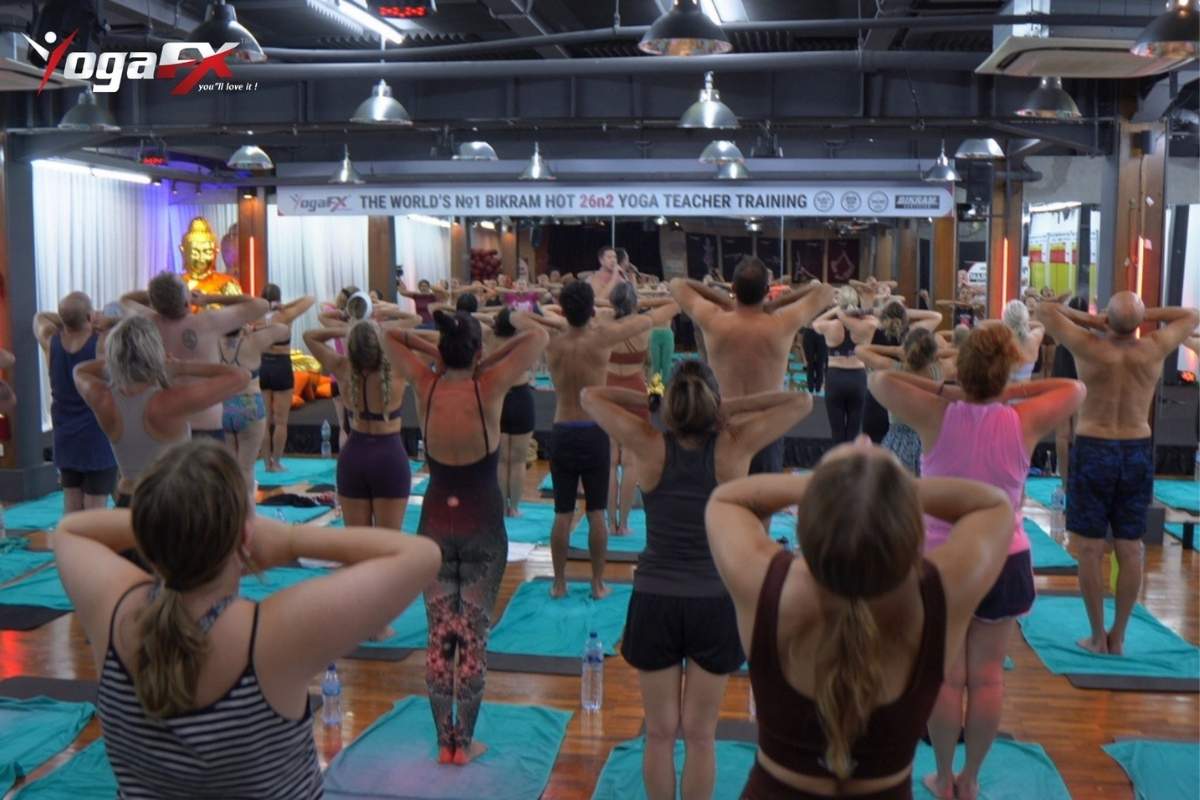
Morning Hot Yoga in Bali: Who It Suits
A morning class is a strong choice if you like a fixed routine. You do the hard thing first, and the rest of the day is yours.
- People who want a daily habit. Fewer things can interrupt a 07:00 class than a 18:00 one.
- Holiday visitors. You finish early and still have the whole day for the beach, temples or a café.
- Early risers. If you already wake at dawn, a morning class costs you nothing.
- Anyone who dislikes a heavy stomach. Practice before breakfast feels lighter.
The trade-off is stiffness. For example, you may feel tight for the first few postures. Arrive early, move gently and give your body time. Resting on your mat is always allowed.
Evening Hot Yoga in Bali: Who It Suits
An evening class suits people whose bodies loosen as the day goes on, or whose mornings are already full.
- Desk workers and remote workers. A class after work breaks the sitting pattern and clears your head.
- Night owls. If mornings are hard, you will perform better later.
- People who feel stiff in the morning. Many students find the postures easier after a day of moving.
- Anyone using class as a day-end ritual. The hot room is a clear boundary between work and rest.
The trade-offs are food planning and sleep. Eat lightly at lunch, and leave a few hours before bed. If your evenings fill with dinners and plans, a morning slot may survive better.
What the Research Says About Timing (and What It Doesn’t)
Here is the honest position. We are not aware of a study that compares morning vs evening yoga directly, and none of the research we cite does. What the studies do show applies to hot yoga at any hour. Three findings are worth knowing:
- Calorie burn and heart rate. A University of Wisconsin study (Porcari et al., 2014) found that a 90-minute Bikram class raised heart rate to about 80% of maximum. Women burned an average of 333 kcal and men 460 kcal (PubMed 24700459). The study did not test different times of day.
- Strength and flexibility. An 8-week study by Tracy and Hart (2013) reported gains in strength, flexibility and body composition in healthy adults who practised Bikram yoga (PubMed 23438366). The benefit came from showing up, not from the clock.
- Mood. In an 8-week Massachusetts General Hospital trial (Nyer et al., 2023), 59% of people doing heated hatha yoga had their depression symptoms drop by half or more, against 6.3% on the waitlist (PubMed 37883245). That study used heated hatha yoga, not the Bikram sequence specifically.
The takeaway for morning vs evening yoga is simple. Regular practice matters more than the hour you choose. Hot yoga is also not a medical treatment, and it does not suit everyone. Anyone who is pregnant, or who has a heart condition or blood pressure concerns, should consult a healthcare professional before practising in a heated room.
Which Goal Favours Which Time?
Use this morning vs evening yoga table as a starting point, then adjust after a week of testing.
| Your goal | Lean towards | Why |
|---|---|---|
| Build a daily habit | Morning | Fewer clashes with plans |
| Feel looser in the postures | Evening | Body is often warmer after a day of moving |
| Start the day with focus | Morning | You finish before the day’s demands |
| Unwind after work | Evening | The class marks the end of the working day |
| Practise on a light stomach | Morning | Easier to avoid a recent meal |
| Avoid midday and late afternoon traffic | Early morning or late evening | Roads are usually quieter |
If two rows point in different directions, for instance, trust the one that protects consistency. A class you attend four times a week beats a “perfect” slot you attend once.
Common Mistakes When Choosing Between Morning vs Evening Yoga
Most people who struggle with their class time make one of the same few errors. Spotting them early saves weeks of frustration.
- Choosing the “ideal” slot instead of the realistic one. A 06:00 class sounds heroic. If you are asleep until 08:00 every other day, you will skip it.
- Judging a slot after one class. Your first hot yoga session is a shock whatever the hour. Wait for three or four visits before you decide.
- Eating a big lunch before an evening class. That single choice ruins more evening sessions than the heat does.
- Drinking water only just before class. Hydration is a full-day habit, in the morning and the evening alike.
- Ignoring how you sleep. If an evening session leaves you restless, that is useful information, not a failure.
- Changing slots every week. Constant switching makes it hard to build the habit you came for.
Notice that none of these mistakes are about the clock itself, so they are easy to fix. They are about fit. That is why the best time to do hot yoga is the one that matches your life, and why consistency beats timing in almost every case.
Some students ask whether hot yoga in the morning or evening changes the postures themselves. It does not. The class is the same 90-minute, 26-posture sequence either way, taught by the same scripted dialogue, in the same room. Only your body and your day are different.
A One-Week Test to Find Your Best Time
Instead of guessing, run a simple morning vs evening yoga experiment. It takes one week and costs nothing extra.
- Pick two time slots. One morning and one evening that both fit your schedule.
- Alternate them. Take a class in each slot over the week, with a rest day between.
- Note three things. Energy during class, how stiff you felt, and how you slept that night.
- Choose the winner. Keep the slot where you felt best and found it easiest to turn up.
- Give it two more weeks. Heat tolerance improves with repeat visits, so judge the slot again after a few classes.
For a sensible weekly rhythm, see our guide on how often to do Bikram yoga. If you are new to heat, our walkthrough of your first hot yoga class in Bali explains what to expect at either time.
Tips for Morning and Evening Classes
These habits help whichever slot you choose:
- Arrive 15 minutes early. That gives you time to check in, set up your towel and settle your breathing.
- Hydrate across the whole day. Sip water from the morning instead of drinking a litre just before class. Replace water and electrolytes afterwards.
- Eat light, early. Finish any real meal 2 to 3 hours before class. A small snack is fine closer to the start.
- Go easy the night before a morning class. Alcohol and a very late night make the heat feel much harder.
- Leave a gap before bed after an evening class. Give your body time to settle.
- Bring a large mat towel, a small hand towel and a full water bottle. A bare mat gets slippery once you sweat.
- Tell the instructor about any health condition before class starts.
Morning vs Evening Yoga for Expats and Longer Stays
If you live in Bali or stay for weeks, the morning vs evening yoga question changes. You are no longer asking what feels best on one day. You are asking which slot will survive a busy month.
Morning slots tend to protect a habit, because work and social plans rarely start before 08:00. Evening slots survive when your job is flexible and you like ending the day with a hard session. Many long-term students mix the two, keeping one anchor slot and using the other when life changes.
Our guide to yoga in Bali for expats covers building a practice that lasts. If you live near Canggu, our guide to yoga studios in Canggu helps you compare your options.
Why Try Morning vs Evening Yoga at YogaFX
Three things make YogaFX a good place to settle the morning vs evening yoga question.
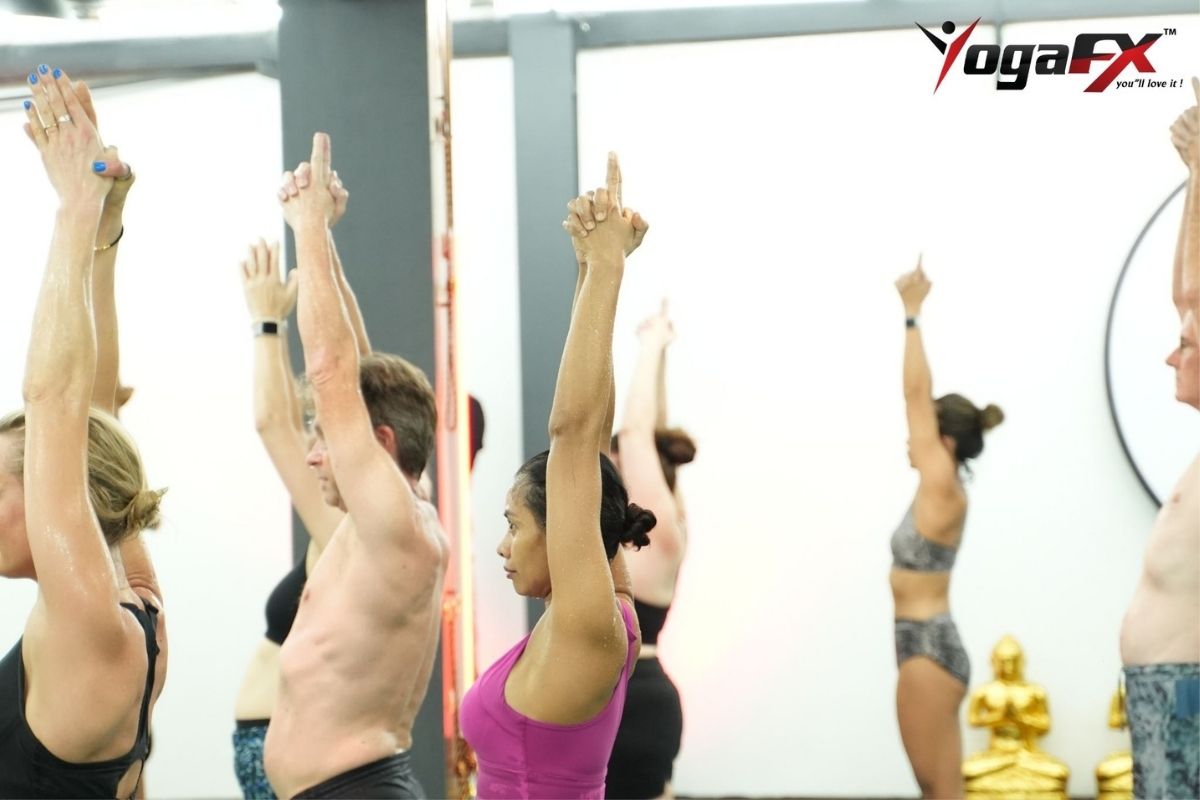
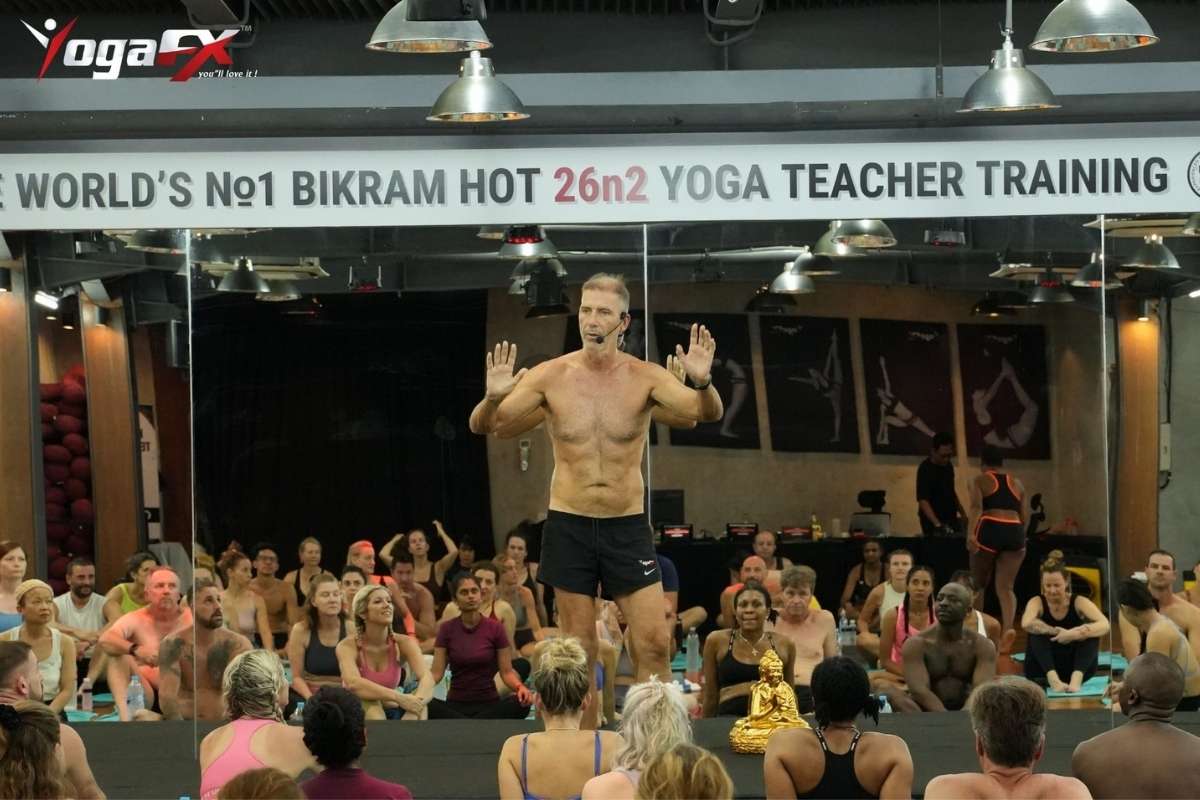
First, the teaching standard. Mr. Ian Terry is E-RYT 500 and has taught more than 12,000 hours. He trained for five years, from 2014 to 2019, with the founder of the Bikram Hot 26&2 method. In June 2026 he was confirmed as Master Trainer of the Republic of Indonesia Yogasana Sports Federation. Every teacher at the studios delivers the same scripted dialogue he teaches.
Second, the reviews. YogaFX has 150 Google reviews. A common thread is that people arrive nervous about the heat and leave surprised by how good they feel. One reviewer admitted he dreaded the class and thought he might not finish, then described feeling incredible afterwards.
Third, the flexibility. The studios in Seminyak and Canggu are open every day from 06:00 to 22:00. The class is the same 90-minute Hot 26&2 sequence in natural tropical heat whenever you come. Message the team on WhatsApp for the current timetable.
FAQ
Is morning or evening better for hot yoga?
Neither is better for everyone. Morning classes suit routine and a light stomach. Evening classes often suit a stiffer body and a day-end reset. Both give the full 90-minute Hot 26&2 sequence at YogaFX. Try one of each for a week and keep the one you enjoy most.
Should I eat before morning hot yoga?
Eat lightly and early. Finish any real meal two to three hours before class. For a morning slot, that usually means practising before breakfast or after a very small snack. Have a proper breakfast once your body has cooled down, and sip water through the rest of the day.
Does evening hot yoga affect sleep?
It can go either way. Some students sleep well after an evening class, while others feel wired for a while. Leave a few hours between class and bed, and watch your sleep over the first week. If it gets worse, move your class earlier in the day.
How early should I arrive for a morning class?
Arrive about 15 minutes before the start. That gives you time to check in, set up your mat and towel, and settle your breathing. Morning bodies often need a little more time to ease into the heat, so do not rush in at the last minute.
Can I try a morning and an evening class before I commit?
Yes. First-time visitors can try a class free with the YogaFX Free Guest Pass at the Seminyak or Canggu studio. Message the team on WhatsApp at +628113888330, share your dates and preferred times, and they will confirm a class and the current timetable.
Not sure which slot suits you? Message Mr. Ian and the YogaFX team on WhatsApp, tell us your schedule, and we will help you pick. Claim your Free Guest Pass on WhatsApp.
This article is for general educational purposes and is not medical advice. Anyone with a heart condition, high blood pressure, or other health concerns should consult a healthcare professional before practising in a heated room.