A 300-hour yoga teacher training is an advanced program you take after you already hold a 200-hour certification, and the two combined qualify you for Yoga Alliance’s RYT 500 registration. It typically runs USD 3,000 to USD 6,000, takes anywhere from three weeks intensive to a year part-time, and goes deeper into anatomy, adjustments, and a specific teaching lineage rather than covering the basics again.
For most new teachers deciding where to start, the real question isn’t whether a 300-hour program is good, it’s whether you need one yet, or whether a single, more rigorous 200-hour training gets you further faster.
What a 300-Hour Yoga Teacher Training Actually Covers
A 300-hour program assumes you can already teach a basic class. It doesn’t reteach posture names or class structure, it builds specialization on top of a 200-hour foundation. Most curricula split roughly into four areas: advanced asana and hands-on adjustment, applied anatomy and injury-aware sequencing, a deeper study of philosophy or a specific lineage’s teaching method, and practicum hours actually leading classes under supervision.
- Advanced asana and hands-on adjustment. Learning to physically assist students into deeper or safer expressions of postures already covered at the 200-hour level, rather than new poses entirely.
- Applied anatomy and injury-aware sequencing. Moving past general anatomy into how to sequence and modify a class around common injuries, joint limitations, and specific student populations.
- Deeper philosophy or lineage-specific method. Extended study of the tradition behind a specific style, going beyond the survey-level philosophy typically covered in a 200-hour syllabus.
- Supervised practicum. Real teaching hours leading classes under observation, with a mentor correcting cueing, pacing, and room management in real time.
What varies enormously between schools is how much of that 300 hours is genuinely new material versus repackaged 200-hour content stretched out. Reddit threads on r/YogaTeachers return to this complaint often: a 300-hour certificate with the same posture clinic content as the 200-hour, just taught slower. That’s worth checking before you pay for one, ask the school directly what percentage of the syllabus is new versus review, and ask to see a day-by-day schedule, not just a module list.
300-Hour vs 200-Hour: What Actually Changes
| Factor | 200-Hour | 300-Hour |
|---|---|---|
| Prerequisite | None | Active RYT 200 |
| Typical cost (US market) | USD 2,000-4,000 | USD 3,000-6,000 |
| Typical duration | 3-6 weeks intensive, or months part-time | 3 weeks to 1 year, often part-time |
| Content focus | Foundations: posture, alignment, teaching methodology, anatomy basics | Specialization: advanced adjustment, deeper anatomy, lineage-specific method |
| Combined credential | RYT 200 | RYT 500 (once combined with an RYT 200) |
| Who it’s for | Anyone starting from zero | Working teachers deepening a specific practice |
The credential difference matters less to most hiring studios than people assume. YogaFX has walked candidates through hundreds of these conversations, and the pattern holds: a studio hiring for its regular class schedule checks whether you hold an active RYT 200 and whether you can actually teach the style the room practices. An RYT 500 opens doors at studios specifically seeking senior or specialized instructors, teacher-trainer roles, or therapeutic/private clientele, but it rarely changes whether you get hired for a standard studio slot.
What a 300-Hour Program Actually Costs
The USD 3,000 to USD 6,000 range for a 300-hour program reflects a few real cost drivers, not an arbitrary markup. Because enrollment requires an active RYT 200, cohorts are smaller and the curriculum is more specialized, which raises the per-student cost of instructor time.
Advanced adjustment training in particular requires a low student-to-instructor ratio, since hands-on correction can’t scale the way a lecture-format module can. Programs that include a mentored practicum, where an experienced teacher observes and corrects your actual classes rather than just grading a written exam, cost more to run than a purely academic add-on.
As with any teacher training, price alone doesn’t indicate quality. A 300-hour program at the low end of the range that’s mostly self-paced video content with a short in-person weekend is a different product from one at the same price point built entirely around live mentored practicum. The same comparison questions that apply to a 200-hour program apply here: how many of the hours involve the lead instructor personally, what the actual practicum-to-lecture ratio is, and whether Yoga Alliance registration processing is included in the quoted price.
How to Evaluate a 300-Hour Program Before You Enroll
Because the format and quality of 300-hour programs vary so widely, a short evaluation checklist saves more money than any amount of price comparison alone. Start by asking what percentage of the total hours is live instruction with the lead trainer present, versus pre-recorded video or independent reading. A program that’s heavy on self-study but priced like a fully mentored one isn’t necessarily bad value, but you should know which one you’re buying before you commit.
- Practicum hours, stated explicitly. Ask for the exact number of hours you’ll spend actually teaching under supervision, not just “hands-on training” as a vague category.
- Instructor-to-student ratio during adjustment work. A 1:20 ratio for hands-on adjustment training is a different experience than 1:5, and the difference rarely shows up in the marketing copy.
- Yoga Alliance Continuing Education registration status. Confirm the school’s 300-hour program is actually registered with Yoga Alliance as a Continuing Education Provider, not just self-described as “300 hours.”
- What happens if you don’t finish. Ask about refund and completion policies before paying a deposit, particularly for programs spread across many months, since life circumstances change and not every program prorates fairly.
None of these questions are unusual or aggressive to ask. A program confident in what it delivers will answer them directly and specifically. Vague answers, or answers that redirect to marketing language about transformation and community without addressing the actual hour breakdown, are themselves useful information.
Why the Research Points Toward Depth Over Hours
Willmott et al.’s 2025 systematic review of Bikram-style hot yoga research, covering 43 studies and 942 participants, found that the instructor’s precision in cueing and sequencing correlated more strongly with student outcomes than the raw hour count of the teacher’s training.
That’s consistent with what shows up anecdotally across the industry: a 200-hour teacher who trained intensively under one experienced instructor, with real supervised practicum hours, often teaches a tighter class than a 500-hour teacher whose training was spread across disconnected weekend modules from three different schools.
This is the case for choosing training quality and specificity over stacking hour counts. A generalist 200-hour certification followed by a generalist 300-hour add-on gives you a broad but shallow credential. A single intensive program built around one method, with real dialogue mastery and supervised teaching reps, can produce a more confident, more employable teacher in less total time and at lower total cost.
Tracy and Hart’s 2013 research on Bikram-style practitioners found measurable strength and flexibility gains tied directly to consistent, correctly cued practice, not simply to time spent in a training room. Applied to teacher training, the implication is the same: a teacher’s ability to cue and adjust precisely matters more to student outcomes than whether their certificate says 200 hours or 500.
Hour count is a proxy for competence, not a guarantee of it, and schools that lean heavily on the number itself in their marketing are often signaling that the number is the most compelling thing they have to offer.
Who Should Actually Consider a 300-Hour Program
A 300-hour training makes sense in a narrower set of situations than most marketing for these programs suggests. It’s a good fit if you’re already teaching regularly, ideally at least six months to a year in, and have identified a specific gap in your skills, such as adjustment technique, working with a particular injury population, or a deeper grounding in one lineage’s philosophy. It also makes sense if a specific senior role you want, a teacher-trainer position, a therapeutic or private-client specialty, explicitly requires or strongly prefers RYT 500 registration. For a fuller picture of what the teaching career path and income actually look like at each stage, see our yoga instructor career and income guide.
It makes less sense for someone who hasn’t started teaching yet, or who’s still deciding which style of yoga to commit to. Stacking a 300-hour credential onto a 200-hour foundation before you’ve taught a single class doesn’t address a skill gap you’ve actually identified through experience, it’s paying for depth before you know where you need it. In that situation, a more rigorous, more specific 200-hour program, and a year or two of real teaching experience, usually gets a new teacher further than an early 300-hour add-on.
There’s also a financial dimension worth naming plainly. A 300-hour program adds USD 3,000 to USD 6,000 on top of whatever a trainee already spent on their 200-hour certification, plus travel and lost income if the format requires time away from teaching. For a new teacher still building a class roster and an income base, that’s a significant outlay to spend on specialization before the generalist skills are earning consistently. Waiting a year, building experience and savings, and choosing a 300-hour program deliberately once a specific gap is clear is rarely the wrong call.
Red Flags When Choosing a 300-Hour Program
Because so much of a 300-hour program’s value depends on how much of the material is genuinely new, a few warning signs are worth checking before enrolling. A syllabus that closely mirrors the school’s own 200-hour curriculum, just with longer sessions or extra reading, is often repackaged content rather than real specialization.
A program that doesn’t specify practicum hours separately from lecture or video hours makes it hard to know how much of the 300 hours is actually supervised teaching practice versus passive learning. A program priced well below the typical USD 3,000 to USD 6,000 range for an in-person, fully mentored format is worth asking about directly, since the practicum ratio or instructor access is usually what gets cut to hit a lower number.
Watch too for programs that can’t name the specific lineage or method the 300 hours specializes in. “Advanced yoga teacher training” without a clearly stated focus, whether that’s therapeutic adjustment, a particular style’s advanced sequencing, or trauma-informed teaching, usually means the curriculum is a generic collection of workshops rather than a coherent specialization. The strongest 300-hour programs can tell you in one sentence exactly what skill you’ll walk away with that you didn’t have before.
The YogaFX Alternative: Dual Certification in One Intensive
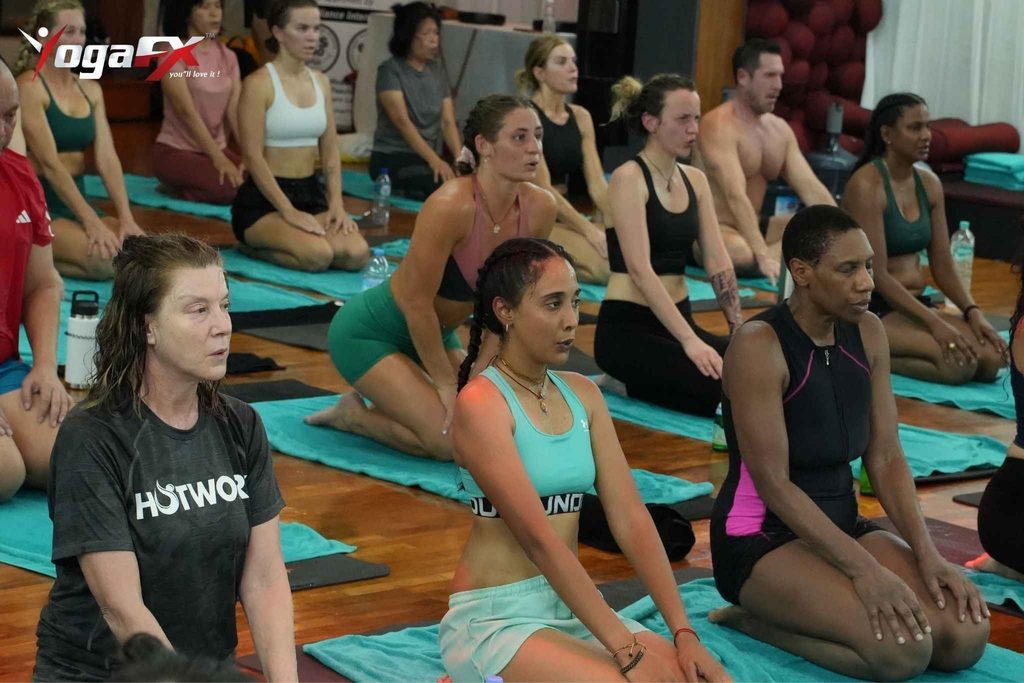
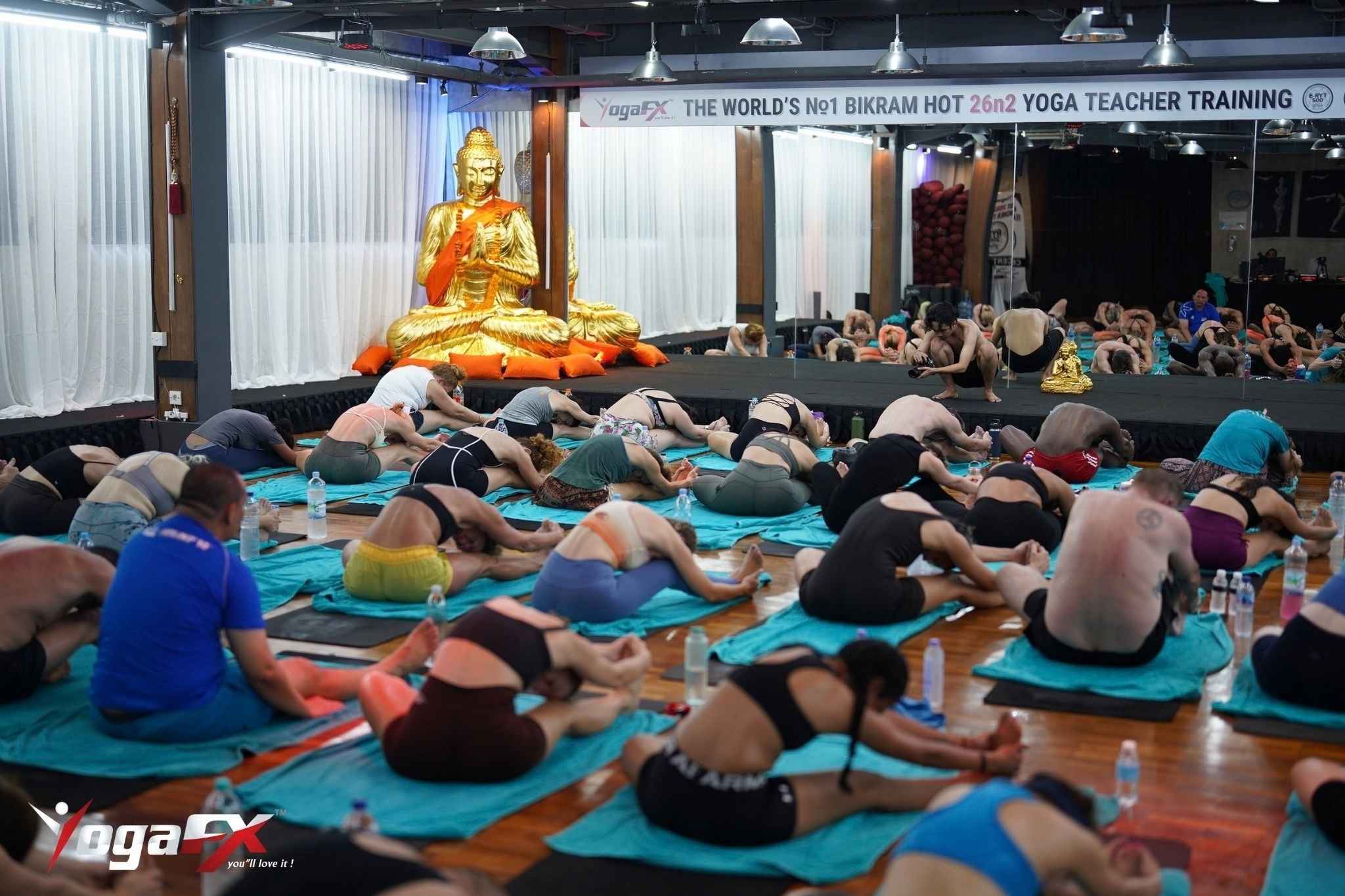
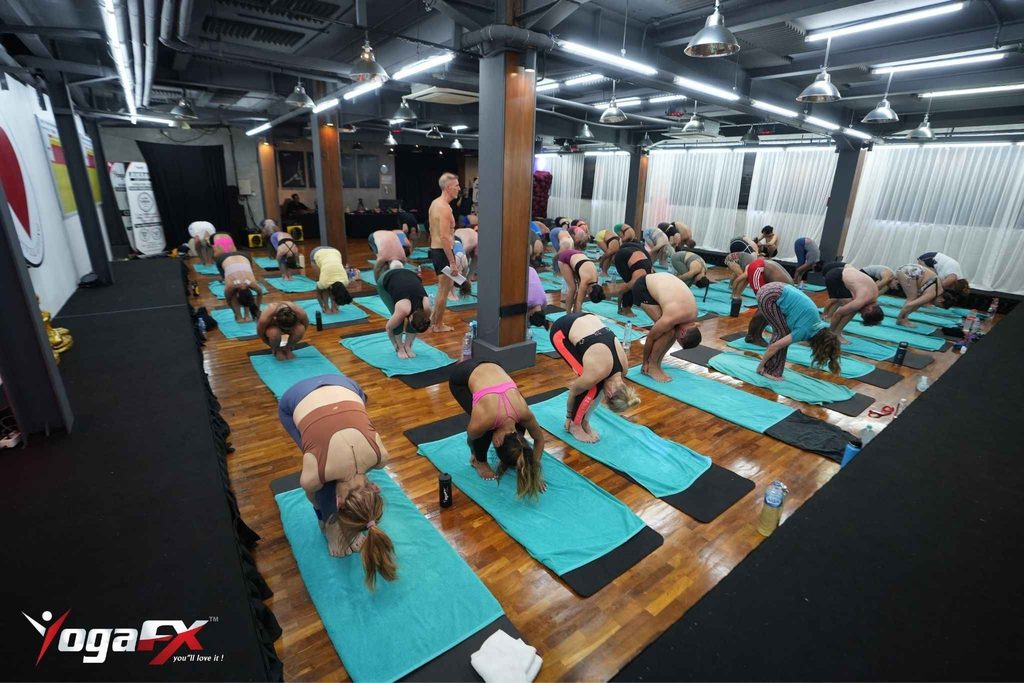
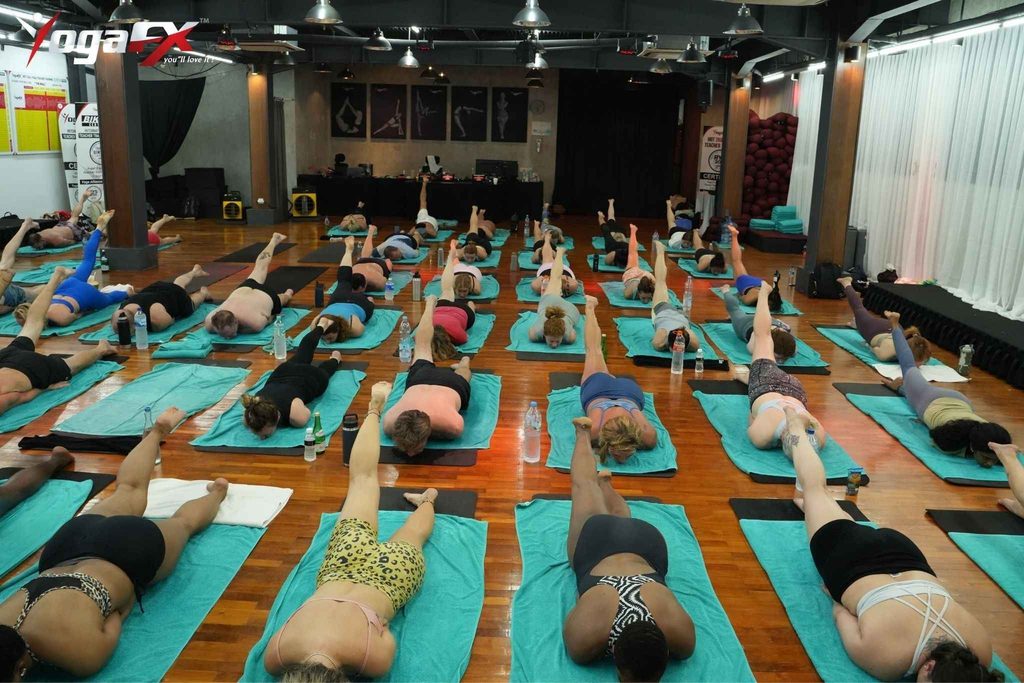
YogaFX doesn’t run a 300-hour program, and that’s a deliberate choice rather than a gap. The 6-day intensive Bikram Hot 26&2 Yoga Teacher Training in Seminyak, Bali delivers dual certification, Yoga Alliance RYT 200 plus the Bikram Hot 26&2 credential, in a single cohort capped at 19 students. Every trainee learns the full 90-minute scripted dialogue for all 26 postures and 2 breathing exercises directly from Mr. Ian Terry, E-RYT 500, who trained across 5 direct events under Bikram Choudhury between 2012 and 2019 and has logged more than 12,000 teaching hours since.
That format solves the exact problem a 300-hour add-on is often bought to fix: depth of practicum and specificity of method. Instead of a broad 200-hour foundation followed by a separate, sometimes disconnected 300-hour specialization, trainees leave with one focused credential in a single lineage, taught by one instructor, with immediate teaching reps in the same natural-heat room they trained in.
Graduates like Ivara Candra Kartika and Arkan Fauzan Riyanto went on to medal at the World Yogasana Sports Federation Championships in Ahmedabad in June 2026, evidence that a single well-built intensive can produce teaching precision that stacking certificate hours doesn’t automatically guarantee.
For a practitioner who already knows they want to teach one specific, authentic method rather than build a generalist multi-style resume, this is usually the more direct path: one certification, one lineage, real dialogue mastery, done in six days instead of spread across a year of part-time modules.
For those who do go on to teach for a year or more and later decide a 300-hour specialization is worth pursuing, the dual RYT 200 plus Bikram Hot 26&2 credential from this program satisfies the RYT 200 prerequisite most 300-hour schools require, meaning the intensive doesn’t close that door, it simply delays it until a real need is identified.
FAQ
Is a 300-hour yoga teacher training worth it?
It’s worth it if you’re already teaching regularly and want to specialize in a specific method, adjustment style, or therapeutic niche. For someone still deciding what style to commit to, a single intensive, dual-certified 200-hour program often delivers more practical teaching readiness for less total cost and time.
How long does a 300-hour yoga teacher training take?
Anywhere from three weeks as a full-time intensive to a full year part-time, depending on the school’s format. Most hybrid programs run modules over several months, while destination intensives compress the same hours into a shorter block.
What’s the difference between 200-hour and 300-hour yoga teacher training?
A 200-hour program teaches the foundations: posture, alignment, sequencing, and basic teaching methodology, with no prerequisite. A 300-hour program requires an active RYT 200 and builds specialization: advanced adjustment, deeper anatomy, and lineage-specific method. Combined, they qualify a teacher for Yoga Alliance’s RYT 500 registration.
Does YogaFX offer a 300-hour teacher training?
No. YogaFX runs a 6-day dual-certified 200-hour intensive (Yoga Alliance RYT 200 plus Bikram Hot 26&2 certification) led by Mr. Ian Terry, E-RYT 500, in Seminyak, Bali. Trainees seeking RYT 500 status would pursue a separate 300-hour program after building teaching experience.