If you’re planning a day trip or island stay on Nusa Penida, Nusa Lembongan, or the Gili Islands and searching for Bikram or hot yoga, here’s the honest answer: none of these islands have a true Bikram 26&2 studio.
What you’ll find is a genuinely good scene of open-air vinyasa, hatha, and dive-resort yoga classes, especially on the Gilis, but not the fixed 90-minute natural-heat sequence.
If the full Bikram method matters to your trip, it’s a mainland stop at YogaFX in Seminyak or Canggu before or after your island days.
Yoga on Nusa Penida: What’s Actually There
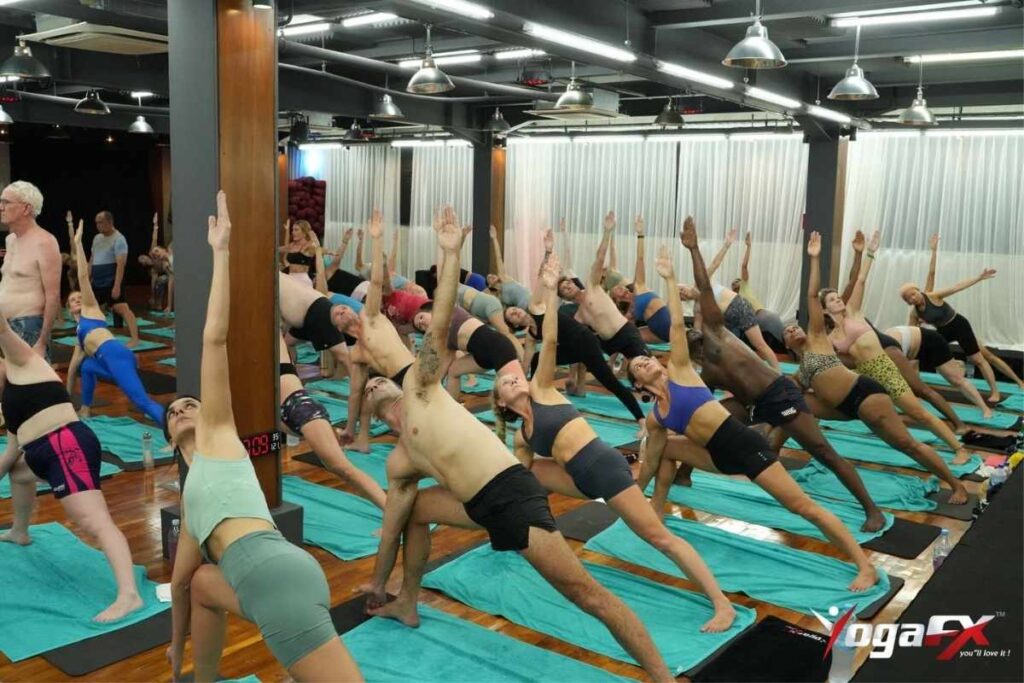
Nusa Penida’s yoga scene is small and mostly tied to dive resorts rather than dedicated studios. Deep Roots Dive & Yoga Resort runs daily open-air classes alongside its diving programme, Tishe House of Balance combines yoga with spa treatments and a café on the island’s north coast, and Sanctuary Yoga in Ped offers drop-in sessions that show up consistently in visitor reviews.
These are casual, welcoming classes built around the island’s cliff and ocean scenery, not a fixed heated sequence.
Most visitors are on Nusa Penida for a single day, chasing the cliffside viewpoints at Kelingking and Broken Beach, which leaves little room to plan around a yoga class anyway. If you’re staying overnight, the dive-resort classes are worth checking into, but don’t expect anything resembling Bikram’s dialogue-led, 40°C room.
Yoga on Nusa Lembongan: What’s Actually There
Lembongan’s yoga offering leans toward the same retreat-adjacent model as Penida, with studios such as The Yoga Garden Lembongan running regular vinyasa and hatha classes for both guests and drop-ins. The island’s slower pace and surf-and-snorkel reputation make it a natural fit for a gentle morning practice before the day’s activities, but again, this is flow-based yoga rather than a fixed heated method.
Lembongan sits close enough to Penida that many visitors combine both islands in a single multi-day trip from Sanur, which also means any yoga plans there are usually built around a longer island stay rather than a quick day trip.
Yoga on the Gili Islands: What’s Actually There
The Gilis have by far the most developed yoga scene of the three island groups, and it’s worth treating separately since it draws real, dedicated search demand. Gili Yoga on Gili Trawangan runs a full daily schedule of vinyasa, yin, and breathwork from a garden studio steps from the beach, and is one of the longest-running schools in the islands.
Sunset Beach Yoga Gili Trawangan and Flowers and Fire Yoga Garden on Gili Air both have strong review counts and run multiple daily sessions, while H2O Yoga and Meditation Center on Gili Air positions itself as a dedicated retreat destination rather than a drop-in studio.
Some Gili studios market certain classes as “hot yoga,” and the tropical humidity there does add real heat to a room without air conditioning.
But this is ambient island heat applied to a standard vinyasa or ashtanga class, not the specific 40°C, 40% humidity room paired with a fixed 26-posture sequence and scripted dialogue that defines Bikram. The distinction matters if you’re specifically chasing the Bikram method rather than “yoga that happens to be warm.”
Why None of These Islands Have a True Bikram Studio
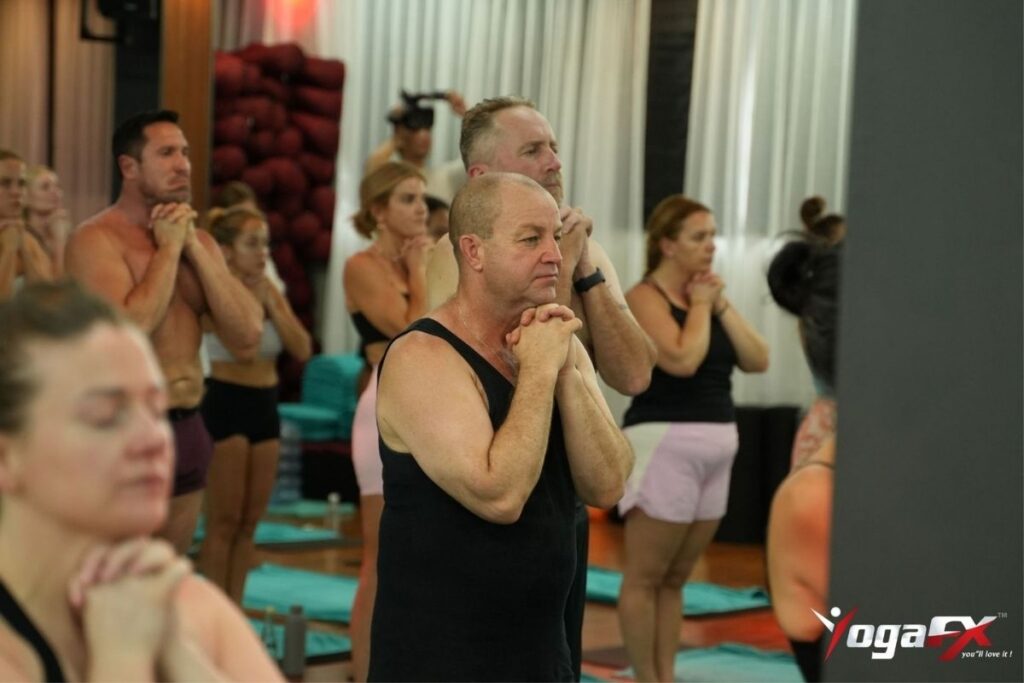
Running an authentic Bikram room isn’t just a matter of warm weather. It needs a space built to hold a consistent 40°C and 40% humidity for a full 90 minutes, plus an instructor trained to deliver the scripted dialogue from memory, without music or demonstration. Smaller islands running on limited power infrastructure and a rotating cast of freelance instructors are set up for exactly the opposite: flexible, low-overhead studios that can run vinyasa or hatha with whoever’s available that season.
Bali’s mainland studios have an advantage here that’s genuinely rare even within Indonesia: a Bikram room that uses the island’s own tropical heat and humidity instead of electric heaters, paired with year-round consistency that a seasonal island studio can’t easily match. Research on the format shows why that consistency is worth the trip.
An eight-week Bikram programme produced roughly a 20% increase in posterior chain strength and measurable flexibility gains (Tracy & Hart, 2013), and a systematic review of 43 studies covering more than 900 participants found consistent benefits for flexibility, bone density, and general well-being across regular practitioners (Willmott et al., 2025). Those outcomes come from sustained practice in a standardised room, which is exactly what the smaller islands aren’t set up to offer yet.
Island Yoga vs Real Bikram 26&2: Side by Side
| Aspect | Nusa Penida / Lembongan / Gili Islands | True Bikram 26&2 (YogaFX Seminyak/Canggu) |
|---|---|---|
| Studio type | Dive resorts, garden studios, retreat centres | Purpose-built Bikram room |
| Heat source | Ambient tropical humidity, no climate control | Natural tropical Bali heat, no electric heaters |
| Sequence | Varies: vinyasa, hatha, yin, ashtanga | Fixed 26 postures + 2 breathing exercises, identical every class |
| Instruction | Verbal cues, demonstration, often music | Scripted dialogue only, no demonstration or music |
| Consistency | Depends on which instructor is on-island that week | Same method taught by E-RYT 500 certified instructors year-round |
| Getting there | Fast boat from Sanur (30 min to 3 hours depending on island) | Drive within Seminyak/Canggu, open 06:00 to 22:00 daily |
Making It Work: Islands and Bikram in One Trip
Fast boats to Nusa Penida and Nusa Lembongan leave from Sanur and typically take 30 to 45 minutes each way, which makes either island genuinely workable as a single day trip from Seminyak or Canggu.
The Gili Islands are a different scale of trip. Getting there usually means a fast boat via Padang Bai or a longer crossing from Lombok, often 2 to 3 hours each way, so most visitors treat the Gilis as an overnight or multi-night stay rather than a day trip.
The practical way to combine both worlds is straightforward: book your island days around the diving, snorkelling, and beach time they’re genuinely good for, and slot a Bikram class in at YogaFX on the days you’re based in Seminyak or Canggu, either before you head out to the islands or once you’re back.
If it’s your first time trying the method, it’s worth reading what to expect in your first Bikram class beforehand, since the heat and pace are different from anything on the islands. Both the Seminyak studio and the Canggu studio run classes daily from 06:00 to 22:00, so there’s flexibility around ferry schedules in either direction.
The YogaFX Difference: Natural Heat and Ian Terry’s Lineage
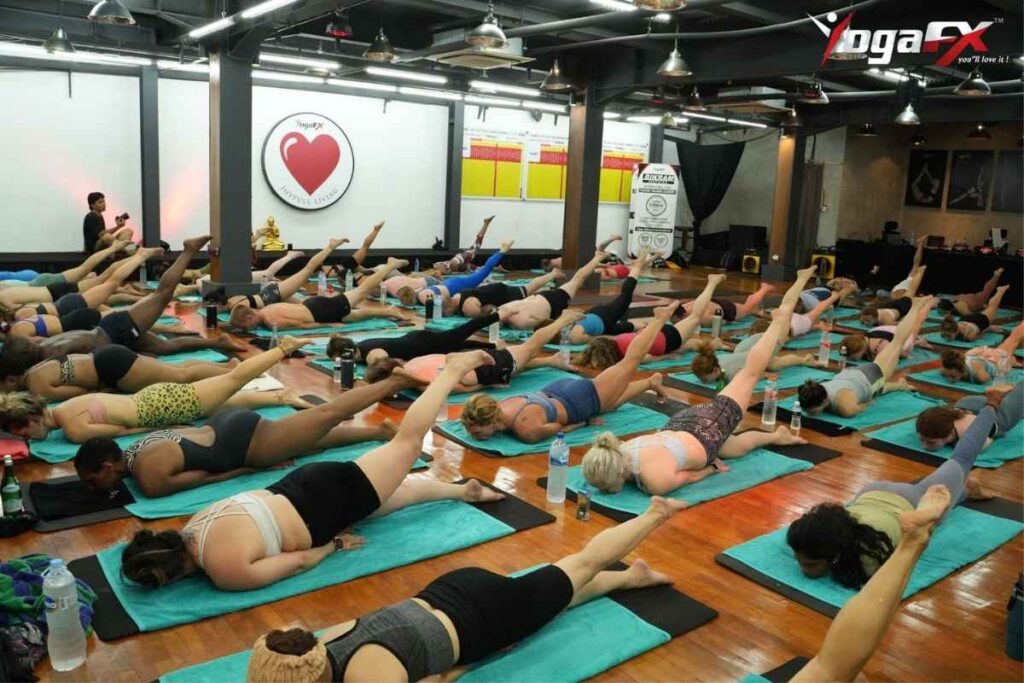
Mr. Ian Terry, E-RYT 500 and founder of YogaFX, trained directly under Bikram Choudhury across five events between 2012 and 2019 and has taught more than 12,000 hours in the room since. That lineage is part of why the dialogue is delivered the same way, class after class, in a way that a rotating roster of freelance island instructors can’t replicate.
The natural heat is the other half of it. Outside the tropics, every Bikram-style studio relies on electric heaters to fake the temperature, and even within Indonesia, few locations pair genuine tropical humidity with a purpose-built, consistently run room the way Seminyak and Canggu do.
Beyond the physical training effect, hot yoga practice has also been linked to a roughly 60% reduction in depression symptoms after eight weeks, with 44% of participants reaching full remission (Harvard Massachusetts General Hospital / Nyer, 2023). For visitors island-hopping across Bali’s coast, that’s the case for building in a mainland stop rather than assuming any warm room counts as the same thing.
First-time visitors can claim a free one-day guest pass at either studio. Details and booking are on the YogaFX Bali homepage.
FAQ
Is there Bikram or hot yoga on Nusa Penida, Lembongan, or the Gili Islands?
No true Bikram 26&2 studio exists on any of these islands. What’s available is vinyasa, hatha, and ashtanga classes at dive resorts and garden studios, most developed on the Gili Islands. For the authentic fixed sequence in natural heat, the nearest option is Seminyak or Canggu on Bali’s mainland.
Can I do a yoga day trip to Nusa Penida or Lembongan from Seminyak or Canggu?
Yes. Fast boats from Sanur to either island typically take 30 to 45 minutes each way, making a single day trip realistic. Most visitors spend the day sightseeing rather than attending a yoga class, since island studios run limited schedules built around resort guests.
Is the Gili Islands a good day trip from Bali for yoga?
Not really as a single day trip. The crossing typically takes 2 to 3 hours each way via Padang Bai or Lombok, so most visitors treat the Gilis as an overnight or multi-night stay. The Gilis do have the most developed yoga scene of the three island groups if you have the extra time.
What’s the difference between the “hot yoga” offered on the Gili Islands and real Bikram yoga?
Gili studios that call a class “hot yoga” usually mean ambient tropical humidity applied to a standard vinyasa or ashtanga sequence, without climate control. Bikram yoga is a fixed 26-posture, 2-breathing-exercise sequence delivered through scripted dialogue in a room held at 40°C and 40% humidity for exactly 90 minutes.
Should I do Bikram yoga before or after my island trip?
Either works well. Some visitors take a class before departing to Nusa Penida or the Gilis to start the trip grounded, while others prefer returning to a familiar heated room after several days of island travel. Both Seminyak and Canggu studios run classes daily from 06:00 to 22:00.