Forgot your yoga mat, or arrived without gear suited to Bali’s heat and humidity? You are not alone, and Bali makes it easy to sort out.
This guide covers where to shop for yoga clothing and equipment across Seminyak, Canggu, and Ubud, and more importantly, what actually matters when you are buying gear for hot yoga specifically, since the fabric and equipment choices that work for a room-temperature Vinyasa class often fail badly in a 40 degree Celsius Bikram room.
Where to Shop by Area
Bali’s yoga wear and equipment shopping splits fairly cleanly by area, and each has a different character worth knowing before you go.
| Area | What You’ll Find | Best For |
|---|---|---|
| Seminyak (Jl. Kayu Aya / Petitenget corridor) | Boutique activewear stores, higher-end local and international brands | Quality hot yoga wear, quick browsing before or after class |
| Canggu (Batu Bolong / Berawa) | A dense cluster of small activewear boutiques and concept stores, often locally made | Trend-forward pieces, independent local labels |
| Ubud (central market and surrounding streets) | Yoga-specific boutiques, printed cotton and rayon pieces, mats and props | Loose, breathable pieces and yoga props, gift shopping |
| Marketplace apps and delivery | Same local brands available for same-day delivery in most tourist areas | Restocking without leaving your accommodation |
None of these areas require advance planning. Bali’s activewear market has grown alongside its yoga tourism boom, and most visitors find something suitable within their first day of looking, whether that is a proper hot yoga top or a simple cotton wrap for a beach club afternoon. If you have not settled on where to base yourself yet, the Seminyak and Canggu area guides cover the shopping scene alongside the studio options in each.
What Actually Matters for Hot Yoga Specifically
Most yoga clothing guides treat all yoga as the same activity, but a 90-minute Bikram class at 40 degrees Celsius with high humidity puts genuinely different demands on fabric and equipment than a room-temperature Hatha or Vinyasa class. Getting this wrong does not just mean discomfort. It can mean a class you cut short because your gear worked against you rather than with you.
Fabric
Cotton absorbs sweat and holds onto it, which means it gets heavy, clingy, and uncomfortable within the first twenty minutes of a hot class. Synthetic moisture-wicking fabrics, the kind used in most dedicated activewear lines, pull moisture away from the skin and dry faster, which matters over a full 90-minute session in Bali’s natural humid heat.
Mayo Clinic’s guidance on preventing heat-related illness similarly recommends lightweight, breathable fabric over heavier materials specifically because clothing choice affects how well the body can cool itself in hot, humid conditions. If you are shopping specifically for hot yoga, prioritise technical fabric over cotton, even if the cotton piece looks and feels nicer on the shop floor.
Fit
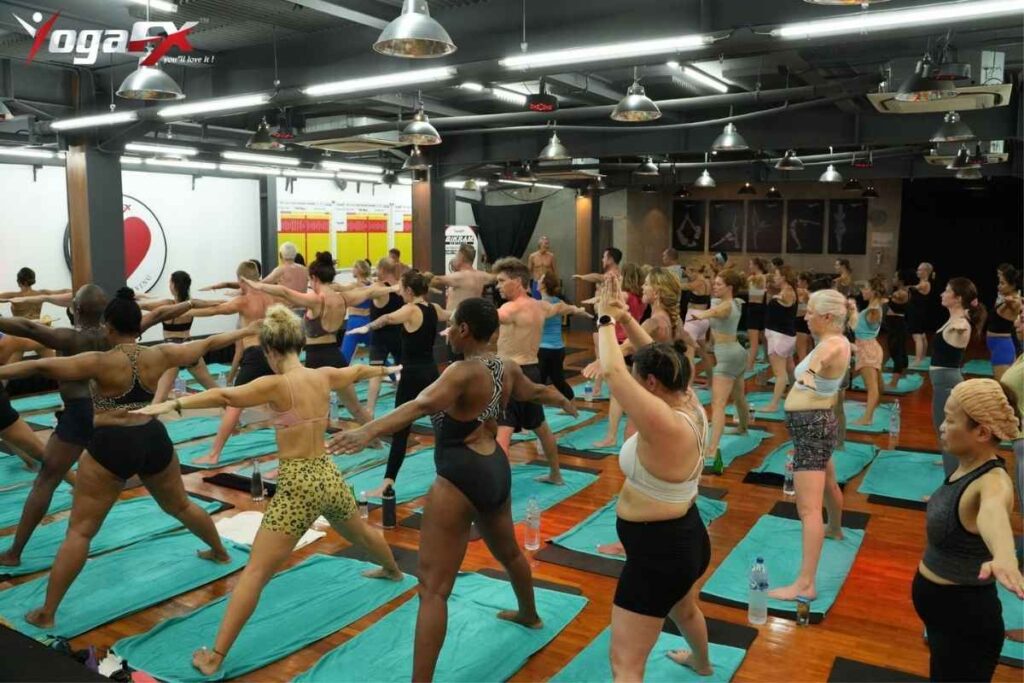
Loose, flowing pieces that look great for a gentle Vinyasa flow become a liability in a heated standing series.
Bikram’s balancing postures, Standing Head to Knee, Standing Bow, Balancing Stick, all require you to see and feel your alignment clearly, and loose fabric bunching or shifting mid-posture is a real distraction.
Fitted, stretch-capable pieces are the practical choice for hot yoga specifically, regardless of what looks best on the rack.
Mat and Towel
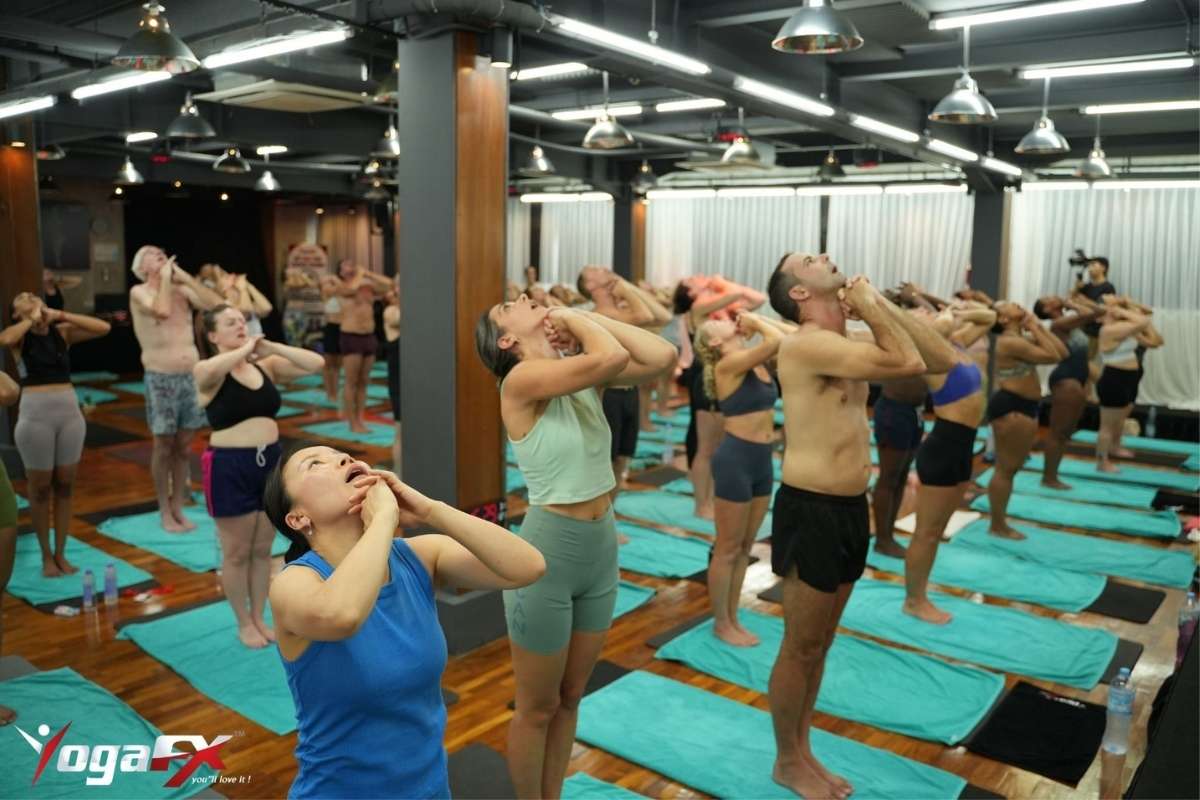
A standard yoga mat becomes genuinely dangerous in a hot, humid room once sweat starts pooling on the surface. A dedicated hot yoga towel, one designed to lie over the mat and grip better as it absorbs moisture, is close to essential rather than optional for a serious practice.
Many practitioners also use a mat towel with silicone grip dots on the underside specifically to stop it sliding during standing postures. If you are buying one item before your first hot yoga class in Bali, make it this rather than clothing.
Budget vs Premium: Where to Actually Spend More
Bali’s yoga wear market spans a wide price range, from simple market-stall leggings to boutique technical activewear priced closer to what you would pay at home. For hot yoga specifically, the spending priority is not intuitive, and it is worth knowing before you are standing in a shop deciding between two very different price points.
The towel is where quality genuinely matters most. A cheap, thin towel without grip will bunch and slide the moment it gets wet, which in a standing balance posture is a real fall risk, not just an inconvenience. This is the one item worth paying a premium for.
Clothing is where budget options genuinely hold up fine, as long as the fabric is synthetic rather than cotton. A mid-range moisture-wicking top from a Canggu boutique performs almost identically to a premium international brand for the purposes of a single Bikram class. The premium brands add durability over hundreds of washes and slightly better temperature regulation, but for a trip of a few weeks or a few months, the difference is marginal.
Water bottles are worth a mid-range spend on insulation specifically. A basic plastic bottle works, but an insulated bottle that keeps water cold through a 90-minute class in a 40 degree room is a noticeably better experience for a marginal price difference, and most Bali shops now stock decent insulated options at reasonable prices.
Packing for a Bali Yoga Trip: What to Bring vs What to Buy on Arrival
If you are planning a trip specifically around a regular hot yoga practice, whether that is a few weeks of daily classes or a teacher training programme, the calculation changes slightly from someone shopping on arrival for a single class.
Bringing from home makes sense for items you already own and know work for you: a mat you are used to, a specific brand of moisture-wicking top that fits well, or a water bottle you already like. There is no need to replace gear that already performs, and checked-baggage weight is rarely a genuine constraint for a few key items.
Buying on arrival makes more sense for anything bulky, anything you are unsure about, or anything specific to hot yoga that you have not needed before.
A hot yoga towel is the clearest example: if you have never practiced in genuine heat before, buying one in Bali once you know what your own sweat response actually looks like is more useful than guessing at home and bringing the wrong size or grip style.
The same logic applies to a second or third change of workout clothes, since laundry in Bali is fast, cheap, and widely available, which reduces how much you actually need to pack for an extended stay.
A reasonable middle ground for most visitors: bring one full outfit and your preferred water bottle from home, then buy a hot yoga towel and any additional clothing once you have taken your first class and know exactly what your body needs from the natural heat and humidity.
Caring for Gear in Bali’s Climate
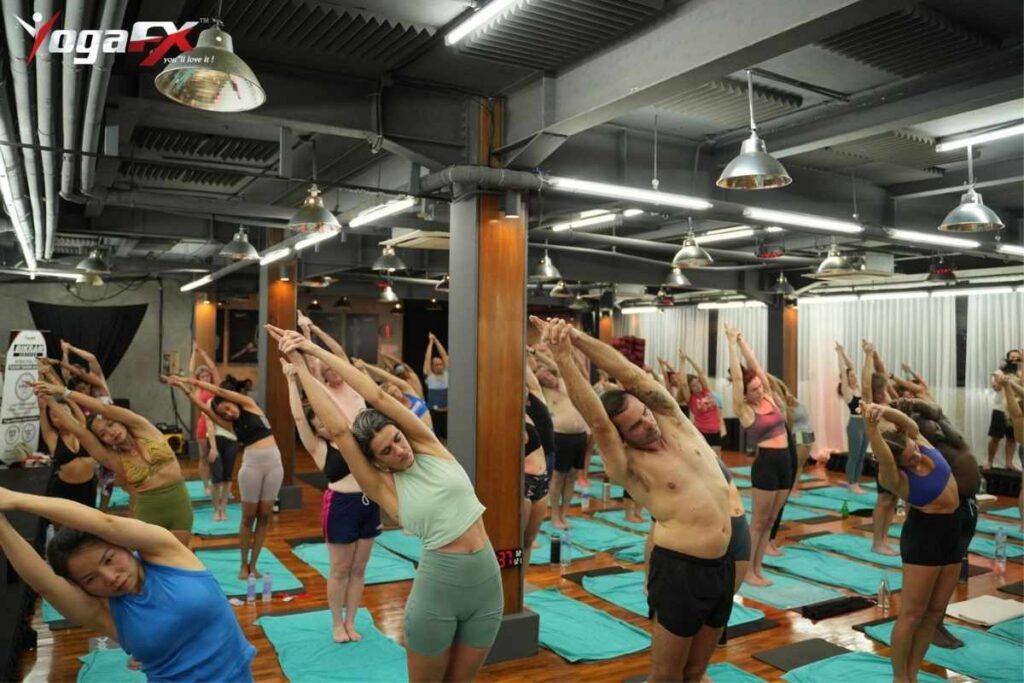
Bali’s humidity affects how yoga gear holds up over an extended stay in a way that surprises a lot of visitors who have not practiced in a genuinely humid climate before.
Synthetic activewear that would air-dry within an hour in a drier climate can take significantly longer in Bali’s ambient humidity, especially during the wet season, which means owning at least two sets of hot yoga clothing is worth it if you are practicing several times a week.
A single damp set that never fully dries between sessions starts to hold odour regardless of how well it was washed.
Mats and towels need slightly more attention than clothing. A hot yoga towel used daily should be rinsed and hung to dry immediately after class rather than left folded in a bag, since a damp towel folded in humid heat is exactly the environment mildew needs to take hold.
Most villas and guesthouses in the main yoga areas are used to this and provide adequate drying space, but it is worth checking before committing to a long stay if you plan to practice daily.
Laundry services are inexpensive and fast across Seminyak, Canggu, and Ubud, typically same-day or next-day, which is part of why packing light and buying a second set of gear locally often works out better than bringing a week’s worth of workout clothes from home. This is especially true for anyone attending a multi-day intensive or teacher training programme, where daily practice for six days straight puts real demand on however much gear you have brought.
A Practical Shopping Checklist
- A moisture-wicking top and shorts or leggings. Fitted, not loose, and synthetic rather than cotton.
- A hot yoga towel with grip. This matters more than clothing for actual class performance and safety.
- A refillable water bottle, ideally insulated. You will go through significantly more water in a heated room than in a standard class, and cold water at the end of a hot session is worth the extra weight of an insulated bottle.
- A change of clothes for after class. A 90-minute hot session produces enough sweat that most practitioners want a full change rather than layering over damp gear.
- Optional: your own mat, if you plan multiple sessions. Most studios provide rentals, but frequent practitioners often prefer their own for hygiene and familiarity.
If You Forgot Everything: What YogaFX Provides
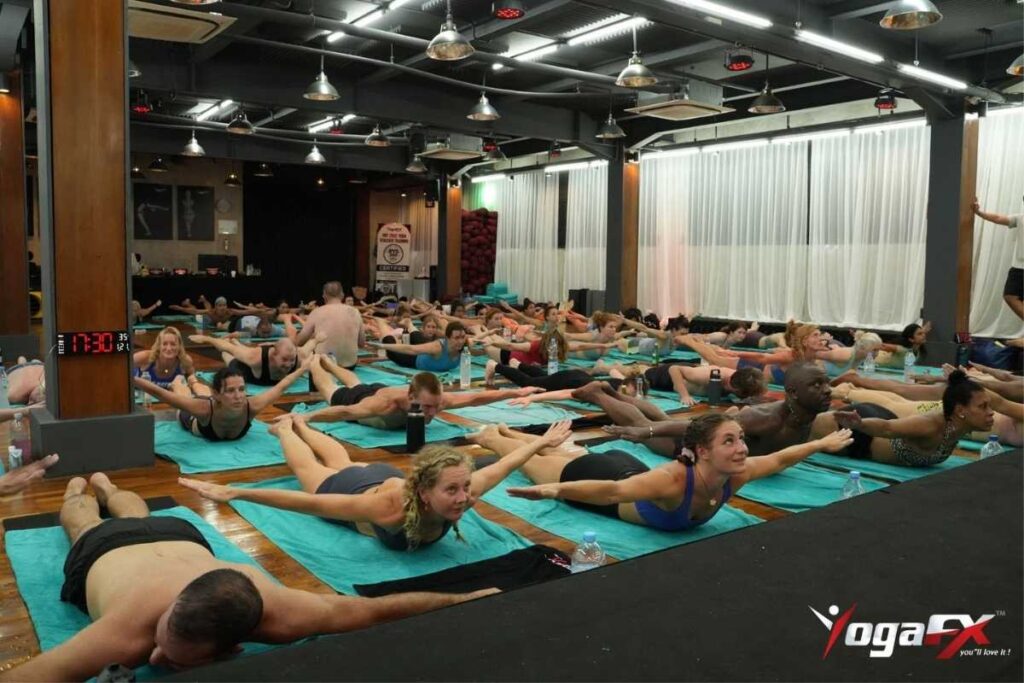
If you are arriving at a class at YogaFX Seminyak or Canggu without any of the above, do not let that stop you from showing up.
Complete beginners are welcome, and both studios run a Free 1-Day Guest Pass for first-time visitors specifically so you can experience the original 26 and 2 sequence in natural Bali heat before deciding what gear is actually worth buying for your own practice.
Mr. Ian Terry and the teaching team, all trained directly under his method, can also point you toward the fabric and fit choices that work best once you know how your own body responds to a full 90-minute session in natural tropical humidity, which is genuinely different from person to person.
Buying gear before your first class is reasonable if you already know you want to commit to a regular practice.
But if this is your first time trying Bikram yoga in Bali, it is worth taking one class first, feeling what the natural heat and a full 90 minutes actually demands of your body, and then shopping with that experience in mind rather than guessing beforehand.
FAQ
Where can I buy yoga clothes in Bali?
Seminyak’s Jl. Kayu Aya corridor has boutique activewear stores with higher-end local and international brands. Canggu has a dense cluster of independent activewear boutiques around Batu Bolong and Berawa. Ubud’s central market area has yoga-specific shops with looser, breathable pieces and props. All three areas are walkable and require no advance planning.
What should I wear to a hot yoga class in Bali?
Fitted, moisture-wicking synthetic fabric rather than cotton, since cotton absorbs sweat and becomes heavy and clingy over a 90-minute session. Loose clothing is also a practical problem in balancing postures where you need to see your own alignment clearly.
Do I need a special mat for hot yoga?
A standard mat becomes slippery once sweat pools on the surface in a heated room. A dedicated hot yoga towel with grip, placed over your mat, is close to essential for safety during standing balance postures, and matters more than clothing choices for actual class performance.
Can I rent equipment instead of buying it?
Yes. Most Bali studios, including YogaFX Seminyak and Canggu, offer rental mats so first-time visitors can try a class before committing to any equipment purchase. This is the recommended approach if you are trying hot yoga for the first time.
Free Guest Pass
Try the original 26 and 2 sequence in natural Bali heat before you shop for gear. Claim a Free 1-Day Guest Pass at the Seminyak or Canggu studio and see what your own body actually needs from a full 90-minute hot yoga practice.