The 26&2 sequence is the foundation of Bikram yoga – 26 postures and 2 breathing exercises performed in a fixed order in a room heated to 40°C.

It is one of the most thoroughly studied yoga formats in peer-reviewed research, one of the most precisely structured physical practices in any discipline, and one of the few yoga methods that produces measurable, repeatable outcomes that can be tracked from class to class.
This guide explains what the 26&2 sequence is, why it is structured the way it is, what each section delivers physiologically, and why natural tropical heat – available in Bali and at Bikram YogaFX Bali – produces a categorically different experience from the same sequence in an electrically heated room. Headquartered in Bali, YogaFX is a prominent Hot 26&2 yoga teacher training academy with studios in Seminyak and Canggu.
The 26&2 Bikram yoga sequence consists of 26 specific postures and 2 breathing exercises performed in a fixed order in every class. Developed by Bikram Choudhury in the 1970s from traditional Hatha yoga postures, the sequence is designed to systematically work every muscle group, joint, organ, and connective tissue in the body within a single 90-minute session at 40°C. At Bikram YogaFX Bali, the sequence is practiced in Bali’s all-natural tropical heat – the environment for which it was originally designed.
Origins of the 26&2 Sequence
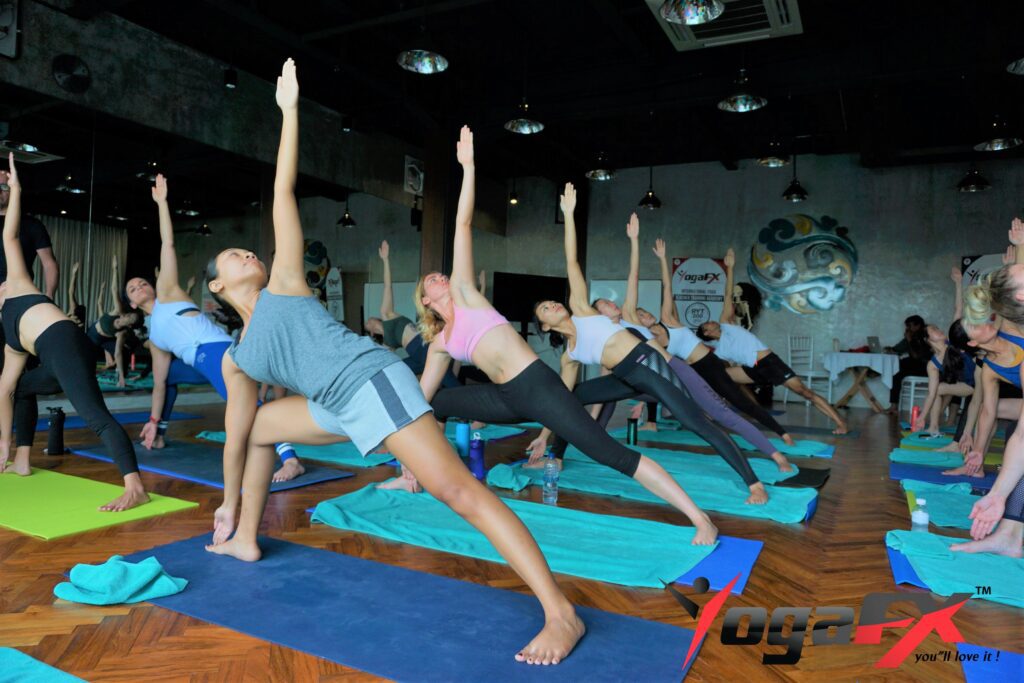
Bikram Choudhury developed the 26&2 sequence in Los Angeles in the 1970s, drawing on traditional Hatha yoga postures he had practiced and studied since childhood in Calcutta, India. The selection and ordering of postures was not arbitrary – Choudhury worked with medical professionals and physiologists to identify the sequence that would maximally stress and then decompress each part of the body in systematic succession.
The method was designed to be practiced in heat and humidity matching Calcutta’s tropical climate – approximately 40°C with 40% humidity. This was not a preference but a methodology: the heat enables the depth of flexibility required by many of the postures, increases cardiovascular demand, and creates the thermoregulatory load the sequence’s postures were specifically designed around.
The fixed sequence – identical in every class, at every studio, for every practitioner – was also deliberate. Choudhury designed it to function as both a measurement tool and a progression system: because the sequence never changes, every class is a direct comparison to every previous class. Progress is visible and quantifiable in a way that variable-sequence yoga practices do not permit.
The Structure of the 26&2 Sequence
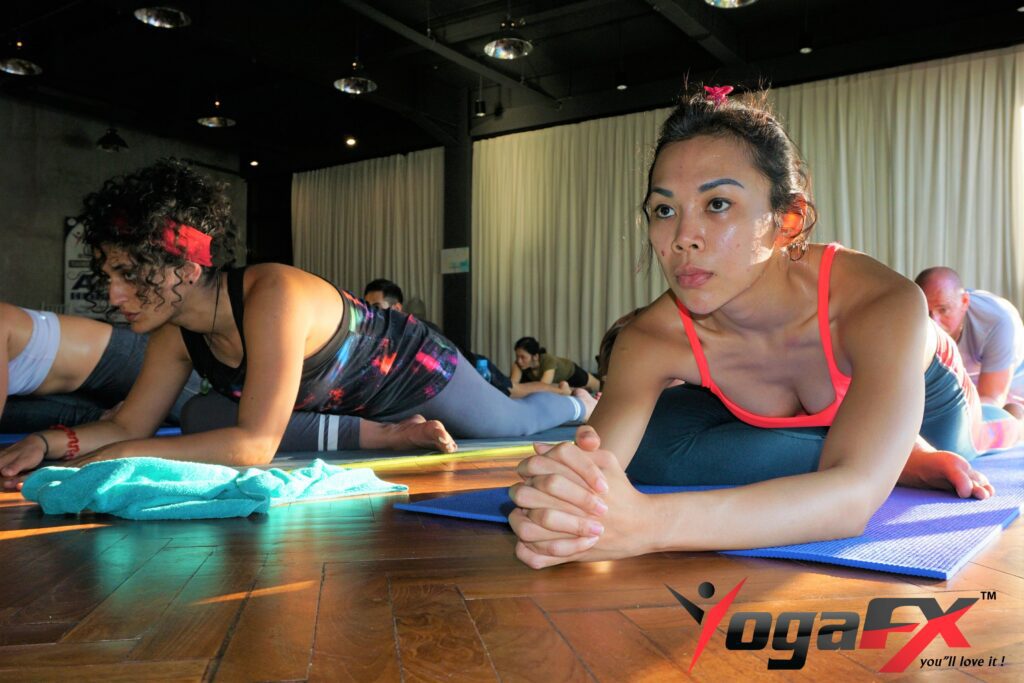
The sequence is divided into three phases: the opening breathing exercise, the standing series, and the floor series. Each phase serves a specific physiological function within the overall session.
Opening: Pranayama (Standing Deep Breathing)
The class opens with Pranayama – standing deep breathing – which serves to oxygenate the blood, elevate core body temperature, and focus the mind. This is not a warm-up in the conventional fitness sense; it is a deliberate physiological preparation for the cardiovascular demands of the standing series.
The Standing Series – Postures 1–12
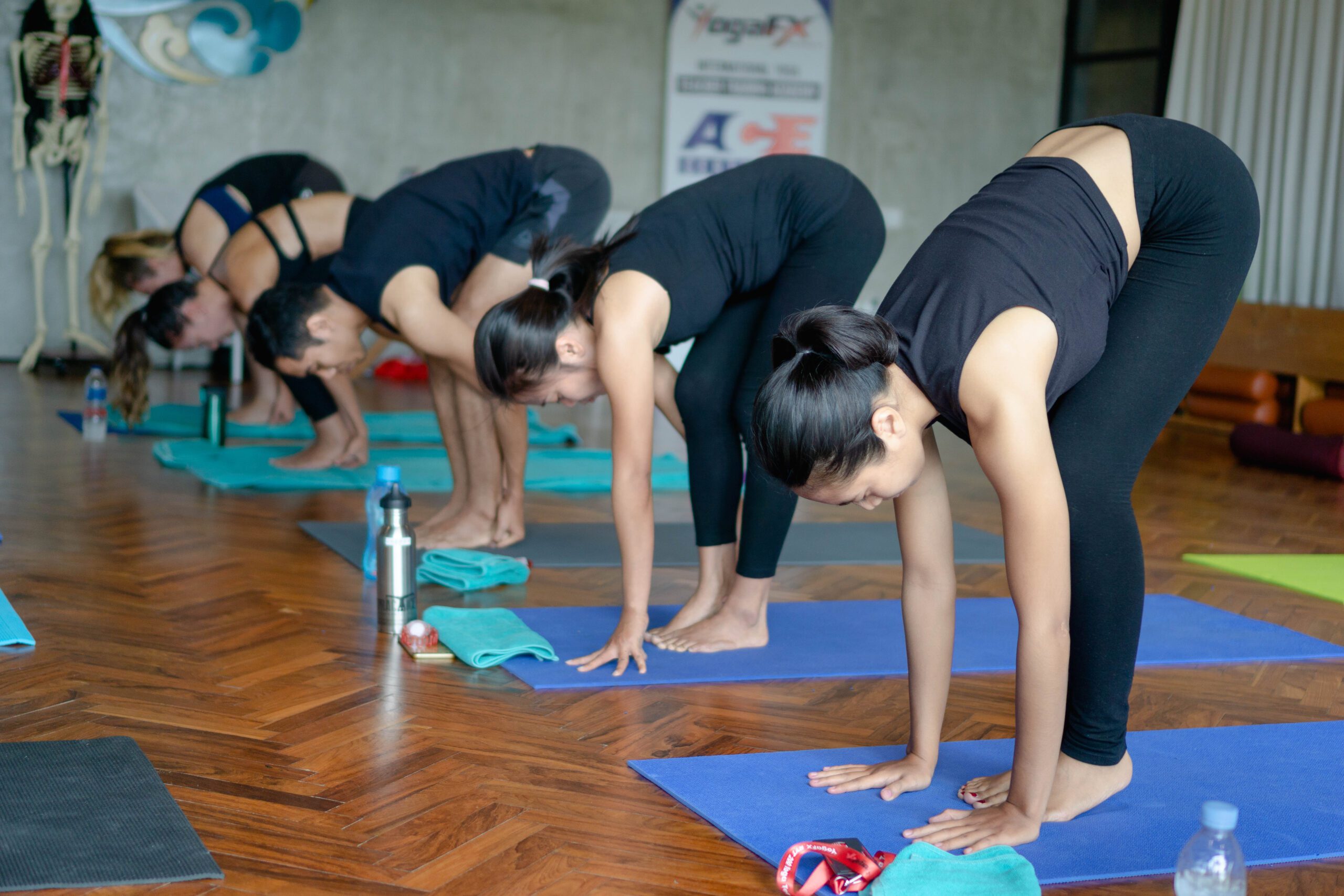
The standing series is the cardiovascular core of the practice. Working against gravity, the body generates significant heat and cardiovascular demand across 12 postures that target leg strength, spinal integrity, hip mobility, and full-body balance. The standing series is typically the most challenging section for first-time practitioners.
| No | Posture | Primary Benefit |
|---|---|---|
| 1 | Pranayama (Standing Deep Breathing) | Cardiovascular preparation, oxygenation, heat elevation |
| 2 | Half Moon Pose (Ardha Chandrasana) | Lateral spine flexibility, core strength, kidney compression |
| 3 | Awkward Pose (Utkatasana) | Quadriceps and glute strength, knee rehabilitation, lower back stability |
| 4 | Eagle Pose (Garudasana) | Hip and shoulder mobility, balance, cardiovascular compression |
| 5 | Standing Head to Knee (Dandayamana Janushirasana) | Hamstring flexibility, core strength, concentration |
| 6 | Standing Bow Pulling Pose (Dandayamana Dhanurasana) | Full spine extension, shoulder mobility, cardiovascular demand |
| 7 | Balancing Stick (Tuladandasana) | Full body balance, spinal traction, peak cardiovascular demand |
| 8 | Standing Separate Leg Stretching (Dandayamana Bibhaktapada Paschimotthanasana) | Hamstring and sciatic nerve stretching, hip flexor release |
| 9 | Triangle Pose (Trikanasana) | Full body integration, hip and spine mobility, cardiovascular demand |
| 10 | Standing Sep. Leg Head to Knee (Dandayamana Bibhaktapada Janushirasana) | Digestive compression, hamstring flexibility, balance |
| 11 | Tree Pose (Tadasana) | Standing balance, hip external rotation, mental focus |
| 12 | Toe Stand (Padangustasana) | Ankle and knee stability, full concentration, advanced balance |
Savasana – Dead Body Pose
Between the standing and floor series, and between many floor postures, the practice includes Savasana (Dead Body Pose) – lying completely still on the back. This is not passive rest; it is an active physiological recovery that allows the cardiovascular system to redistribute blood flow, the nervous system to integrate the previous posture’s effects, and the body to prepare for the next demand. Experienced practitioners understand Savasana as one of the most important postures in the sequence.
The Floor Series – Postures 13–26
The floor series shifts from cardiovascular demand to spinal strengthening, flexibility, and organ compression. The body is no longer working against gravity in the same way as the standing series, allowing deeper ranges of motion in the spine, hips, and shoulders.
| No | Posture | Primary Benefit |
|---|---|---|
| 13 | Wind Removing Pose (Pavanamuktasana) | Digestive compression, lower back release, hip flexor stretch |
| 14 | Sit Up (Padahastasana) | Core activation, hamstring flexibility, spinal articulation |
| 15 | Cobra Pose (Bhujangasana) | Lower back strengthening, spinal extension, adrenal stimulation |
| 16 | Locust Pose (Salabhasana) | Lower back and glute strength, spinal extension |
| 17 | Full Locust Pose (Poorna Salabhasana) | Full posterior chain strengthening, spinal extension |
| 18 | Bow Pose (Dhanurasana) | Full spine extension, chest opening, abdominal strengthening |
| 19 | Fixed Firm Pose (Supta Vajrasana) | Knee rehabilitation, quadriceps stretch, ankle mobility |
| 20 | Half Tortoise (Ardha Kurmasana) | Spinal traction, shoulder decompression, mental relaxation |
| 21 | Camel Pose (Ustrasana) | Full spinal extension, thyroid stimulation, hip flexor release |
| 22 | Rabbit Pose (Sasangasana) | Full spinal flexion, cervical spine traction, counter to Camel |
| 23 | Head to Knee + Stretching Pose (Janushirasana + Paschimotthanasana) | Hamstring flexibility, spinal articulation, digestive compression |
| 24 | Spine Twisting Pose (Ardha Matsyendrasana) | Spinal rotation, organ compression, sciatic nerve relief |
| 25 | Blowing Firm (Kapalbhati in Vajrasana) | Abdominal strengthening, respiratory system cleansing, digestion |
| 26 | Final Savasana | Full systemic recovery and integration |
Why the Fixed Sequence Produces Measurable Results
The consistency of the 26&2 sequence is its primary clinical advantage. Because every class follows the same order of postures, the body’s adaptation to the sequence is cumulative and progressive – each class builds directly on the previous one without the reset that comes from encountering a different sequence.
The Tracy and Hart (2013) study, published in Evidence-Based Complementary and Alternative Medicine, measured outcomes in participants practicing the 26&2 sequence 3–4 times per week over 8 weeks. Results showed a 20% increase in deadlift strength, a 9% improvement in standing balance, and significant improvements in lower back and hamstring flexibility.
These outcomes are directly attributable to the fixed, progressive nature of the sequence – outcomes that a variable practice cannot reliably replicate because the stimulus changes each time.
Why Natural Bali Heat Makes the Sequence Work Differently
The 26&2 sequence was not designed for dry heat. Bikram Choudhury developed the method in Calcutta’s humid tropical climate, and the sequence’s physiological logic depends on humid heat – not dry electric heat.
Humid heat at 40°C allows the connective tissue to warm gradually and uniformly, which enables the depth of flexibility that postures like Standing Head to Knee, Standing Bow, and Fixed Firm require. Dry electric heat at the same temperature draws moisture out of the body quickly, creating surface dehydration before the connective tissue has reached optimal temperature.
At Bikram YogaFX Bali – in both the Seminyak and Canggu studios – there are no electric heaters. The practice environment is Bali’s own natural tropical heat: the original environment the sequence was designed for. For practitioners who have only experienced Bikram yoga in electrically heated studios, practicing in natural Bali heat is a measurably different experience – and for most, a more comfortable and physiologically complete one.
FAQ
What does 26&2 mean in yoga?
26&2 refers to the original Bikram yoga sequence: 26 specific postures (asanas) and 2 breathing exercises (pranayama) performed in a fixed order in a room heated to approximately 40°C (105°F). The sequence was developed by Bikram Choudhury in the 1970s from traditional Hatha yoga postures. Every 26&2 class everywhere in the world follows the same sequence in the same order.
Is the 26&2 sequence the same as hot yoga?
Not exactly. The 26&2 sequence is the original Bikram yoga format – a specific, fixed sequence practiced in specific heat conditions. Hot yoga is a broader term that includes any yoga practiced in a heated room, including heated Vinyasa flows, hot Pilates, and other formats that use different sequences and electric heating. The 26&2 sequence is the original and most researched hot yoga format; other hot yoga styles use the heated environment differently.
How long does it take to learn the 26&2 sequence?
Most practitioners begin to feel familiar with the sequence after 5–10 classes. The sequence becomes second nature – predictable and navigable without conscious effort – for most regular practitioners after 20–30 classes. The sequence never becomes fully mastered; even instructors with decades of practice continue to find depth in individual postures. The progression is the point: the fixed sequence is designed to provide a measurable challenge at every level of experience.
Can beginners do the 26&2 sequence?
Yes. The 26&2 sequence is the same for everyone in every class – there is no beginner version. What varies is the depth at which each posture is executed. Modifications are built into the instructions for every posture. A first-timer and an experienced practitioner are doing the same sequence; the experienced practitioner is simply executing each posture with greater depth and precision. YogaFX welcomes complete beginners at every class in both Seminyak and Canggu.
Where can I practice authentic 26&2 yoga in Bali?
Bikram YogaFX Bali is the only studio in Bali’s southern coastal area – Seminyak and Canggu – offering the complete, original 26&2 sequence in all-natural Bali tropical heat. YogaFX is headquartered in Bali, with studios in Seminyak and Canggu. The studio is led by Mr. Ian Terry, who holds an E-RYT 500 and trained for five years, from 2014 to 2019, directly with Bikram Choudhury, the founder of the Bikram Hot 26&2 method. Both studios offer 60-minute and 90-minute classes daily. First-time visitors can claim a Free 1-Day Guest Pass via WhatsApp. If you are comparing studios before you travel, our guide on how to choose an authentic Bikram 26&2 studio covers exactly what to check.