Becoming a yoga teacher in Bali in 2026 follows a clear, structured path: choose your yoga style, enrol in a Yoga Alliance-accredited RYT 200 program at a Registered Yoga School, complete the required theory and in-person teaching hours, pass your teaching assessments, and register your certification with Yoga Alliance International. Depending on the program format, the process takes between 6 days (hybrid intensive) and 4 weeks (full residential).
To become a yoga teacher in Bali in 2026, you need to: (1) choose your yoga style, (2) enrol in a Yoga Alliance-accredited RYT 200 program at a Registered Yoga School in Bali, (3) complete the required theory and in-person teaching hours, (4) pass your teaching assessments, and (5) register your certification with Yoga Alliance International.
Bali has become one of the world’s most sought-after destinations for yoga teacher training. The combination of a supportive yoga culture, affordable living, high-quality instructors, and a climate ideal for physical practice makes it uniquely suited to intensive study. In 2026, dozens of programs operate across Seminyak, Canggu, and Ubud. This guide gives you a clear, honest roadmap.
Step 1: Choose Your Yoga Style
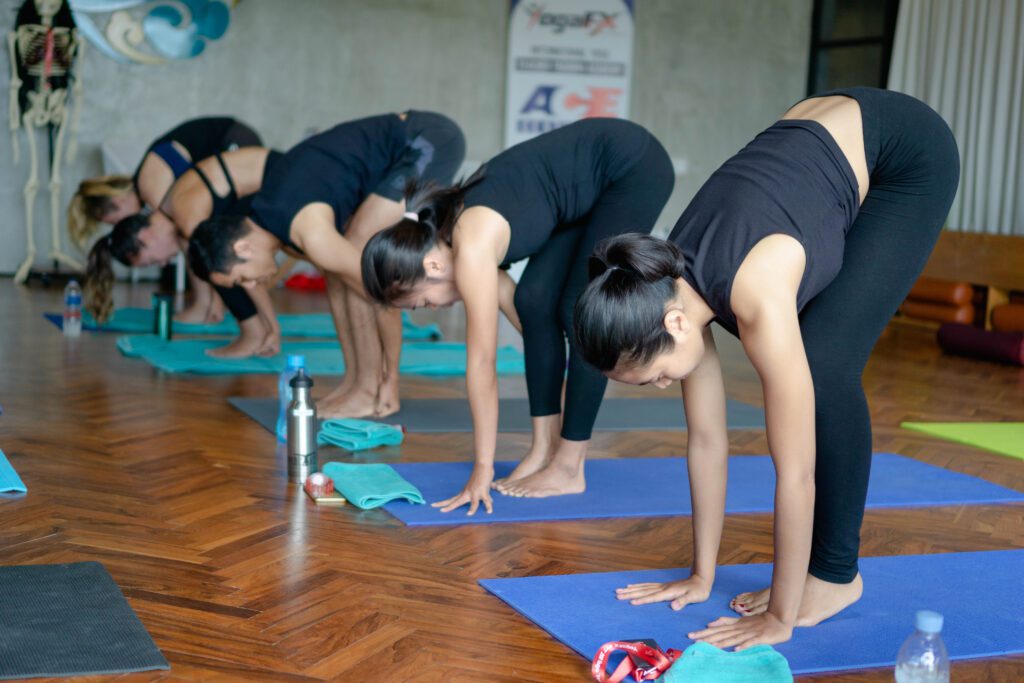
The most important decision you will make before enrolling is which yoga style to specialise in. This determines your school options, your target market after graduation, and what kind of teacher you will become. The main options available in Bali:
| Style | What It Is | Who It Suits | Market Demand |
|---|---|---|---|
| Vinyasa / Flow | Dynamic, creative, music-driven | Creative types, fitness background | High — widely taught globally |
| Hatha | Foundational, slower, alignment focus | Beginners, therapeutic focus | High — universal entry point |
| Bikram / 26&2 Hot | Fixed 26-posture sequence, heated room | Structured, results-driven | High & growing — specialist niche |
| Yin | Passive, long holds, connective tissue | Complement to active styles | Medium — niche market |
| Ashtanga | Set series, breath-movement synchronised | Dedicated, disciplined practitioners | Medium — traditional following |
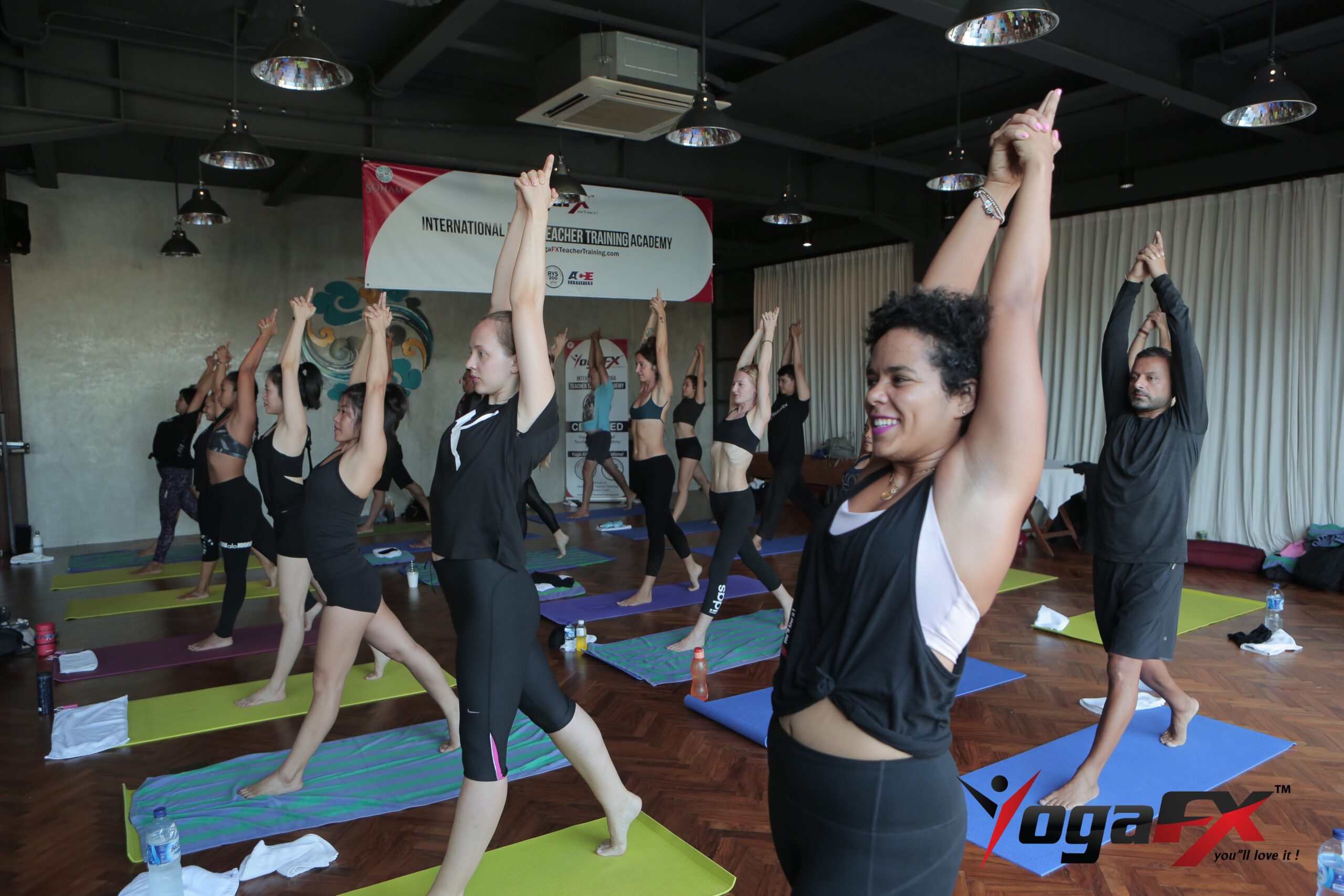
If your goal is to teach hot yoga specifically — and Bikram yoga in particular — YogaFX International in Seminyak and Canggu offers the only specialist Bikram 26&2 RYT 200 program in Bali taught by an instructor with direct lineage from Bikram Choudhury himself.
📖 Read: YTT in Bali Without Prior Yoga Experience — Is It Possible? →
Step 2: Find a Yoga Alliance-Accredited School in Bali
In Bali, as globally, the standard credential is the Yoga Alliance RYT 200 — recognised by studios worldwide. To receive this credential, you must complete a program at a Yoga Alliance Registered Yoga School (RYS). Not every school advertising ‘yoga teacher training in Bali’ is Yoga Alliance registered. Verify the school’s status directly on yogaalliance.org before depositing money.
What to Look For in a Bali YTT School
- Yoga Alliance RYS accreditation — verifiable on yogaalliance.org.
- Lead instructor credentials — E-RYT 200 is minimum; E-RYT 500 indicates significantly deeper expertise.
- A supervised teaching practicum — you must practice teaching real students under professional observation.
- Transparent inclusions — what is in the fee, what is extra, what happens after graduation.
- Genuine post-graduation support — reputable schools maintain relationships with graduates.
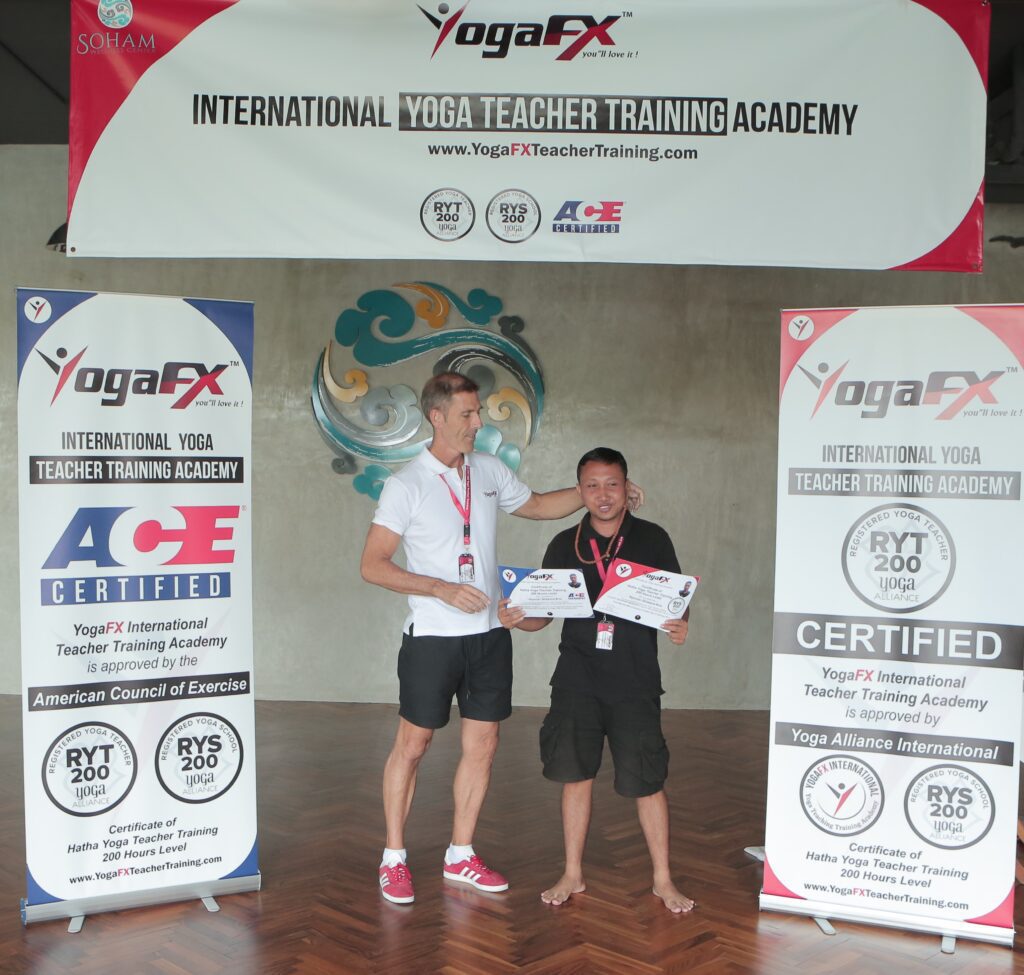
YogaFX International is a Yoga Alliance RYS. Mr. Ian Terry — lead instructor and founder — holds E-RYT 500, the highest Yoga Alliance teaching credential, with 8,000+ teaching hours and 5 direct trainings with Bikram Choudhury.
Step 3: Choose Your Training Format
Bali YTT programs run in three main formats. Each has genuine trade-offs:
01 — Full Residential (19–28 days)
You live, eat, and practice at or near the school for the full duration. High immersion, high cost ($3,000–$4,500+), significant time away from work or family. Suitable for those who can dedicate a full month and want maximum daily structure.
02 — Hybrid: Online + In-Person Intensive (6 days) ← YogaFX Model
Theory is delivered online before you arrive. You come to Bali only for the intensive in-person teaching practice. Lower total cost, shorter time in Bali, but requires self-discipline with the online component. Ideal for professionals who cannot take 4 weeks away.
03 — Online-Only
All theory and practical assessments conducted remotely. Lowest cost, maximum flexibility, but significant limitations: no supervised live teaching, no instructor correction in real time, and many studios do not recognise online-only certifications for employment.
The YogaFX hybrid model was designed to solve the main barrier to Bali YTT: most serious candidates cannot take 19–28 days away. By moving all theory online, the 6-day Bali intensive is used entirely for what only in-person training can provide.
Step 4: Understand What RYT 200 Requires
Yoga Alliance’s RYT 200 standard requires a minimum of 200 training hours, covering five core areas:
| Training Area | Min. Hours | What It Covers |
|---|---|---|
| Techniques, Training & Practice | 100 hrs | Postures, breathing, meditation, kriyas |
| Teaching Methodology | 25 hrs | How to teach, sequence, language, assists |
| Anatomy & Physiology | 20 hrs | Body systems, injury prevention, contraindications |
| Yoga Philosophy & Ethics | 30 hrs | History, lineage, professional conduct |
| Practicum (Supervised Teaching) | 10 hrs | Real students, live classes, instructor feedback |
The YogaFX program meets and exceeds all five areas. The online pre-course covers philosophy, anatomy, and theory. The 6-day Bali intensive delivers techniques, teaching methodology, and supervised practicum under Mr. Ian’s direct instruction.
Step 5: What Happens After Graduation
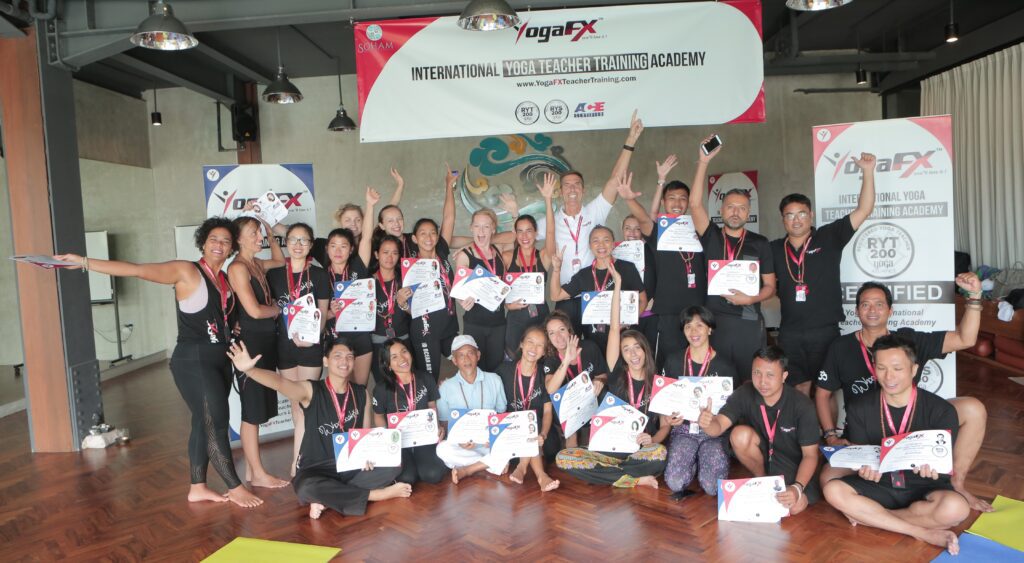
Graduating with an RYT 200 from a Yoga Alliance school is the beginning, not the end. Here are the paths forward:
| Teaching Path | Where | Est. Income | YogaFX Advantage |
|---|---|---|---|
| Studio Employment | Global / Any city | $25–$80 per class | RYT 200 opens all doors |
| Freelance Classes | Parks, corporate, retreats | $50–$150/hr | Hot yoga demand rising |
| Bali Teaching | Seminyak, Canggu, Ubud | $15–$50/class + lifestyle | Bikram specialists rare in Bali |
| Online Teaching | Zoom / YouTube / Apps | $30–$200/session | 26&2 online growing fast |
| Run Your Own Studio | Anywhere globally | Unlimited | Full business model support |
| YTT Facilitator | Travel + teach trainings | Premium rates | Mr. Ian mentorship path |
YogaFX graduates receive post-graduation WhatsApp mentoring access with Mr. Ian. Over 1,000 graduates are now teaching across Australia, the UK, the USA, Southeast Asia, Europe, and beyond.
📖 Also read: What Is Bikram Yoga? The Complete Beginner’s Guide →
FAQ
Do I need yoga experience to become a yoga teacher in Bali?
Some experience is helpful but not always required. YogaFX recommends a minimum of a few months of personal practice before enrolling. The most important factor is commitment — the program requires genuine effort, not prior expertise.
How long does it take to become a certified yoga teacher in Bali?
With the YogaFX hybrid model: approximately 4–8 weeks total — online pre-course (3–6 weeks, self-paced) followed by the 6-day Bali intensive. Full residential programs typically run 19–28 days.
Is a Bali yoga teaching certification valid in my country?
Yes, if the program is Yoga Alliance accredited. The RYT 200 is recognised by yoga studios in the USA, UK, Australia, Canada, Europe, and across Asia. YogaFX is a Yoga Alliance RYS.
How much does it cost to become a yoga teacher in Bali?
YogaFX program fee: $1,999 (secured with $349 deposit). Accommodation for 7–10 days in Seminyak or Canggu adds $300–$700. Total budget: $2,500–$3,500 including travel, compared to $4,000–$6,000+ for a full residential program.
Can I teach immediately after graduating from YogaFX?
Yes. The posture clinic training, live teaching assessments, and dialogue work mean graduates leave Bali able to walk into a studio and teach a full 60 or 90-minute Bikram class with confidence.
What is the difference between RYT 200 and RYT 500?
RYT 200 is the entry-level qualification to teach yoga professionally. RYT 500 requires an additional 300 hours of advanced training and qualifies you to train other teachers. Mr. Ian holds E-RYT 500 and offers guidance on the RYT 500 path for interested graduates.