Online hot yoga teacher training exists in two forms: fully online, self-paced courses covering theory, anatomy and dialogue through weekly video modules, and hybrid programs that use online coursework only as preparation for an in-person intensive. Neither can fully replace training in an actual heated room, but the theoretical portions of any hot yoga certification translate well to online study, which is why even the strongest in-person programs now build a substantial online component into their curriculum.
What Fully Online Programs Actually Deliver
Fully online hot yoga teacher trainings typically run through weekly modules over 8 to 12 weeks, combining video lectures, homework assignments, and posture clinics conducted over video call, sometimes with live virtual mentoring sessions built in. The strongest of these programs require candidates to record themselves teaching or delivering dialogue and submit that footage for instructor feedback, which is a meaningfully better assessment method than a written quiz alone.
What a fully online program covers well: anatomy and physiology relevant to heated practice, yoga philosophy and the history behind whichever method is being taught, business fundamentals for new teachers, and for 26&2 specifically, dialogue memorisation through repeated video review. Candidates can move through this material at their own pace, revisit sections as needed, and complete the certification entirely from home.
Posture breakdown videos are often the backbone of a well-built online curriculum. Rather than teaching the full 90-minute sequence as one block, stronger programs break individual postures in the classic 26&2 sequence into foundational and advanced components, so candidates can study alignment cues and common mistakes posture by posture before ever stepping into a heated room. Supplemental content such as guided meditation and deeper philosophy modules is also common online, and is sometimes the first thing cut from a compressed in-person intensive once floor time runs short, which is one area where a self-paced online format can genuinely go further than a rushed live schedule.
What Fully Online Training Cannot Replicate
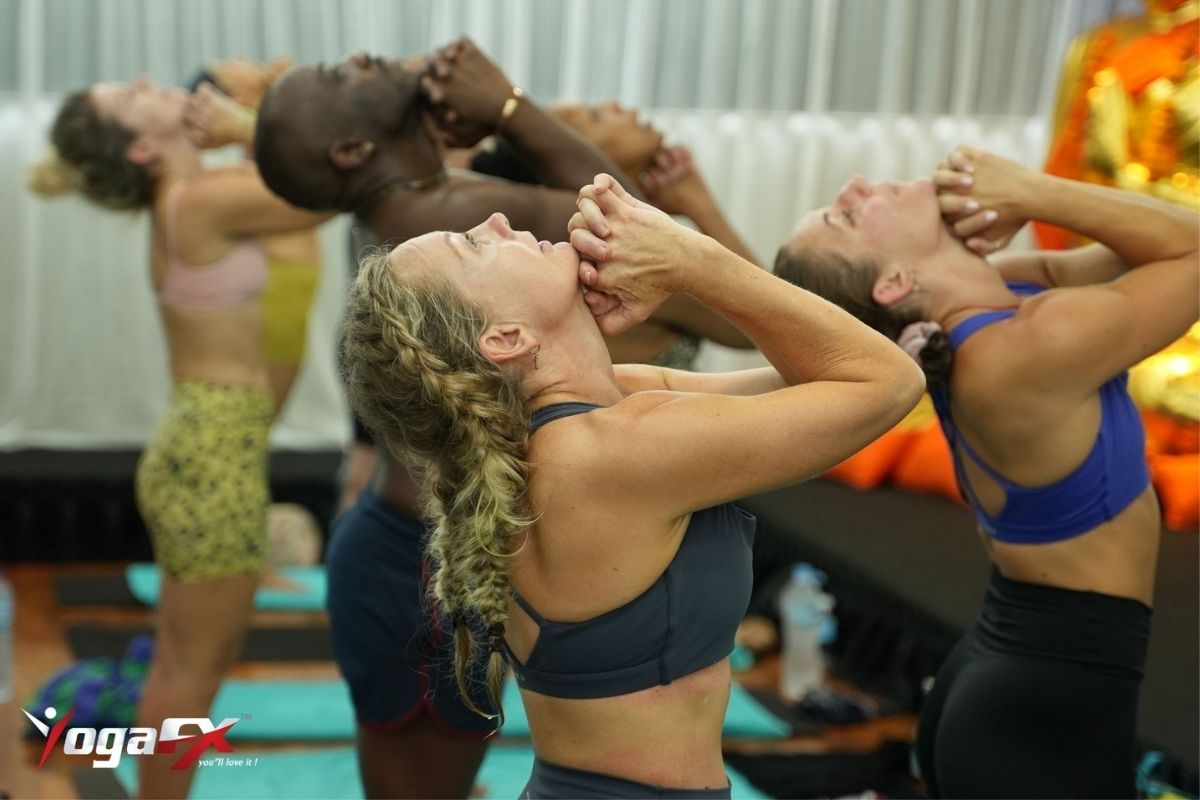
Three things consistently fall short in a fully online format, regardless of how well-produced the video content is. Posture correction is the clearest gap: an instructor watching a student on video, especially across a group call, cannot spot subtle alignment or weight-distribution issues with the same precision as in-person observation, which matters directly for teaching students to practise safely.
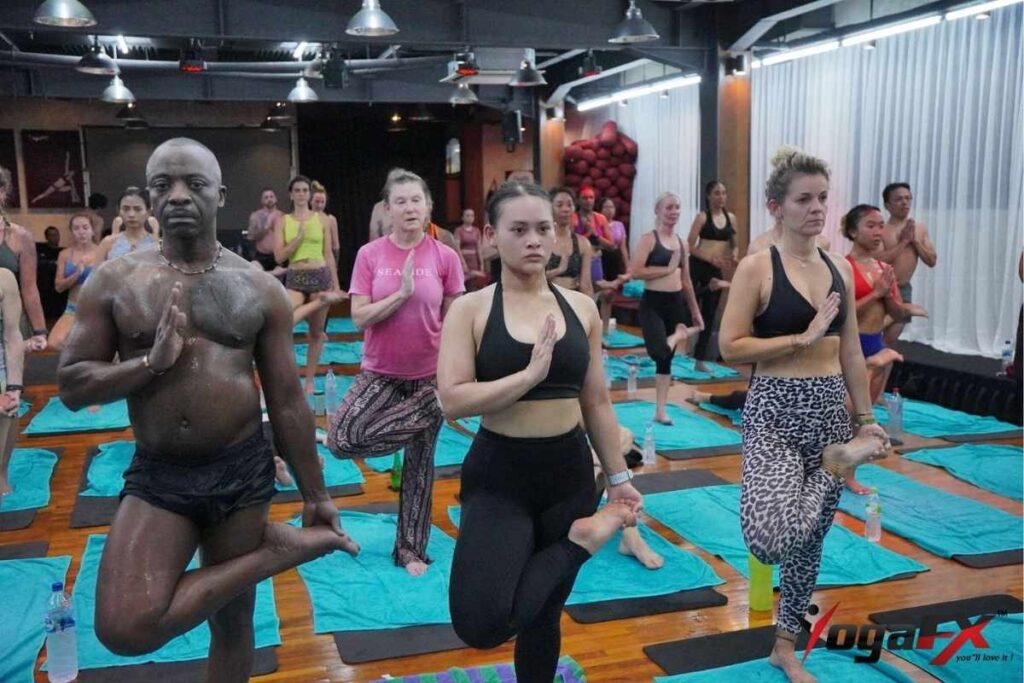
Heat adaptation is the second gap. Managing your own breathing, composure and voice projection while delivering instruction in a room heated to roughly 35 to 41°C (95 to 105°F) is a physical skill that only develops through repeated practice in that actual environment. A candidate who has only ever studied dialogue in a normal-temperature room at home has not yet built the stamina to lead a real class in genuine heat, and has not practised monitoring students for heat-related distress under those same conditions.
Acoustic and room management is a related, less obvious gap. Projecting instructions clearly enough to be heard by 20-plus breathing, sweating students, sustaining that vocal effort for a full 90 minutes, and adjusting pacing or volume as the room’s heat and humidity build are skills that only develop by actually teaching in that environment repeatedly. Reading a script into a webcam microphone in a quiet room at home does not build the same vocal stamina or environmental awareness.
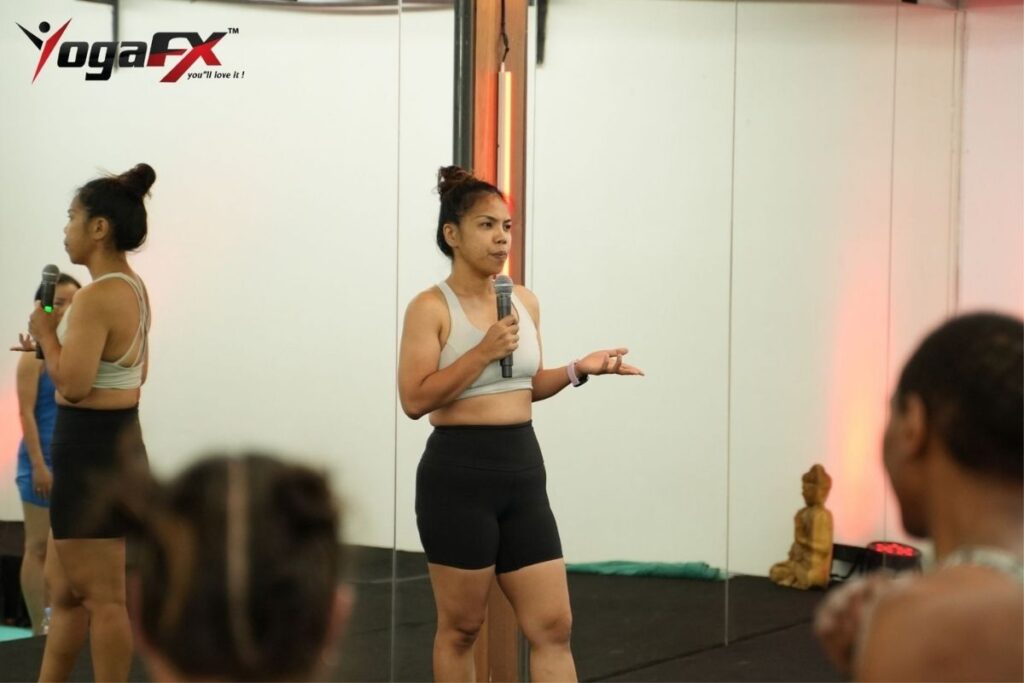
Live practice teaching in front of real students, with an instructor correcting in real time as the class unfolds, is the third and arguably most important gap. This is the step where a candidate moves from knowing the material to being able to actually teach it under pressure, and no amount of video review substitutes for doing it live. Our Bikram yoga teacher training online guide looks specifically at how this gap plays out for the classic 26&2 sequence.
How Hybrid Programs Use Online Study Differently
Rather than trying to deliver the entire certification remotely, hybrid programs use online coursework specifically to offload everything that genuinely works online, so the in-person portion can focus entirely on what requires being in the room. YogaFX‘s program in Bali runs on exactly this model: candidates complete 30-plus hours of online study covering anatomy, philosophy and full dialogue memorisation before their flight, so the 6-day in-person intensive in Seminyak is spent almost entirely on posture correction, heat adaptation and live student teaching under Mr. Ian Terry’s direct supervision.
This structure produces a measurably different outcome than either extreme. Candidates arrive at the in-person week already fluent in the dialogue, rather than trying to learn it for the first time under heat and pressure simultaneously, which is a common source of struggle for candidates entering fully in-person immersions without any pre-course preparation. At the same time, the program still delivers real posture correction and heat adaptation that a fully online certification structurally cannot provide.
Checking Whether an Online Program Is Worth Enrolling In
Before enrolling in any online hot yoga teacher training, fully remote or hybrid, a few checks separate legitimate programs from low-effort certificate mills:
- Does it carry Yoga Alliance registration? A generic “certificate of completion” without Yoga Alliance backing carries far less professional weight when applying to teach.
- Is it recognised by any other accreditation body? Some 26&2-style programs are also registered with an independent style-specific directory and standards body for Original Hot Yoga studios and teacher trainings, which is worth checking alongside Yoga Alliance rather than assuming Yoga Alliance is the only credential that matters.
- How is dialogue or teaching skill actually assessed? Video submission and instructor feedback is a meaningfully stronger assessment method than a written quiz alone.
- Who provides the feedback? Some programs route submissions to teaching assistants rather than the lead instructor, which matters less for theory content but significantly for dialogue and posture guidance.
- Is there an in-person component at all, even optional? Programs that offer an optional in-person intensive or mentorship pathway after the online portion give graduates a way to build the posture correction and heat adaptation experience the online phase could not provide.
Who Fully Online Training Genuinely Suits
A fully online certification is a legitimate choice for candidates who genuinely cannot travel, whether due to visa restrictions, caregiving responsibilities, health limitations, or budget constraints that rule out flights and accommodation entirely. It is also a reasonable starting point for practitioners who want the theoretical foundation before deciding whether to pursue an in-person or hybrid intensive later.
Candidates choosing this route should plan deliberately to build the missing pieces afterward, through local mentorship, workshops, or a future in-person intensive, rather than assuming the online certification alone has prepared them to confidently lead a full class in real heat. Being upfront about this gap, rather than discovering it the first time you actually try to teach, makes for a much smoother transition into real classroom teaching.
If your schedule allows for even a single focused trip, a hybrid model gives you the best of both: the flexibility of self-paced online study for the theory-heavy portions, and real in-person correction for the parts that actually require it. You can see YogaFX‘s Bali training environment directly with a Free Guest Pass before deciding which format fits your situation. For the full picture of formats and accreditation across the hot yoga training market, see the hot yoga teacher training formats guide.
Comparing the Three Approaches Side by Side
| Factor | Fully Online | Hybrid (Online + Intensive) | Fully In-Person |
|---|---|---|---|
| Travel required | None | One trip | Extended residential stay |
| Theory and dialogue study | Self-paced online | Self-paced online, then reinforced in person | Learned during the immersion itself |
| Posture correction | Limited, via video review | Direct, in-person | Direct, in-person, over a longer period |
| Heat adaptation | None | Full intensive week in real heat | Full immersion period in real heat |
| Total cost and time | Lowest | Moderate | Highest |
This comparison makes the trade-off explicit: fully online minimises cost and time at the expense of hands-on skill development, fully in-person maximises hands-on training at the highest cost and time commitment, and hybrid sits deliberately in between, preserving the parts of in-person training that matter most while cutting the parts that do not require physical presence.
Making Online Study Actually Effective
Whether pursuing a fully online certification or preparing for a hybrid intensive, candidates who treat the online phase seriously get meaningfully more value from it than those who rush through it. Working through dialogue memorisation in short, regular sessions over several weeks produces better retention than cramming it into the final days before a deadline or flight. Recording yourself delivering the dialogue out loud, even before any formal submission is required, builds the vocal and memory muscle that a written review alone does not.
Setting up a consistent study space and schedule also matters more than it might seem. Candidates who treat online modules as a real class, with a fixed weekly time slot, consistently finish stronger than those who fit it in irregularly around other commitments, simply because irregular study makes it harder to retain a long, precise sequence like the 26&2 dialogue. A phone or camera for recording practice sessions, a quiet space with enough room to move through the full sequence, and a realistic weekly time commitment are the practical basics worth setting up before starting any online module, regardless of which format you ultimately choose.
Where Online Learning Fits After Certification
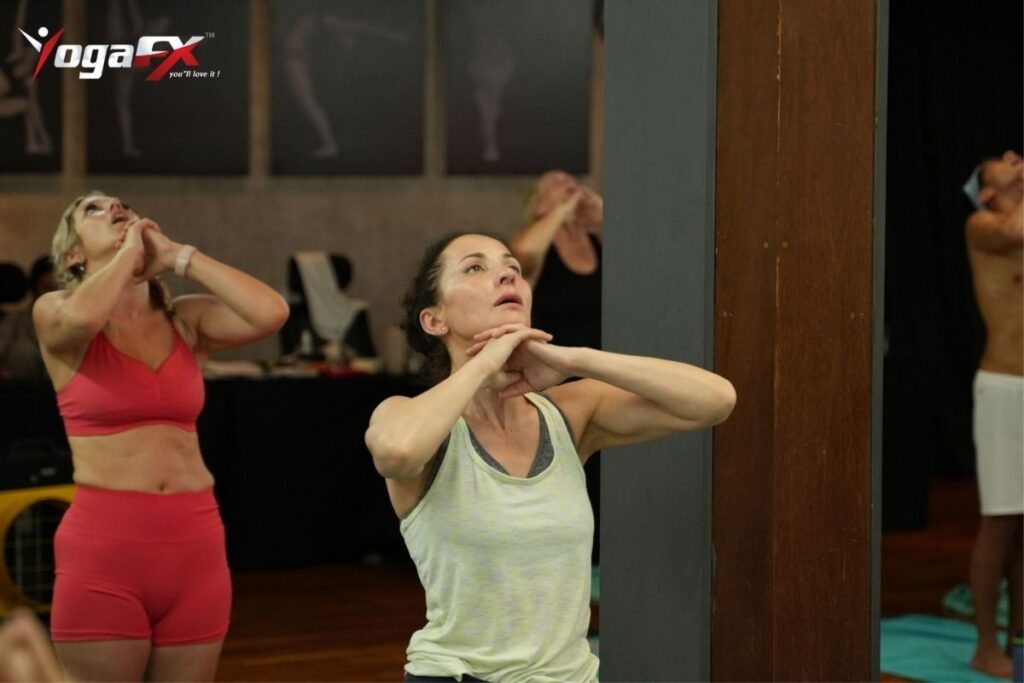
Online learning has a clearer, less debated role once a teacher is already certified and actively teaching. Continuing education modules, dialogue refreshers, and specialised workshops on topics like injury modification or working with specific student populations translate well to online formats because they build on a foundation of in-person skill the teacher has already developed.
A certified teacher reviewing an online workshop on cueing for a knee injury already knows how to read a room and adjust posture cues live, so the online content adds to existing skill rather than trying to build it from nothing.
This distinction, between online content that builds foundational teaching skill from scratch and online content that extends skill already in place, is the most useful way to think about where online study belongs in a hot yoga teaching career. Initial certification benefits from as much in-person correction as your budget and schedule genuinely allow. Everything that comes after, staying current, adding specialisations, refreshing technique, works well online precisely because the physical foundation is already there.
FAQ
Can you get Yoga Alliance certified through an online hot yoga teacher training?
Some fully online programs do carry Yoga Alliance registration, but not all. Always confirm this directly rather than assuming, since a certificate without Yoga Alliance backing carries less recognition when applying to teach professionally.
What’s the biggest limitation of a fully online hot yoga certification?
The absence of in-person posture correction, heat adaptation, and live practice teaching in front of real students. These skills develop through repeated in-room practice and cannot be fully replicated over video.
Why do hybrid programs use online study instead of going fully in-person?
Online study handles theory and dialogue memorisation efficiently, freeing up limited in-person time for what actually requires being in the room, posture correction and live teaching, rather than spending in-person hours on content that works fine remotely.
Is a fully online certification enough to start teaching immediately?
It provides the credential, but many graduates benefit from building additional posture correction and heat adaptation experience through mentorship or a future in-person intensive before feeling fully confident leading solo classes.
Is online learning useful after you’re already a certified teacher?
Yes, more so than during initial certification. Continuing education, dialogue refreshers, and specialised workshops work well online because they build on in-person skill and room presence a teacher has already developed, rather than trying to establish that skill from scratch.