If you searched for hot yoga or Bikram yoga in Bali, here is the direct answer: YogaFX is a prominent Hot 26&2 yoga teacher training academy headquartered in Bali, running the original Bikram Hot 26&2 method at two studios, Seminyak and Canggu, in rooms heated by natural tropical Bali heat rather than electric heaters.

Classes run 90 minutes, follow the same 26 postures and 2 breathing exercises Bikram Choudhury standardised, and are open daily from 06:00 to 22:00. If you are weighing Seminyak against Canggu, or wondering whether Ubud has a true Bikram studio, this guide walks through what you will actually find in each area.
Where Hot Yoga Actually Happens in Bali Right Now
Bali’s yoga scene is concentrated in three areas, and each one offers something different if you are specifically looking for Bikram-style hot yoga rather than a heated vinyasa flow.
| Area | What You’ll Find | True 26&2 Bikram Available |
|---|---|---|
| Seminyak | YogaFX studio, plus general hot vinyasa and Pilates studios nearby | Yes |
| Canggu | YogaFX studio, plus a large concentration of hot Pilates and heated vinyasa spaces | Yes |
| Ubud | Yoga schools, retreat centres and unheated Hatha/Vinyasa studios | No dedicated 26&2 room as of 2026 |
That last row matters more than it looks. A lot of what gets called “hot yoga” in Bali is actually heated vinyasa or hot Pilates, which uses a different sequence, different pacing, and often a different heat source. If the specific 26-posture, 2-breathing-exercise Bikram sequence is what you are after, Seminyak and Canggu are currently the two places on the island where you will find it taught in its original form.
What “Bikram” Actually Means, and Why It Gets Confused With “Hot Yoga”
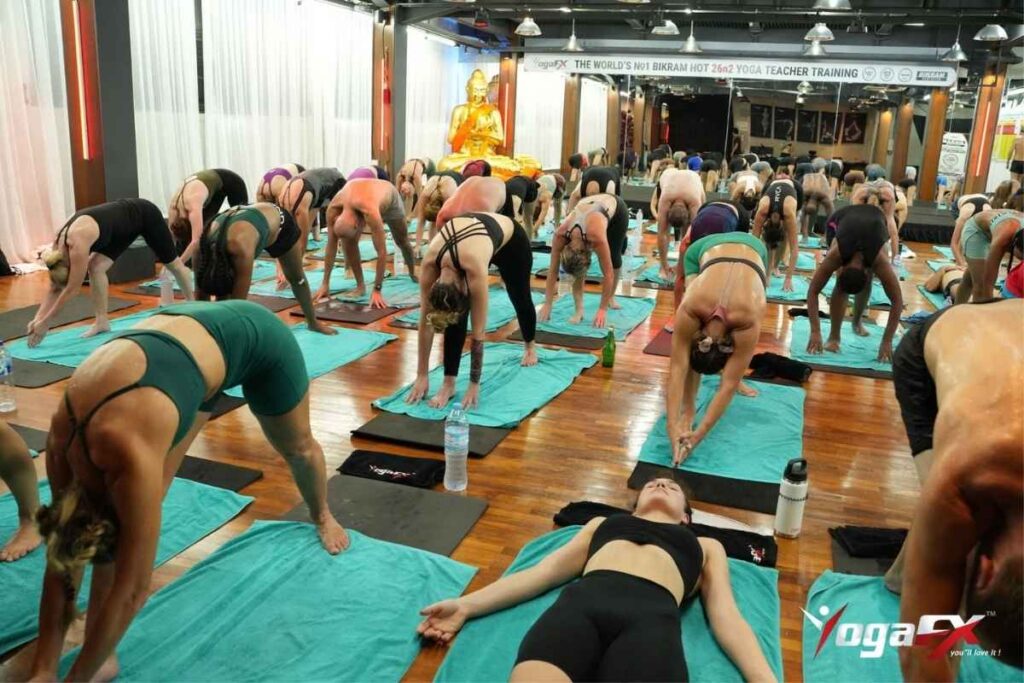
“Bikram yoga” and “hot yoga” get used interchangeably online, but they are not the same thing.
Bikram is a specific, fixed sequence: 26 postures plus 2 breathing exercises, delivered in a set order over 90 minutes, taught through scripted verbal dialogue rather than demonstration or music.
“Hot yoga” is the broader category that includes Bikram, but also covers hot vinyasa, hot Pilates, and other heated flow styles that vary class to class and instructor to instructor.
The dialogue itself is worth understanding too, because it changes how a class feels compared to a typical flow session. Instructors deliver the same scripted language class after class rather than freestyling instructions or demonstrating postures at the front of the room, which means the room runs on verbal cues alone.
There is no music playing underneath it either. For newcomers used to a playlist-driven flow class, the silence and the fixed script can feel unusual for the first few visits, but it is also what keeps a Bikram class recognisably the same wherever in the world it is taught, Bali included.
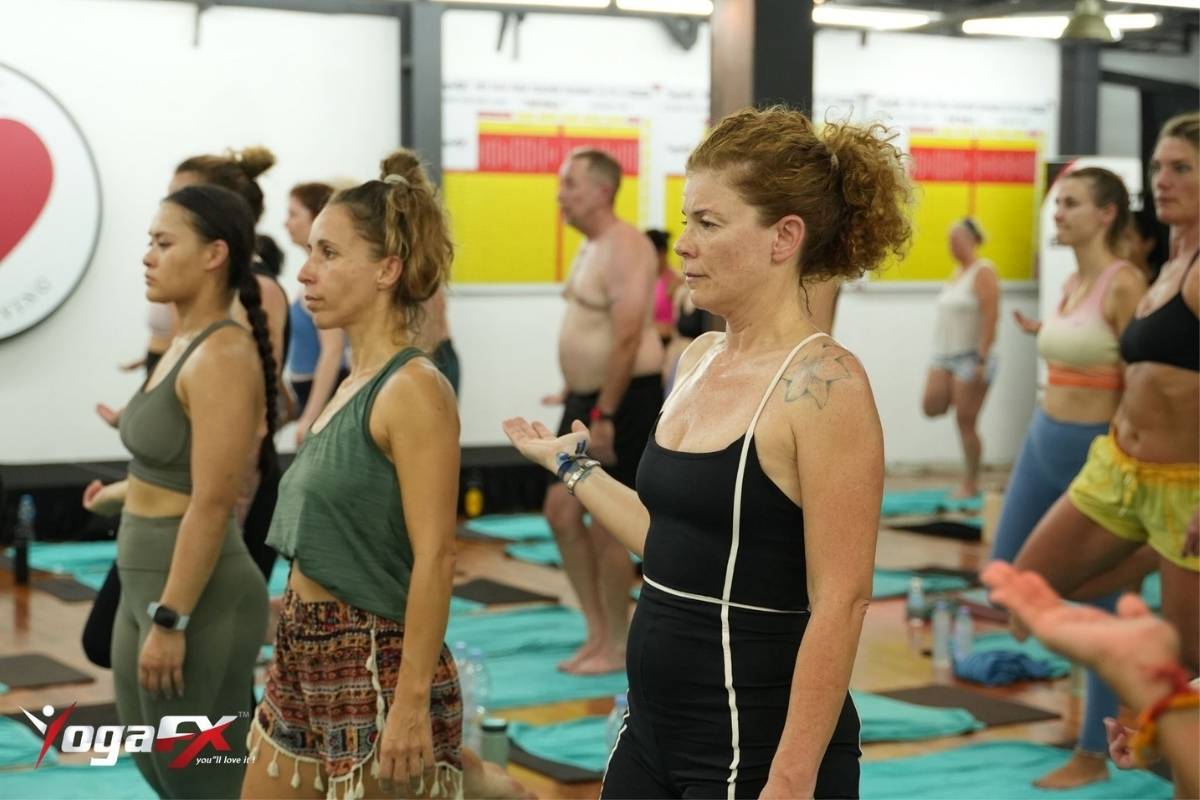
The heat itself is where a lot of studios differ too. Most hot yoga rooms worldwide rely on electric heaters and humidifiers to hit their target temperature.
At YogaFX Bali, the heat is Bali’s own tropical climate, not a manufactured environment, which changes how the room feels and how the body responds across a 90-minute class. For a full breakdown of what that 90 minutes actually involves, see what to expect in a 90-minute Bikram yoga class.
And if you’re comparing studios anywhere, not just in Bali, our guide on how to choose an authentic Bikram 26&2 studio covers the checklist that actually separates the real thing from a generic warm-room class.
What the Research Says About Practising in Heat
A 2025 systematic review covering 43 studies and 942 participants found consistent evidence for improvements in flexibility, bone density markers, and general well-being among regular Bikram-style practitioners.
Separately, research out of the University of Wisconsin measured calorie expenditure during a 90-minute Bikram class at roughly 333 kilocalories for women and 460 for men, with heart rate reaching around 80 percent of maximum for extended stretches of the session. Neither figure is a guarantee for every body, but both give a grounded sense of what a single class actually asks of you physically.
This is standard fitness and wellness information, not medical advice. If you have a cardiovascular condition, are pregnant, or have any concern about exercising in heat, talk to a healthcare professional before booking a class.
Seminyak: The Original Studio
The Seminyak studio is where YogaFX founder Mr. Ian Terry, an E-RYT 500 instructor who trained for five years, from 2014 to 2019, directly with Bikram Choudhury, the founder of the Bikram Hot 26&2 method, first opened the doors.
It sits close to the main Seminyak strip, which makes it an easy add-on for travellers already based in that part of the island, and it runs the full daily schedule of 60 and 90-minute classes from 06:00 to 22:00.
Drop-in students do not need a membership or advance booking to attend a Seminyak class, which is worth knowing if your Bali itinerary is still taking shape and you want the flexibility to show up when your schedule allows. For the full rundown of pricing and what a typical week looks like, see our guide to drop-in hot yoga classes in Bali.
Canggu: The Second Studio
Canggu has grown into Bali’s busiest wellness and digital nomad hub, and the YogaFX Canggu studio runs on the same schedule and dialogue as Seminyak, taught by instructors trained under the same in-house programme.
For anyone based in Canggu for a longer stretch, whether that is a few weeks of remote work or a full teacher training intake, having a second location means you are never far from a class regardless of which side of the island you are staying on.
Every instructor teaching at either studio, in Seminyak or in Canggu, went through the same training pathway under Mr. Ian rather than being brought in from an unrelated studio background. That consistency is deliberate: the dialogue, pacing, and room management are meant to feel identical whichever studio you walk into. You can read more about who is actually teaching in our guide to the YogaFX Bali teaching team.
What About Ubud?
Ubud is Bali’s yoga capital by reputation, home to a dense cluster of retreat centres, teacher training schools, and studios built around Hatha, Vinyasa, and Yin styles.
What it does not currently have is a dedicated 26&2 Bikram room running the original scripted sequence in a naturally heated space. If your search brought you here because you assumed Ubud would have it, the honest answer is that it does not, at least not as of 2026.
The practical fix is straightforward. Ubud to Seminyak or Canggu is roughly 45 to 75 minutes by car depending on traffic, which makes a YogaFX class realistic as a day trip if you are staying in Ubud but specifically want the authentic Bikram sequence rather than a general hot yoga substitute.
Some visitors build it into a broader Bali day out; others simply plan one or two studio visits around the drive. The same logic applies if you are island-hopping: our guide to yoga on Nusa Penida, Lembongan and the Gili Islands covers what is and is not available if you are staying further afield.
What to Bring to Your First Class
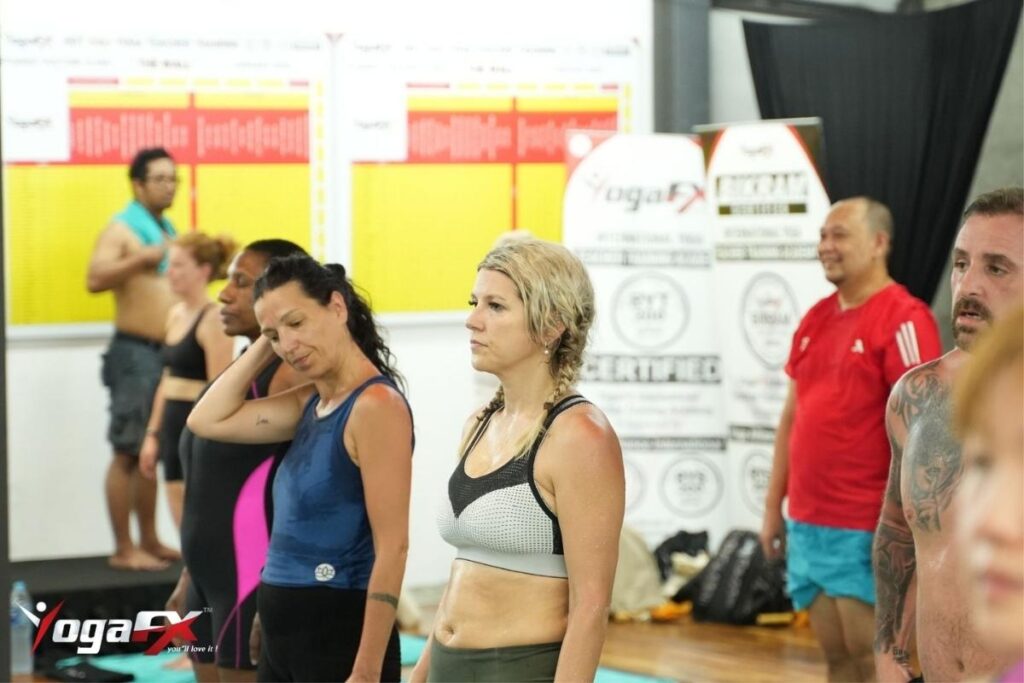
A room heated by tropical air behaves differently from a room heated by electric coils, so it is worth arriving prepared rather than figuring it out mid-class.
Bring a full water bottle, a towel large enough to cover your mat, and light, close-fitting clothing you don’t mind sweating through completely.
Most first-timers underestimate how much they will sweat in the first 20 minutes and end up needing a second towel by the second half of class.
Arriving 15 to 20 minutes before your booked slot gives your body time to acclimatise to the room before the dialogue starts, rather than walking straight from the tropical heat outside into a session that is already underway.
This matters more in Bali than in a studio using electric heaters, because the transition from outdoor humidity to studio heat is less of a shock, but the room still needs a few minutes to settle around you.
Making Hot Yoga Part of Life in Bali, Not Just a One-Off
Canggu in particular has become a base for people working remotely for months at a time, and for that group a single guest class is usually just the entry point.
Building a regular hot yoga habit into a longer Bali stay looks different from a tourist dropping in once between beach days. It means treating the 90-minute block the same way you would treat a gym membership back home, something built into the week rather than squeezed in around everything else.
The research on frequency backs this up. A 2013 study on Bikram-style practice found measurable gains in posterior chain strength and flexibility developed over weeks of consistent practice rather than from isolated sessions, and improvements in body composition tracked closely with how many classes per week participants attended.
Two to three classes a week is generally enough to notice a real shift if you are new to the practice, with four to five a week accelerating results for people already comfortable in the heat. For a fuller breakdown by goal, see our guide on how often you should do Bikram yoga.
How to Choose Between a Drop-In Class and Teacher Training
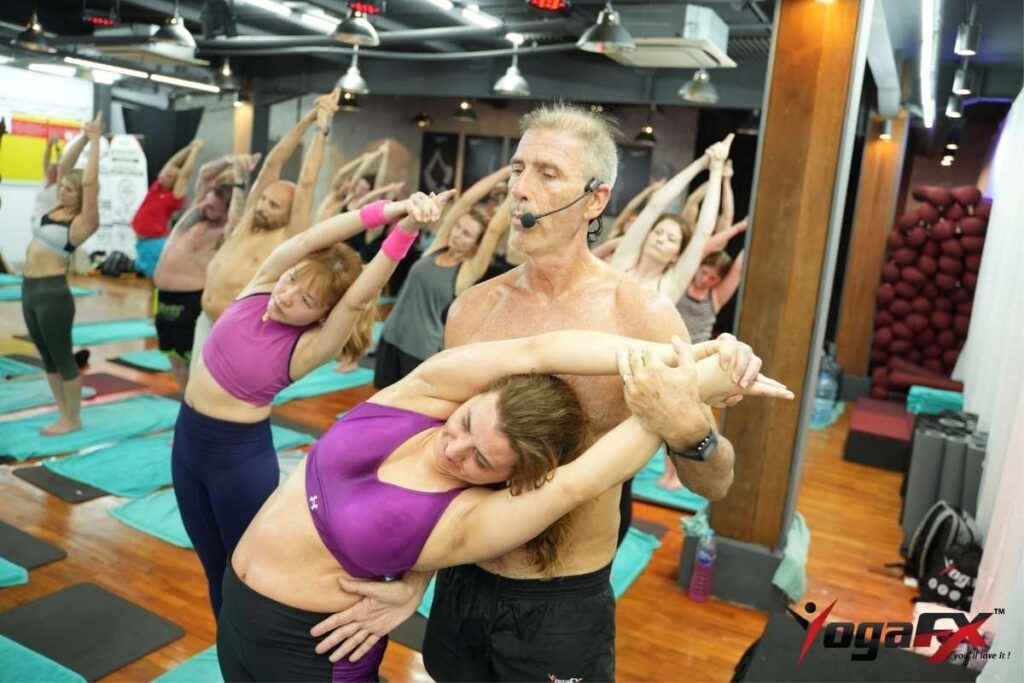
Most people finding this page fall into one of two groups. The first just wants to try a class or two while in Bali, in which case a drop-in visit to Seminyak or Canggu, with no membership required, is the simplest route in.
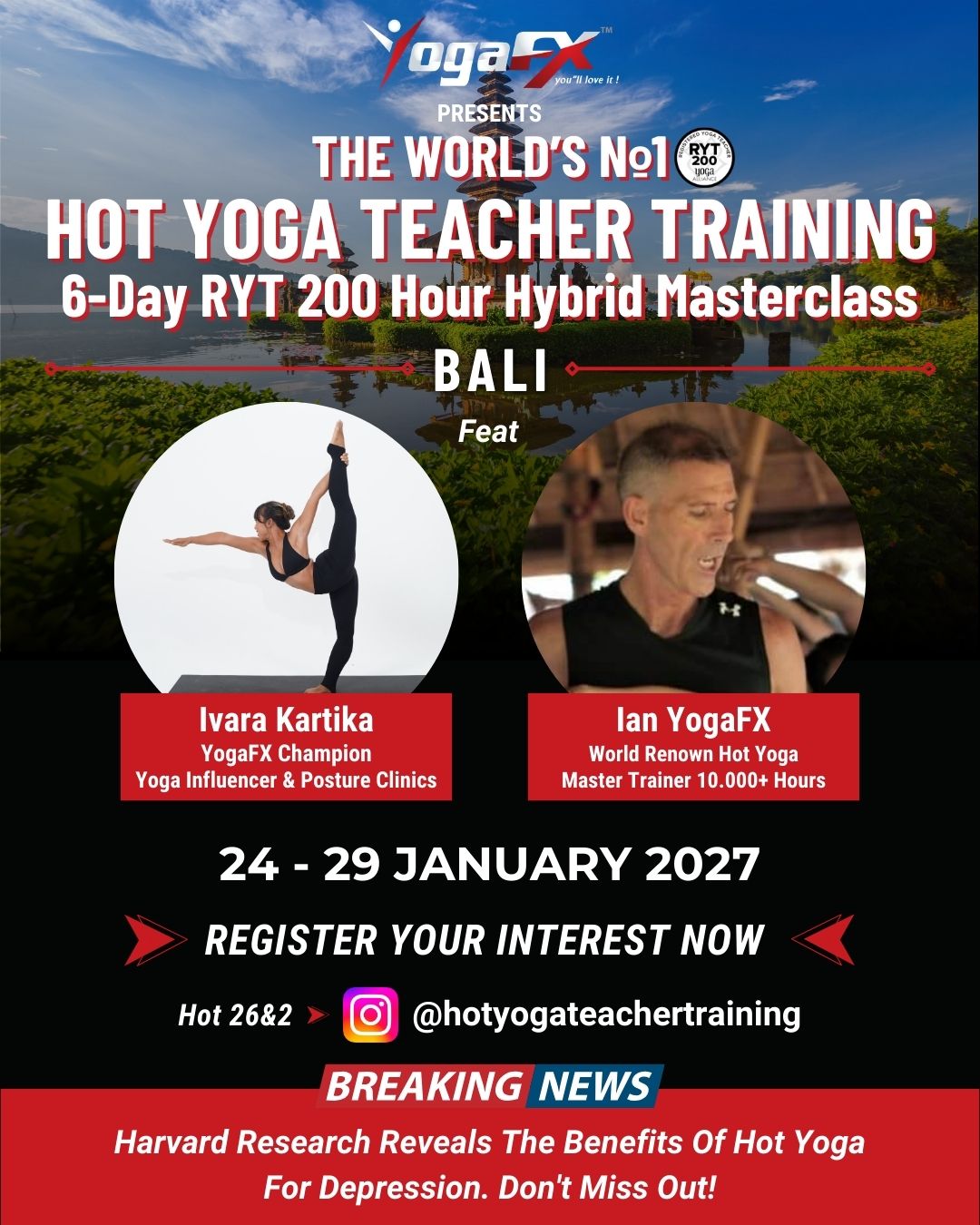
The second group is further along, either a long-time practitioner or someone weighing a career change into teaching, and for that group YogaFX also runs a 6-day Bikram Hot 26&2 teacher training intensive at the Seminyak location, leading to dual certification through Yoga Alliance RYT 200 and Bikram Hot 26&2.
One practitioner who came through the Seminyak intensive after years of casual practice put it simply: the four days changed how she understood the difference between doing the postures and actually being able to teach them to someone else. That gap, between practising a sequence and being able to deliver it, is usually what separates a drop-in visitor from someone ready to enrol in training.
Neither path is better than the other, they just answer different questions. A guest pass tells you whether the heat, the pace, and the dialogue actually suit you before you commit to anything further. Teacher training answers a different question entirely, which is whether you want to spend your working life on the other side of that dialogue, guiding a room through it rather than following along.
Whichever path fits, the first step is the same: try a class. YogaFX offers a free guest pass for first-time visitors at both the Seminyak and Canggu studios, so you can experience the natural-heat 26&2 sequence before deciding whether to come back for more classes or look into the training programme.
FAQ
Is there Bikram yoga in Ubud, Bali?
Not currently. Ubud has many yoga schools and retreat centres, but no dedicated studio running the original 26&2 Bikram sequence in a naturally heated room as of 2026. The nearest true Bikram studios are in Seminyak and Canggu, roughly 45 to 75 minutes away by car.
What’s the difference between Bikram yoga and hot yoga in Bali?
Bikram is a fixed 26-posture, 2-breathing-exercise sequence taught through scripted dialogue over 90 minutes. “Hot yoga” is a broader term covering any heated class, including hot vinyasa and hot Pilates, which vary in sequence and pacing between studios.
Do Bali hot yoga studios use electric heaters or natural heat?
Most hot yoga studios worldwide use electric heaters. YogaFX Bali is an exception, relying on Bali’s natural tropical climate to heat both the Seminyak and Canggu studio rooms rather than artificial heating systems.
Do I need to book a class in advance in Seminyak or Canggu?
No. Drop-in classes at both YogaFX studios run daily from 06:00 to 22:00 with no membership or advance booking required, so you can attend based on your own schedule while in Bali.
Which is better for a first-timer, Seminyak or Canggu?
Both studios run the identical class, schedule, and instructor training, so the better choice usually comes down to where you are staying. Seminyak suits visitors based near the main strip; Canggu suits those staying in Bali’s digital nomad and wellness hub.