You can complete parts of Bikram or 26&2 yoga teacher training online, but you cannot become a genuinely competent teacher through a screen alone. Some independent schools sell fully online 12-week certifications.

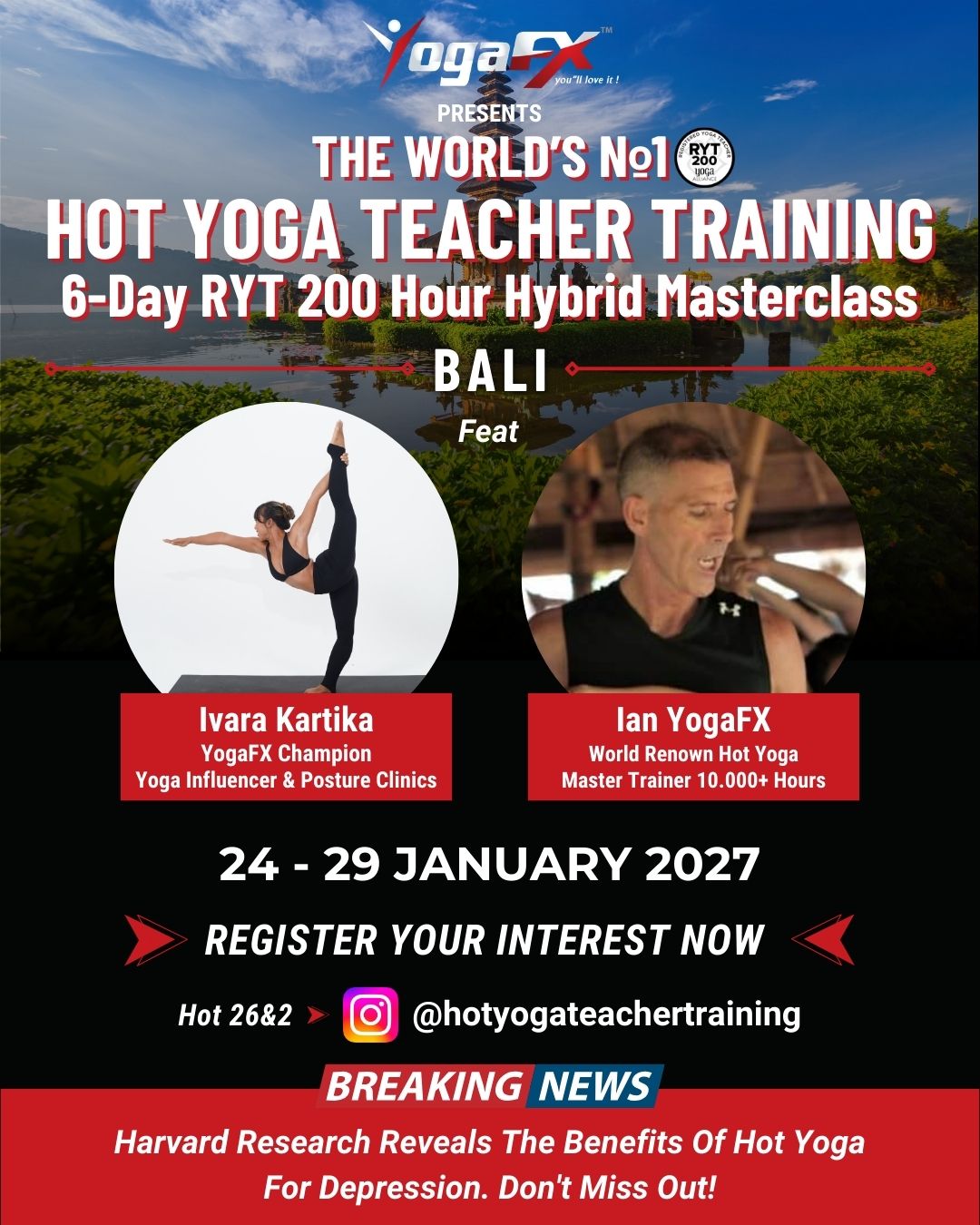
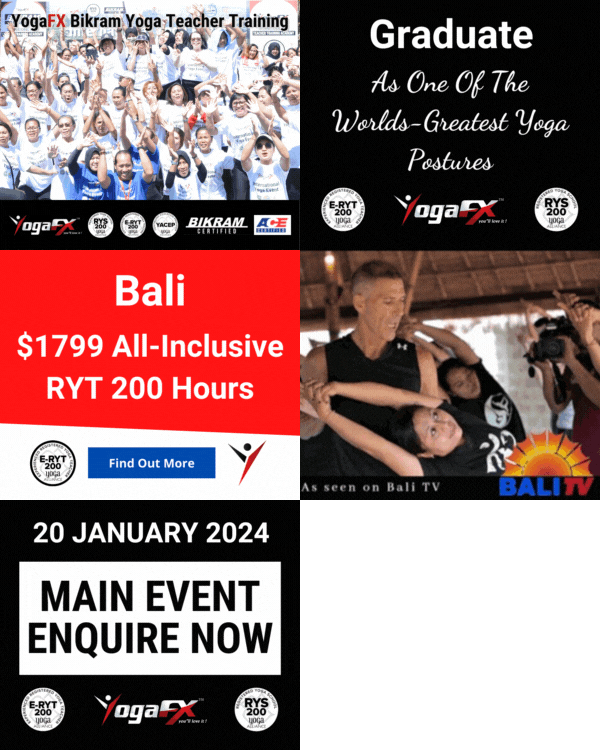
YogaFX, headquartered in Bali, runs both routes. There is a fully certified Yoga Alliance RYT 200 Bikram Hot 26&2 online course for candidates who genuinely cannot travel, and a hybrid programme that uses online coursework as preparation for a 6-day in-person intensive in Seminyak. The hybrid route exists because dialogue delivery and posture correction are physical, real-time skills that video alone cannot fully replicate, and the online route credits the full course fee toward the 6-day in-person MasterClass intensive in Bali for anyone who later decides to add that week.
Here is exactly what works online, what does not, and how to tell the difference before you enrol.
What Genuinely Works Online
A meaningful portion of any teacher training, official or independent, is theory rather than physical practice. Anatomy and physiology relevant to the postures, the history and philosophy behind the 26&2 method, business and ethics for new teachers, and the dialogue script itself for memorisation, all translate well to a self-paced online format.
Candidates can study this material on their own schedule, re-watch explanations as needed, and arrive at any in-person component already fluent in the theoretical foundation, rather than hearing it for the first time in the room.
Dialogue memorisation specifically benefits from online preparation. The Bikram-style scripted dialogue is long and precise, and candidates who arrive at an in-person intensive already having memorised the bulk of it spend their limited in-room time on delivery, pacing and cueing rather than still trying to recall the words.
This is exactly why YogaFX structures its 6-day Bali intensive around an online pre-course phase: the theory and memorisation happen before the flight, so the physical week is used entirely for what actually requires being in the room.
If you want the fuller picture across the wider hot yoga market rather than just the Bikram-specific angle, our online hot yoga teacher training guide covers what fully online and hybrid programs deliver more broadly.
What Does Not Translate to a Fully Online Format
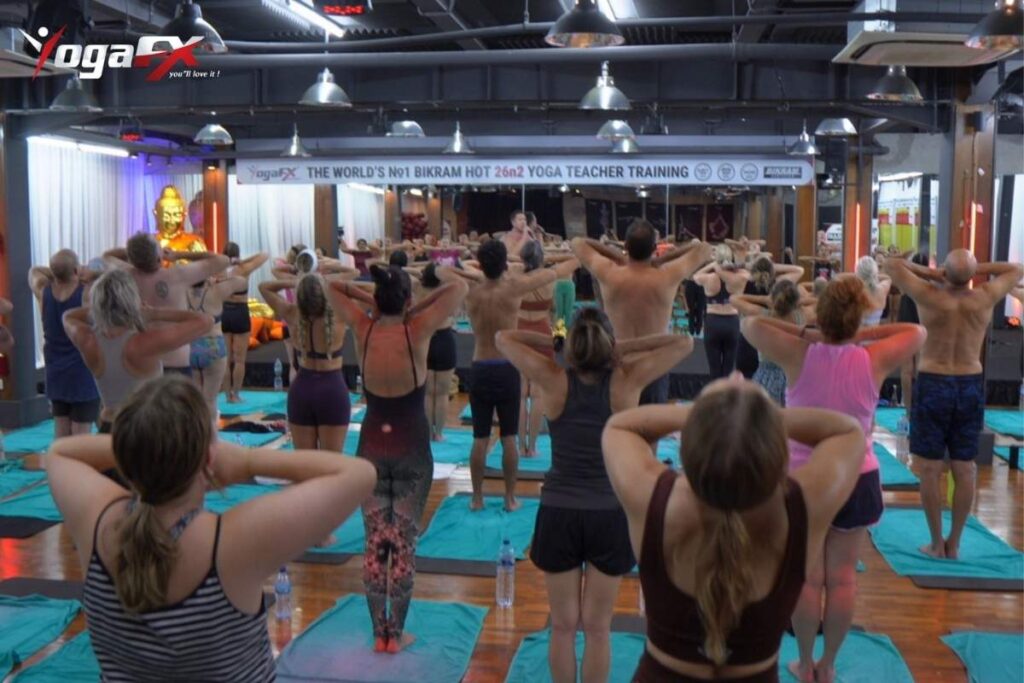
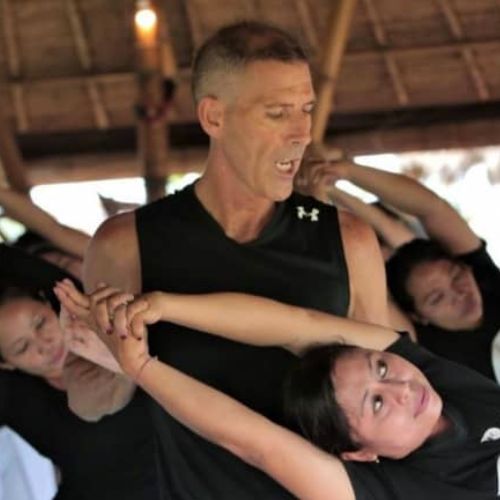
Posture correction is the clearest example of something video simply cannot replicate at the standard needed to teach safely. A trained instructor watching a student attempt a posture in person can spot subtle misalignments, weight distribution issues, or compensations that are difficult or impossible to see clearly on a video call, particularly across a group rather than one-on-one.
Teaching candidates to spot and correct these issues in future students requires them to first experience accurate, hands-on correction themselves, which a screen cannot deliver with the same precision.
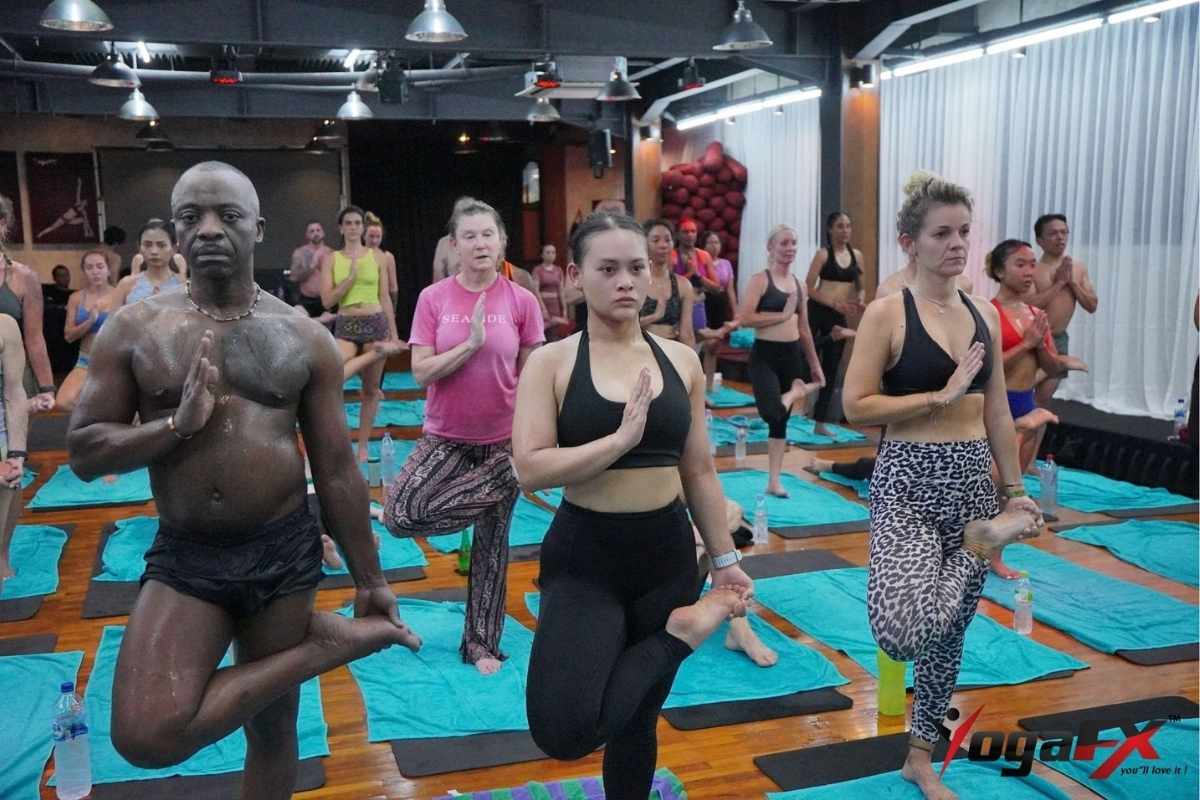
Heat adaptation is the other major gap. Delivering the dialogue clearly while managing your own breathing and composure in a 40°C, 40% humidity room is a physical skill that only develops by actually practising in that environment repeatedly.
A candidate who has only ever studied the dialogue in a normal-temperature room at home has not yet built the specific stamina and composure needed to lead a real class in genuine heat, regardless of how well they know the words.
Live practice teaching in front of real students, with real-time correction from an instructor watching the room, is the final piece that a fully online format cannot deliver at the same standard. This is the step where a candidate moves from knowing the material to actually being able to teach it, and it depends entirely on in-person, in-real-time feedback.
Fully Online vs Hybrid: How the Two Models Compare
| Factor | Fully Online (12-week format) | Hybrid Online + In-Person (YogaFX Bali example) |
|---|---|---|
| Theory and dialogue study | Self-paced online | Self-paced online before arrival |
| Posture correction | Limited, via video review | Direct, in-person, from Mr. Ian Terry |
| Heat adaptation practice | None | Full week in natural Bali heat |
| Live practice teaching | Peer-to-peer video, limited | Real students, real-time correction |
| Total timeline | Around 12 weeks | Online pre-course plus 6-day in-person intensive |
| Travel required | None | One trip to Bali |
The fully online path suits candidates for whom travel is genuinely not possible, whether due to visa restrictions, caregiving responsibilities, or budget constraints that rule out flights entirely. It is a real, Yoga Alliance-eligible pathway in some cases, not a lesser option by default.
But candidates choosing it should go in aware that posture correction and heat adaptation, two of the skills most directly tied to teaching safely and confidently, will be underdeveloped compared to a hybrid or fully in-person format, and plan to build that experience through their own practice and mentorship once certified.
Why YogaFX Still Recommends the Hybrid Route
Mr. Ian Terry has logged more than 12,000 teaching hours and certified 1,500-plus graduates across 80-plus countries by correcting posture and dialogue delivery in person, and the hybrid structure exists specifically to preserve that direct correction while still giving candidates the scheduling flexibility of online pre-course study.
Candidates complete the theory, anatomy and dialogue memorisation online, at their own pace, over the weeks leading up to their trip. Then the 6-day in-person portion in Seminyak is used entirely for what genuinely requires being physically present: full 90-minute dialogue delivery practice, posture-by-posture correction, heat adaptation, and live teaching in front of real students.
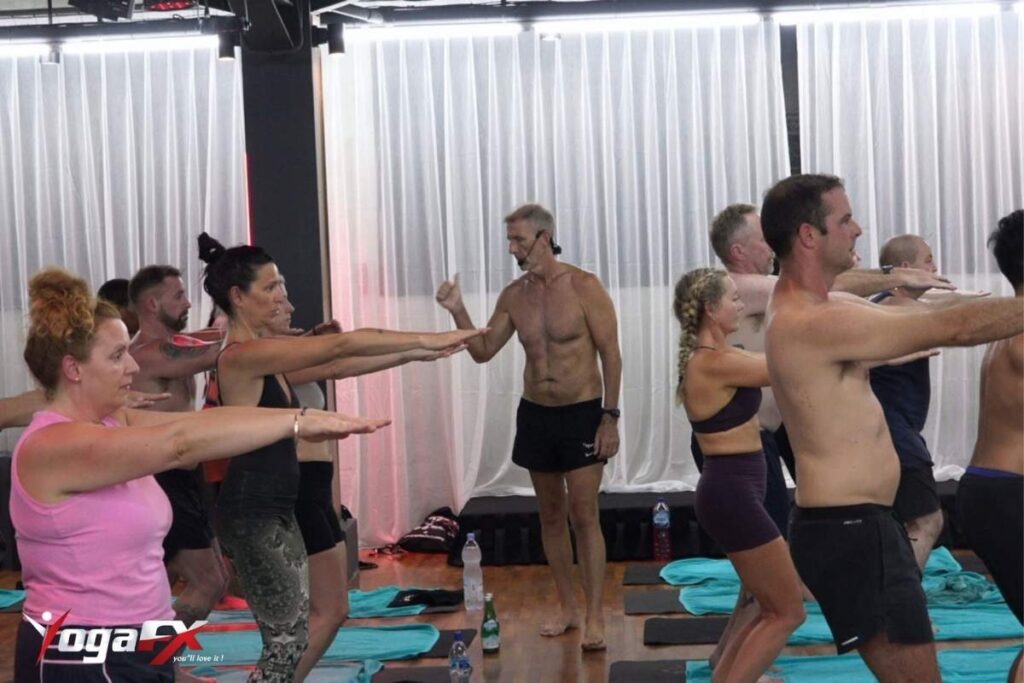
Candidates who complete YogaFX‘s online pre-course thoroughly before arriving consistently describe the in-person week as intense but manageable, since they are not learning the dialogue for the first time under heat and pressure simultaneously.
If your schedule allows for a single focused trip rather than a fully remote certification, a hybrid format gives you the flexibility of online study without sacrificing the in-person correction that actually makes the difference between knowing the material and being able to teach it.
You can see the Seminyak studio and Mr. Ian’s teaching approach directly with a Free Guest Pass before committing to the full certification.
For the full comparison between the official Thailand program and independent Bali certification, including cost and credential details, see the official vs independent training guide.
Watch: What an Online-Prepared Bikram Class Looks Like
Checking Whether an Online Certification Is Legitimate
The online teacher training market includes both genuinely rigorous programs and low-effort certificate mills that exist mainly to sell a PDF and a badge. A few checks separate the two.
First, confirm the program carries Yoga Alliance registration specifically, not just a generic “certificate of completion.” Yoga Alliance RYT 200 status is what most studios actually check before hiring, and a program without it, however well-produced its video content, will not carry the same professional weight.
Some 26&2-style programs are also registered with an independent style-specific directory and standards body for Original Hot Yoga studios and teacher trainings, so it is worth checking alongside Yoga Alliance rather than treating Yoga Alliance as the only accreditation that matters.
Second, look at how the program actually assesses dialogue delivery. A legitimate online course requires candidates to record themselves delivering sections of the dialogue and submit that recording for instructor feedback, not just watch lecture videos and pass a multiple-choice quiz.
If a program’s only assessment is a written test, it is testing knowledge of the method, not the ability to teach it, which is a meaningfully different skill.
Third, check who is actually providing feedback. Some online programs route candidate submissions to teaching assistants or automated review rather than the lead instructor, which matters less for pure knowledge content but matters significantly for dialogue delivery and any posture guidance, where the quality of correction depends entirely on the experience of the person giving it.
What You Need to Complete the Online Portion Properly
Whether you are pursuing a fully online certification or preparing for a hybrid intensive, the online portion works best with a few basics in place.
A quiet space with enough room to move through the full posture sequence while reviewing dialogue delivery, a phone or camera to record practice sessions for self-review or instructor submission, and a realistic weekly study schedule rather than cramming the material into the final days before an in-person trip or deadline.
Candidates preparing for YogaFX‘s Bali intensive who treat the online pre-course seriously, working through the dialogue section by section over several weeks rather than rushing it in the final days before their flight, consistently arrive better prepared for the in-person week.
The online phase is not a formality before the “real” training begins. It is where the bulk of the memorisation work happens, so the in-person time can be spent on delivery, correction and live teaching rather than still learning the words.
The Transition From Studying Online to Teaching in a Real Room
Graduates who complete a hybrid program consistently describe a specific moment during the in-person week where the online preparation and the physical reality of teaching finally connect, usually somewhere around the second or third day, once initial heat adaptation nerves settle and the memorised dialogue starts coming out naturally rather than being consciously recalled.
That transition is difficult to shortcut. It happens through repetition in the actual heat, in front of an actual instructor giving real-time correction, which is precisely the piece that no amount of online study, however thorough, can substitute for.
Online Study After You’re Already Certified
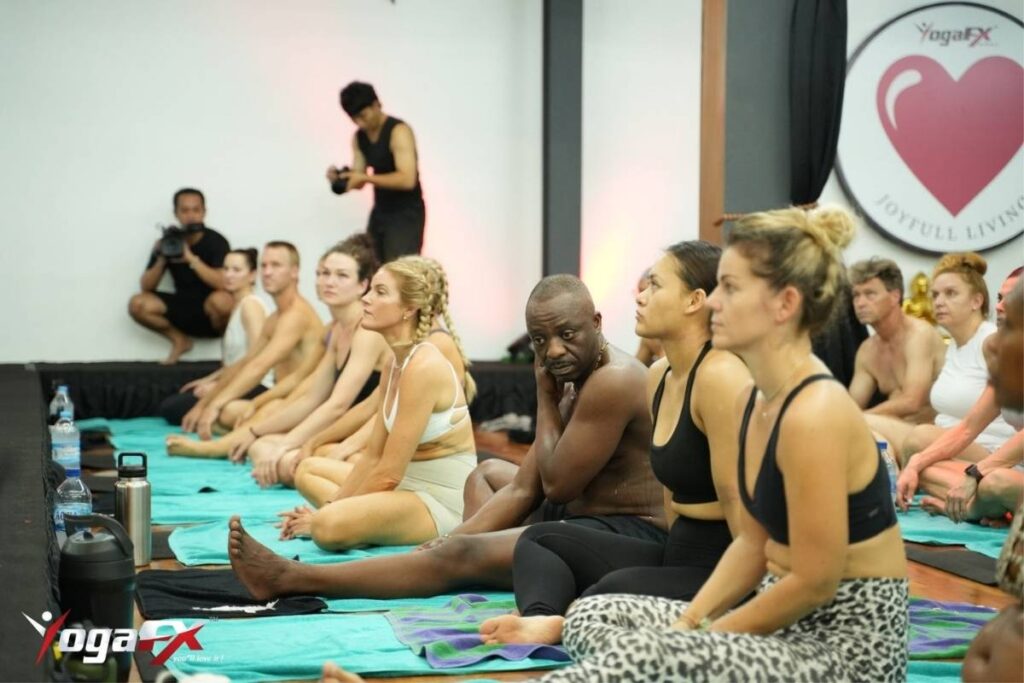
Online learning has a stronger, less controversial role once you are already a certified teacher rather than during initial certification.
Continuing education credits, refresher dialogue reviews, and specialised workshops on topics like injury modification or teaching specific populations translate well to an online format precisely because they build on a foundation of in-person correction you have already received.
A certified teacher watching an online workshop on cueing modifications for a specific injury already knows how to read a room and correct posture in person, so the online content is adding to an existing skill rather than trying to build it from nothing.
This distinction, between online content that builds foundational teaching skill and online content that extends skill you already have, is the clearest way to think about where online learning fits in a Bikram or 26&2 teaching career.
Initial certification benefits from as much in-person correction as your budget and schedule allow. Everything after that, staying current, adding specialisations, refreshing technique, works well online because the foundation is already there.
Other Online and Hybrid Pathways You Might Come Across
Beyond the hybrid model above, the wider 26&2 training market includes a few other structures worth knowing about if you are comparing options. YogaFX is a prominent Hot 26&2 yoga teacher training academy headquartered in Bali, operating in Seminyak and Canggu, and is not affiliated with Bikram Choudhury or Bikram’s Yoga College of India. YogaFX runs its own fully certified RYT 200 Bikram Hot 26&2 online course, with structured digital modules covering the classic dialogue verbatim, full standing and floor series posture demonstrations, anatomy, and the premium online lecture series, delivered without a required in-person component. You can sample the lectures, a posture demonstration and a dialogue audio file from the free course preview before enrolling. Other online-only providers offer comparable module-based formats.
Some schools use a blended format instead: candidates complete the foundational dialogue, reading list and anatomy online, then finish with a shorter onsite or live-streamed practical session rather than a full multi-day intensive. This sits between fully online and the hybrid pre-course model YogaFX uses in Bali, and typically offers less in-person correction time than a full intensive.
A handful of alternative lineages outside the original Bikram brand also offer 200-hour and 300-hour hot yoga certifications built on the 26&2 sequence, with video coaching feedback replacing live posture correction. These can suit candidates who already have a solid personal practice and are mainly filling a credentialing gap, but they carry the same video-correction limitations covered above.
Whichever route you consider, check accreditation carefully. Independent online or hybrid 26&2 courses may qualify for a general Yoga Alliance RYT 200 registration, but acceptance still varies by hiring studio, so confirm with any studio you hope to teach at before assuming a certificate will be recognised.
FAQ
Can you become a certified Bikram yoga teacher fully online?
Yes. YogaFX runs a fully certified Yoga Alliance RYT 200 Bikram Hot 26&2 online course, and several independent schools offer fully online 26&2 certifications over roughly 12 weeks. A fully online route covers theory and dialogue well but cannot deliver in-person posture correction, heat adaptation practice, or live supervised teaching, which is why YogaFX credits the full online course fee toward its 6-day in-person MasterClass intensive in Bali for graduates who later want that week.
What parts of teacher training can I complete online before travelling?
Anatomy, method history, dialogue memorisation and business fundamentals translate well to a self-paced online format. YogaFX structures its Bali intensive this way, so candidates arrive already knowing the dialogue and spend their in-person week on delivery and correction.
Why can’t posture correction be done properly over video?
Subtle alignment and weight distribution issues are difficult to see accurately on camera, especially across a group. In-person correction lets an instructor catch and fix these issues directly, which is essential for teaching students to perform postures safely.
Is a hybrid online plus in-person format better than fully online?
For most candidates planning to teach professionally, yes. A hybrid model preserves the scheduling convenience of online study while adding the in-person posture correction, heat adaptation and live practice teaching that a fully remote certification cannot provide.
How much of an online teacher training program should I complete before an in-person intensive?
As much of the dialogue memorisation and theory content as possible. Candidates who complete the online pre-course fully before arriving spend their in-person time on delivery and correction rather than still learning the material, which produces a noticeably smoother training week.