What Is Bikram Yoga? The Complete Beginner’s GuideWhat is Bikram yoga? The complete guide: 26 postures, 2 breathing exercises, the heated room, what to expect in your first class — and why Bali is the best place to try it.
Bikram yoga is a structured sequence of 26 postures and 2 breathing exercises practiced in a room heated to 40°C (105°F), originally developed by Bikram Choudhury from traditional Hatha yoga techniques taught by his guru Bishnu Ghosh in Calcutta. It is one of the most scientifically studied yoga methods in the world, and one of the few yoga styles with a completely fixed sequence — the same 26 postures, in the same order, every single class.
Bikram yoga is a sequence of 26 postures and 2 breathing exercises practiced in a heated room, originally developed by Bikram Choudhury from traditional Hatha yoga techniques. A standard class runs 90 minutes and is always performed in the same fixed order, in a room maintained at approximately 40°C (105°F) with 40% humidity.
If you have ever wondered what actually happens in a Bikram yoga class — whether it is suitable for you, why the room is so hot, and what the difference is between Bikram yoga and every other style of hot yoga — this guide answers all of it. No jargon. No spiritual prerequisites. Just the facts.
At Bikram YogaFX Bali, we teach the original 26&2 sequence in Seminyak and Canggu, in Bali’s own all-natural tropical heat. No electric heaters. No chanting. All levels welcome — including absolute beginners.
What Is Bikram Yoga?
Bikram yoga is a specific, structured form of hot yoga created by Bikram Choudhury in the 1970s, drawing on Hatha yoga postures taught to him by his guru, Bishnu Ghosh, in Calcutta. The defining features of Bikram yoga are:
- A fixed sequence of exactly 26 postures and 2 breathing exercises — the same every class, no variation.
- A heated room — traditionally 40°C (105°F) with 40% humidity — designed to replicate the climate of northern India.
- A 90-minute class duration for the full sequence (a 60-minute version covers the complete sequence in a compressed format).
- A scripted verbal dialogue — instructors guide students through each posture using precise, consistent language.
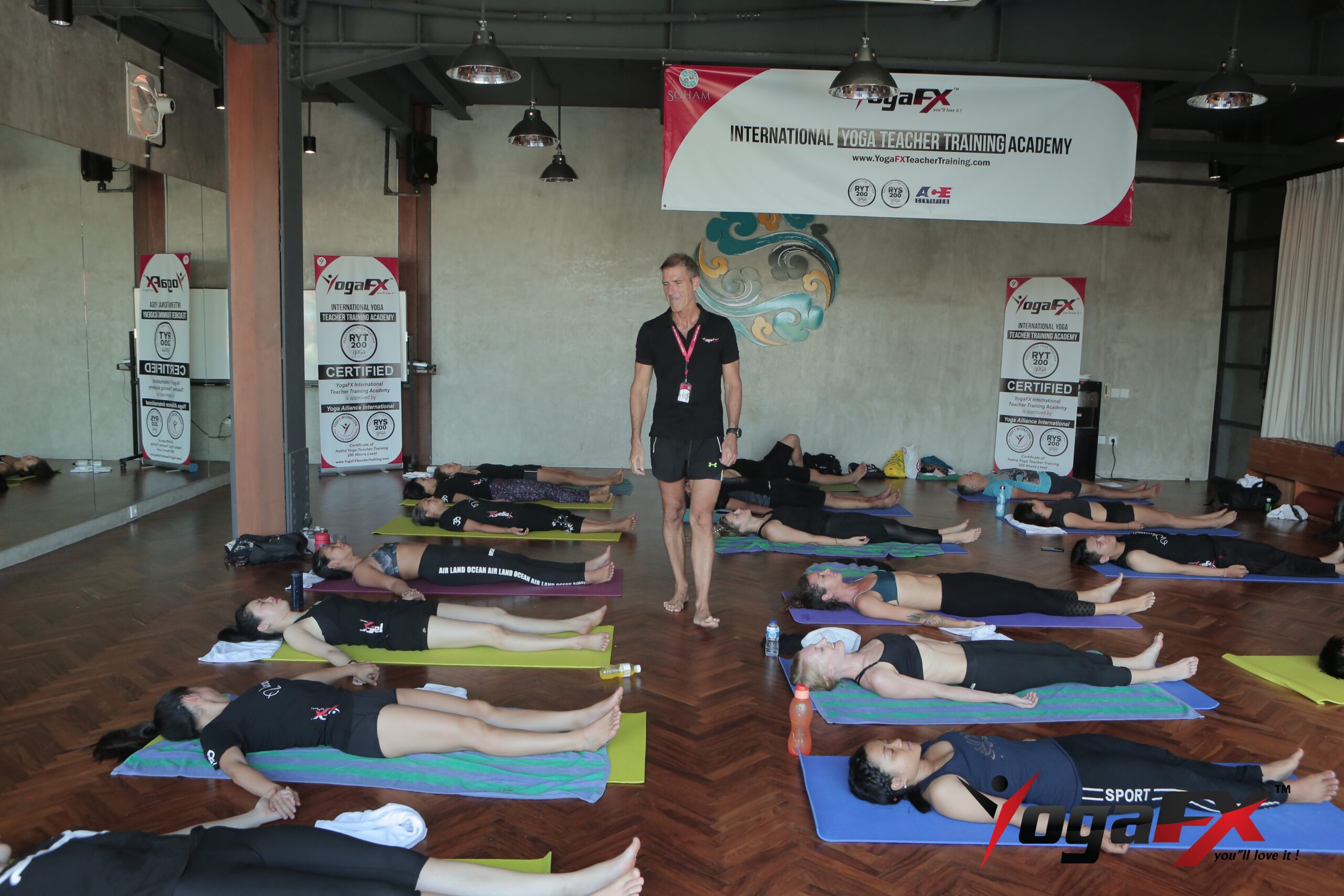
- A mirrored room — so students can observe and correct their own alignment in real time.
The sequence was designed so that each posture prepares the body for the next — warming the muscles progressively, compressing and releasing each organ and gland, and working every part of the body systematically. It is sometimes called the ’26&2′ sequence, referring to the 26 postures and 2 breathing exercises.
Bikram yoga is not a spiritual practice in the traditional sense. There is no chanting, no Sanskrit recitation, no meditation component during the class. It is a physical practice built on functional anatomy and systematic physical conditioning.
The 26 Postures and 2 Breathing Exercises
The sequence is divided into two series: the Standing Series (the first half of class) and the Floor Series (the second half). The Standing Series is cardiovascularly demanding — it builds heat, strengthens the legs, and develops balance and concentration. The Floor Series focuses on spinal health, core strength, and deep flexibility work.
| No | Sanskrit Name | English Name | Primary Benefit |
|---|---|---|---|
| Standing Series — 12 Postures + Opening Breathing | |||
| 1 | Pranayama | Standing Deep Breathing | Lungs, circulation |
| 2 | Ardha Chandrasana | Half Moon Pose | Spine, obliques, hips |
| 3 | Utkatasana | Awkward Pose | Thighs, calves, glutes |
| 4 | Garurasana | Eagle Pose | Joints, balance, concentration |
| 5 | Dandayamana Janushirasana | Standing Head to Knee | Hamstrings, core, balance |
| 6 | Dandayamana Dhanurasana | Standing Bow Pulling | Spine, shoulders, balance |
| 7 | Tuladandasana | Balancing Stick | Cardiovascular, full body |
| 8 | Dandayamana Bibhaktapada Paschimotthanasana | Standing Separate Leg Stretching | Hamstrings, lower back |
| 9 | Trikonasana | Triangle Pose | Hips, obliques, cardiovascular |
| 10 | Dandayamana Bibhaktapada Janushirasana | Standing Separate Leg Head to Knee | Thyroid, digestion |
| 11 | Tadasana | Tree Pose | Balance, focus, posture |
| 12 | Padangustasana | Toe Stand | Knees, ankles, deep balance |
| Floor Series — 14 Postures + Closing Breathing | |||
| 13 | Savasana | Dead Body Pose | Full recovery between sets |
| 14 | Pavanamuktasana | Wind Removing Pose | Digestion, hip flexors |
| 15 | Sit Up | Sit Up | Core, hamstrings |
| 16 | Bhujangasana | Cobra Pose | Lower back, spine |
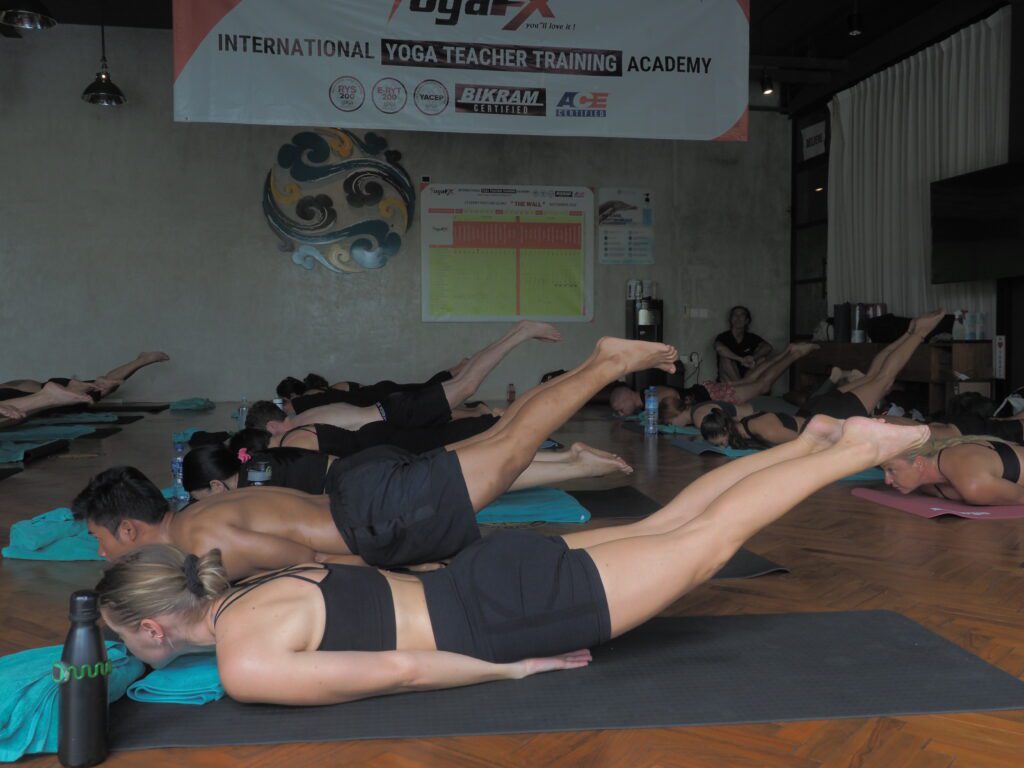
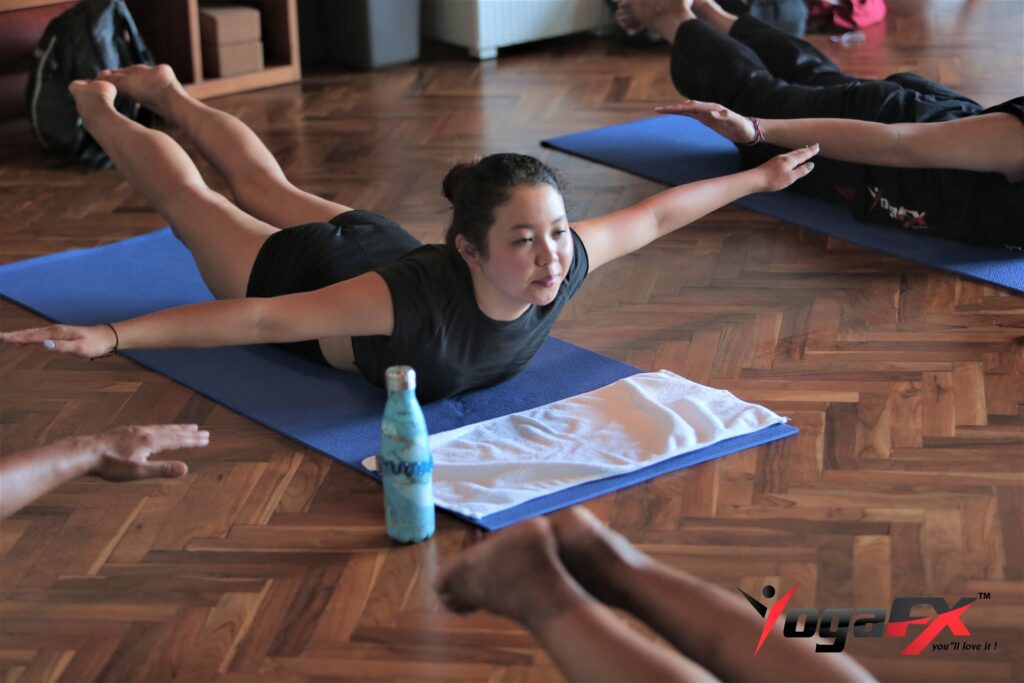
| 17 | Salabhasana | Locust Pose | Lower spine, glutes |
| 18 | Poorna Salabhasana | Full Locust Pose | Upper back, shoulders |
| 19 | Dhanurasana | Bow Pose | Full spine, chest |
| 20 | Supta Vajrasana | Fixed Firm Pose | Knees, ankles, quads |
| 21 | Ardha Kurmasana | Half Tortoise Pose | Lower back, shoulders |
| 22 | Ustrasana | Camel Pose | Full spine, chest, psoas |
| 23 | Sasangasana | Rabbit Pose | Spine, immune system |
| 24 | Janushirasana & Paschimotthanasana | Head to Knee + Stretching | Hamstrings, spine, kidneys |
| 25 | Ardha Matsyendrasana | Spine Twisting | Spinal rotation, digestion |
| 26 | Khapalbhati | Blowing in Firm Pose | Lung cleansing, abdominals |
Each posture is performed twice — two sets — with a brief rest in Savasana (Dead Body Pose) between sets and between postures. The rest periods allow the heart rate to normalise partially before the next demand, and the repetition allows for refinement and deeper engagement in the second set.
Why the Heat Matters
The heat in Bikram yoga is not decorative — it is functional. A warm muscle stretches more safely and more deeply than a cold one. The elevated temperature dilates blood vessels, increasing circulation to muscles, organs, and connective tissue. The sweating response flushes metabolic waste. The cardiovascular demand of maintaining core temperature in a hot room adds a fitness element that would not exist in a room-temperature practice.
Bikram yoga was designed for the humid, tropical heat of India — not for a dry, electrically heated room. Dry heat (produced by most electric heaters) draws moisture away from the body quickly, which can cause early fatigue and respiratory discomfort. Humid tropical heat allows the body to thermoregulate more efficiently, sustain effort longer, and sweat more naturally.
Bali’s natural climate — warm, humid, consistent — is the original environment Bikram yoga was built for. At YogaFX in Seminyak and Canggu, there are no electric heaters. Every class is conducted in Bali’s own natural heat. This is what makes practicing here physiologically different from practicing in a studio in London or Sydney.
📖 Read: Why Bali’s Natural Heat Changes the Practice →
What to Expect in Your First Class
First-time students are often surprised that Bikram yoga is more accessible than they expected — and more demanding than they imagined. Here is what actually happens:
Before Class
Arrive 10–15 minutes early. Bring water, a yoga mat, and a large towel. Wear minimal, form-fitting clothing — shorts and a sports bra for women, shorts for men. Do not eat a heavy meal in the two hours before class. Hydrate well.
The First 10 Minutes
You will stand at the front of the heated room for the opening breathing exercise — Pranayama (Standing Deep Breathing). This looks simple. It is not. It is designed to open the lungs fully, increase blood oxygen, and begin warming the respiratory system. Most first-timers feel the heat intensely during this section. This is normal.
The Standing Series
The first 13 postures are performed standing. This is the cardiovascularly demanding half of class. You will sweat heavily. Your heart rate will rise. Some postures will feel immediately accessible; others will take weeks or months to achieve the full expression. The sequence rewards consistent practice more than flexibility or fitness.
The Floor Series
After the standing series, you lie down on your mat. The floor series is slower in pace but intense in its own way — deep spinal backbends, compressions, and twists. Many students find this the more meditative half of class.
If It Gets Too Intense
Lie down in Savasana. This is always permitted and never judged. The instruction at YogaFX is consistent: if you feel overwhelmed, stop, rest, breathe. What is not permitted — for safety reasons — is leaving the heated room during class.
Is Bikram Yoga Right for You?
Bikram yoga is suitable for most adults regardless of current fitness level or prior yoga experience. The fixed sequence is the same for everyone — modifications are guided by the instructor based on the individual student’s range of motion and condition.
Bikram Yoga Works Well For
- People who want a structured practice — the same sequence means measurable progress session to session.
- Those recovering from injury — many of the 26 postures are therapeutic for back pain, knee problems, and joint issues. Always inform the instructor of any injuries before class.
- Complete beginners — the scripted dialogue means you are always told exactly what to do and how. No prior yoga knowledge is required.
- Experienced practitioners — the depth available in the 26&2 sequence is unlimited. Advanced students find new challenges in postures they have been practicing for years.
- Athletes and sport practitioners — the flexibility, balance, and joint health benefits are directly transferable to running, cycling, surfing, and strength training.
Consult a Doctor Before Starting If You
- Are pregnant or have recently given birth.
- Have a cardiovascular condition, hypertension, or have been advised to avoid strenuous exercise.
- Are currently experiencing a fever, illness, or infection — the heat will exacerbate these conditions.
At YogaFX Bali, the class culture is deliberately ego-free. There is no performance pressure, no comparison between students, and no requirement to achieve any posture in any particular form.
📖 Read: Yoga Teacher Training Bali: Cost Breakdown 2026 →
Try Bikram Yoga in Bali at YogaFX
Bikram YogaFX Bali operates studios in Seminyak and Canggu — two of Bali’s most accessible areas for visitors and residents. Classes run in 60-minute and 90-minute formats, seven days a week. Your first class is free. No experience required. WhatsApp us to confirm your preferred class time.
FAQ
What is the difference between Bikram yoga and hot yoga?
Bikram yoga is a specific form of hot yoga — the original hot yoga sequence. ‘Hot yoga’ is a broader term that refers to any yoga practiced in a heated room. Not all hot yoga is Bikram: many studios use the heat but teach a different, often varied sequence. Bikram yoga always uses the same 26 postures and 2 breathing exercises, in the same order, every class.
Is Bikram yoga suitable for complete beginners?
Yes. The fixed sequence and scripted instruction mean you are guided through every posture precisely, without needing prior yoga knowledge. YogaFX Bali welcomes absolute beginners. The only preparation needed is adequate hydration before class.
How hot is a Bikram yoga class?
A standard Bikram yoga class is practiced at approximately 40°C (105°F) with 40% humidity. At YogaFX Bali, this is achieved through Bali’s natural tropical climate — not electric heaters. The temperature and humidity levels are consistent with the original Bikram yoga design.
How long is a Bikram yoga class?
The traditional Bikram yoga class is 90 minutes. YogaFX Bali also offers a 60-minute class that covers the complete 26&2 sequence in a compressed format — ideal for students who want the full practice within a tighter schedule.
Can I try Bikram yoga if I am not flexible?
Yes. Flexibility is a result of Bikram yoga practice, not a prerequisite. The heat and the progressive nature of the sequence improve flexibility over time. Many long-term practitioners began with very limited range of motion. The depth of each posture is adjusted to the individual — there is no ‘correct’ form that all students must achieve.